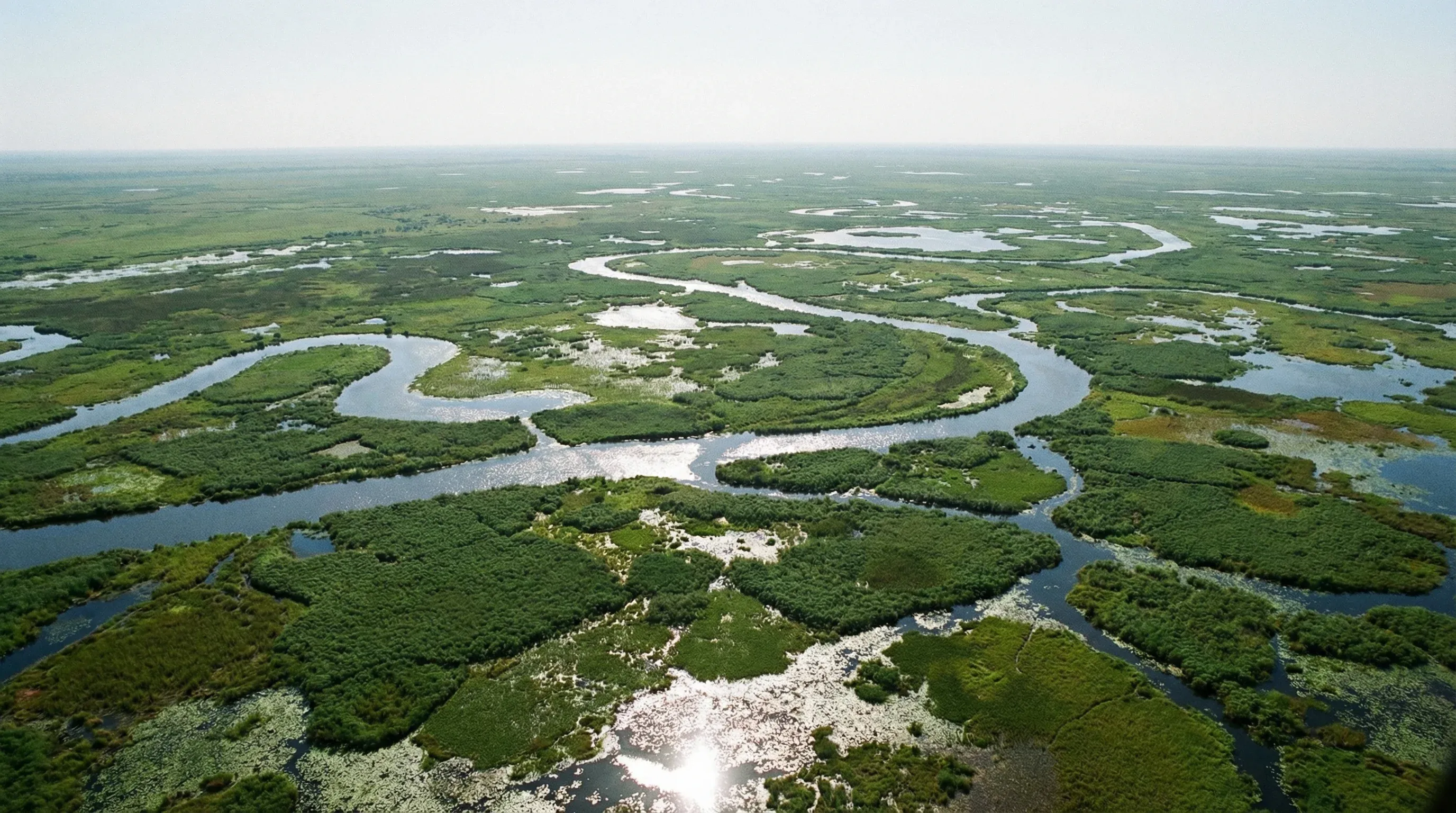

Sudd Wetlands & Boma–Badingilo (Jonglei)
A vast water wilderness hosting one of nature's greatest migrations
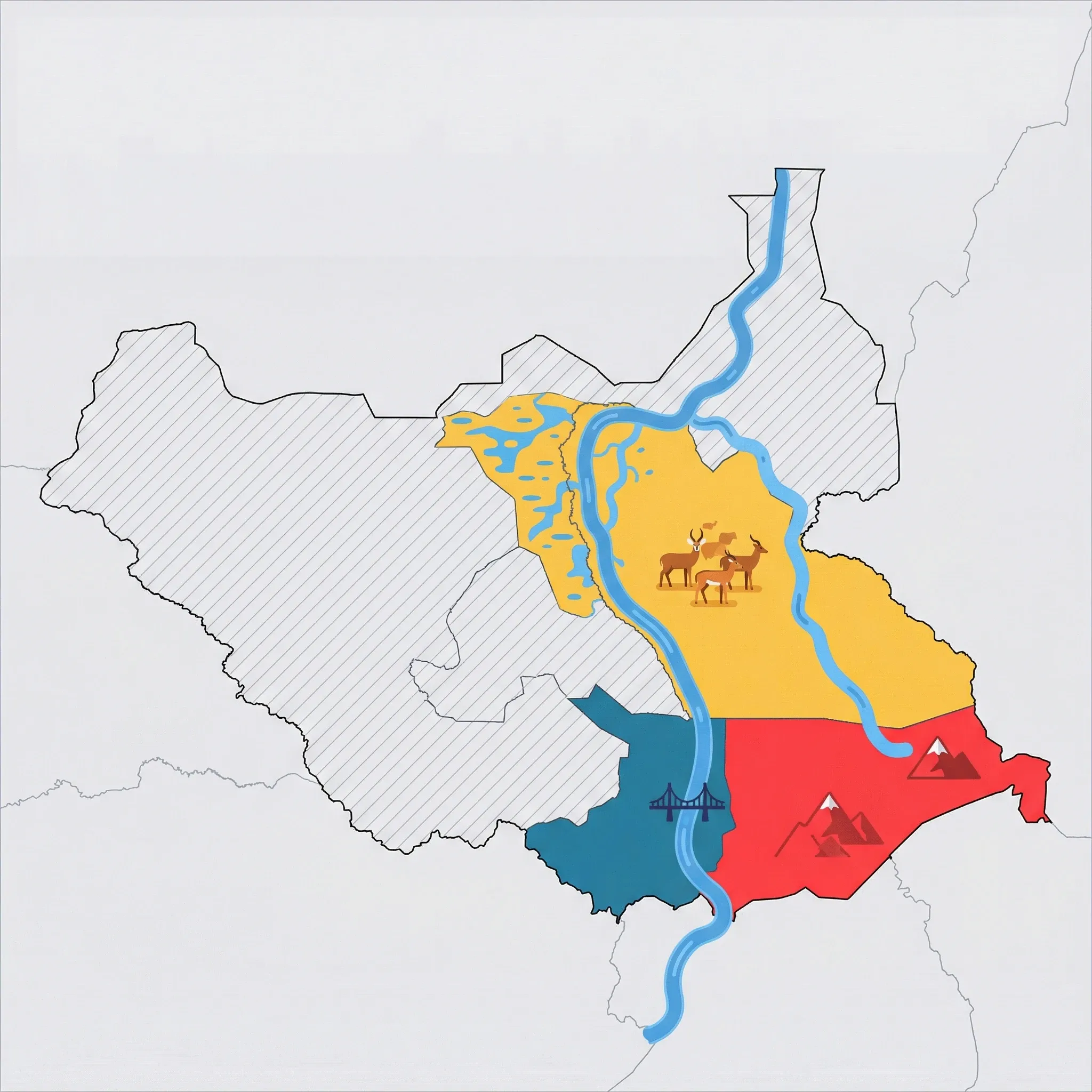
Click a region to explore
⚠️ SAFETY WARNING: Due to frequent intercommunal violence, armed cattle raids, and zero tourist infrastructure, government agencies (including the US, UK, CA, AU, and NZ) advise travelers to avoid all travel (L3/L4) to Jonglei and the Sudd. The wetlands are extremely remote and inaccessible for emergency services. Families are strongly urged to consult their own government's official travel advisory before considering a trip, as circumstances and risk assessments vary.
Overview
The Sudd Wetlands is one of the world's largest tropical wetlands, a massive expanse of lagoons, channels, and papyrus beds that fluctuates with the seasons. For families with a passion for biology and nature, this is a globally significant ecosystem. The landscape is a water-world where the boundary between land and river dissolves, home to the Dinka and Nuer peoples who have adapted their entire way of life to the rhythm of the floods. It is a place of raw, primitive beauty, where the silence is broken only by the call of waterbirds and the splash of crocodiles.
To the east lie the great savannahs of Boma and Badingilo. This area is the stage for a wildlife spectacle that few outsiders have ever seen: the migration of over a million white-eared kob and tiang antelope. It is a migration that rivals the famous Serengeti crossing, yet it happens in near-total isolation. While visiting requires an expedition-style approach, the sheer scale of nature here is a powerful reminder of the planet's wild heritage.
Key Attractions
The Sudd Wetlands is the defining feature of the region. A boat trip through the maze of papyrus offers a chance to see elephants adapting to the marsh and the elusive shoebill stork, a prehistoric-looking bird that tops many birdwatchers' bucket lists. The wetlands act as a giant filter for the Nile and are crucial for the continent's climate.
Boma National Park is the focal point for the great antelope migration. Although there are no lodges or facilities, the sight of columns of antelope stretching to the horizon is a legendary natural wonder. Exploring this area is strictly for those on organized, self-sufficient expeditions with professional security and guides.
Practical Advice
Best time to visit: The dry season (December to April) is critical for seeing the migration. The Sudd is accessible year-round by boat, but humidity and mosquitoes are intense during the rains.
Family logistics: This is an extreme adventure destination. Travel is almost exclusively by chartered light aircraft or boat. There are no medical facilities.
Food & Drink
Typical meal times: Meals are dictated by sunlight; breakfast at 7:00 am, lunch at 12:00 pm, and dinner around 6:30 pm before generator power cuts out.
Typical meal costs: Food is generally included in the high cost of expedition packages. Buying local fish at a market is cheap, around SSP 4,000–6,500 (approx. $3–5 USD / €2.75–4.50 EUR) per kg.
Dietary requirements: The local diet is heavily reliant on fish and milk. Travelers with lactose intolerance or fish allergies will struggle and must bring all their own food.
Signature dishes:
- Nile Perch – This massive fish is the staple protein, often grilled over charcoal or fried in chunks immediately after being caught.
- Kisra – A thin, fermented crepe-like bread made from sorghum, similar to Ethiopian injera but thinner, used to scoop up stews.
- Dried Fish Stew – Fish is preserved by sun-drying and later rehydrated in a thick sauce with onions and peanut paste.
Why this score?
Navigating the world's largest swamp or the trackless savannahs of Boma National Park involves extreme physical challenges and reliance on chartered aircraft. The environment is wild and unpredictable, featuring seasonal flooding and significant populations of large, dangerous wildlife without any park ranger protection.
Why this score?
There is no accessible medical infrastructure within the vast wetlands or the remote national parks for international travelers. Malaria is endemic and the risk of waterborne diseases is high, with the nearest basic hospital often hundreds of miles away across impassable terrain.
Why this score?
Despite hosting one of the world's largest wildlife migrations, the Sudd and Boma remain among the least visited wilderness areas on Earth. The total lack of permanent lodges or paved road access ensures that visitor numbers remain near zero.

This is one of the most expensive adventure destinations on Earth due to the lack of infrastructure. A specialized expedition to the Sudd or Boma can cost SSP 650,000–1,000,000+ (approx. $500–800+ USD / €460–740+ EUR) per person per day to cover charter flights, boats, fuel, permits, and security.

Getting Here & Around
Getting Here
- Airports – Bor has an airstrip, but most travel to the deep wetlands or parks requires a charter flight from Juba (JUB) to bush airstrips.
- Boat – The White Nile is the highway of the region. Boats travel north from Juba to Bor and into the Sudd Wetlands. This is slow and requires careful security planning.
Getting Around
- Boat – Within the Sudd Wetlands, motorized canoes or speedboats are the only way to move. Navigation is difficult due to shifting vegetation islands.
- Walking – In the dry season, walking safaris in the parks are possible but only with armed rangers due to wildlife and security risks.
No airports in this region. See the country flight map for nearby connections.

Packing List
Insect density in the wetlands is extreme; repellent alone is not enough.
All travel is by small boat; gear must be protected from splashes and rain.
The terrain is muddy and marshy; hiking boots will get soaked instantly.
Essential for spotting birds and wildlife in the vast, flat landscape.
Credit cards rarely work; cash is king, but bills must be new and unblemished to be accepted.
Mobile networks are unreliable outside Juba; essential for safety and emergency communication.
Power outages are frequent and prolonged; keeps essential devices charged when the grid fails.
Mandatory for entry; you will be refused borders entry without physical proof of vaccination.
Street lighting is non-existent in most areas; critical for navigating safely after sunset.

Activities & Best Times

Hiking, wildlife, outdoor exploration, ecotourism
This region offers a raw and authentic wilderness experience, featuring one of the world's largest mammal migrations and the vast Sudd wetlands. Visitation is strictly seasonal, as peak dry months (Dec-Feb) allow for wildlife tracking and navigation, while heavy rains (May-Oct) make the region's black cotton soil roads entirely impassable for families.



Public Holidays & Calendar Next 12 months
Public holidays, festivals, cultural celebrations, and seasonal natural phenomena coming up in Sudd Wetlands & Boma–Badingilo (Jonglei) over the next 12 months.
Loading holidays and events...

Travel Advisory
Unanimous consensus across all major international agencies indicates an extreme risk environment. Travel is strongly discouraged due to active armed conflict, pervasive violent crime, and the inability of foreign governments to provide emergency assistance.
Safety Topics
Traveller Advice (3 groups)

There is a significant threat of sexual assault and gender-based violence, particularly in areas of conflict or rural locations. Independent travel is strongly discouraged.

Humanitarian staff have been frequently targeted in attacks and kidnappings. Organizations must employ professional security details and maintain strict contingency plans for emergency evacuation.

Media professionals face high risks of harassment, arrest, and violence. It is mandatory to obtain official accreditation from the Media Authority; working without proper documentation is illegal and extremely dangerous.
Agency Summaries
The United States warns that the risk of abduction, violent crime, and armed warfare is critical throughout the country. Federal assistance is extremely limited, and government staff are restricted by curfews and must use armored transport for movement.
The FCDO recommends against all travel to the nation due to the severe threat of criminality and armed violence. The political landscape is volatile, and embassy support for British nationals is severely constrained.
Australia warns of a dangerous security situation with a high risk of armed conflict and violence. Consular services are very difficult to access, and the situation can worsen without any notice.
Canada strongly advises against visiting South Sudan due to a highly unstable security environment characterized by persistent civil conflict, ethnic violence, and extreme crime rates. Citizens currently in the country should depart while commercial options remain available.
New Zealand cites ongoing warfare and high levels of violent crime as primary reasons for its do-not-travel advisory. Law and order are not maintained in many regions, posing significant personal risk.
Ireland maintains its highest level of warning, advising citizens to avoid the country entirely and leave immediately if safe to do so. Security is fragile, and the embassy has limited power to assist.
Information is provided for general guidance only and does not constitute travel, safety, medical, or legal advice. Conditions may change. Users are responsible for independently verifying information before travel.