
Cultural Triangle (Sigiriya, Polonnaruwa, Anuradhapura)
Ancient ruins, rock fortresses, and wild elephants 🐘🛕
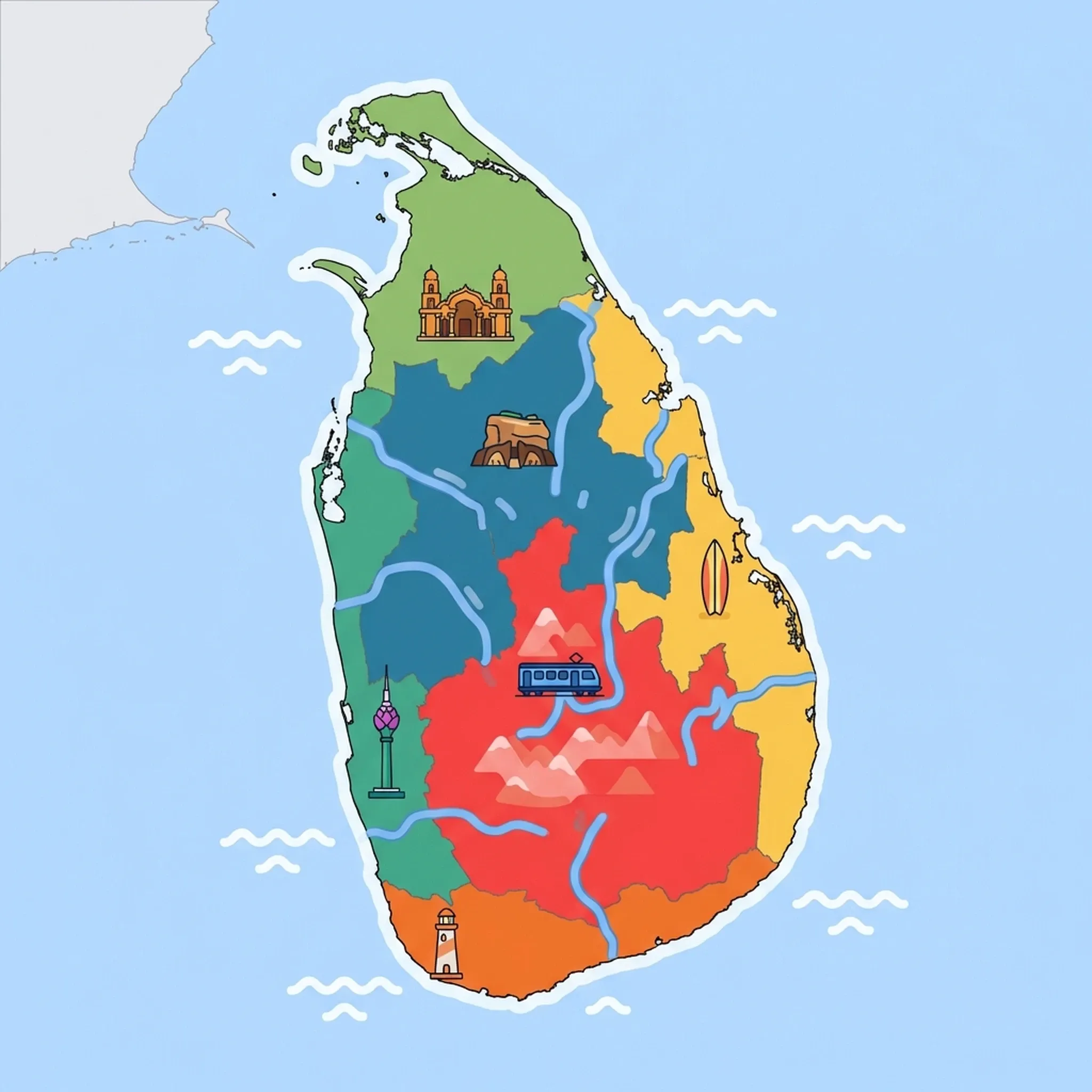
Click a region to explore
The Cultural Triangle is where the grand history of Sri Lanka comes alive in a way that is surprisingly engaging for children. This region, located in the dry central plains, is home to the island's ancient capitals and most iconic UNESCO World Heritage sites. For families, the landscape feels prehistoric: massive boulders balance on plains, lakes teem with birdlife, and ruins emerge from the jungle. Unlike the stuffy museums of Europe, history here is open-air and tactile. Children can scramble over ancient foundations, marvel at giant reclining Buddha statues, and encounter troops of toque macaques (monkeys) that rule the temple grounds. The climate is hotter and drier than the coast or hills, which guarantees plenty of pool time at your hotel after a morning of exploration.
What makes the Triangle truly special for families is the combination of culture and wildlife. You aren't just looking at old stones; you are often doing so while spotting monitor lizards or peacocks. The proximity of national parks to the ancient sites means you can climb a fortress in the morning and be on a jeep safari by the afternoon. The sense of adventure is palatable—climbing the metal staircases of Sigiriya feels like a true expedition. While the scale of cities like Anuradhapura can be overwhelming, focusing on key highlights keeps the experience magical rather than exhausting. It is a region that sparks the imagination, telling stories of kings, engineering marvels, and ancient battles.
Key Attractions
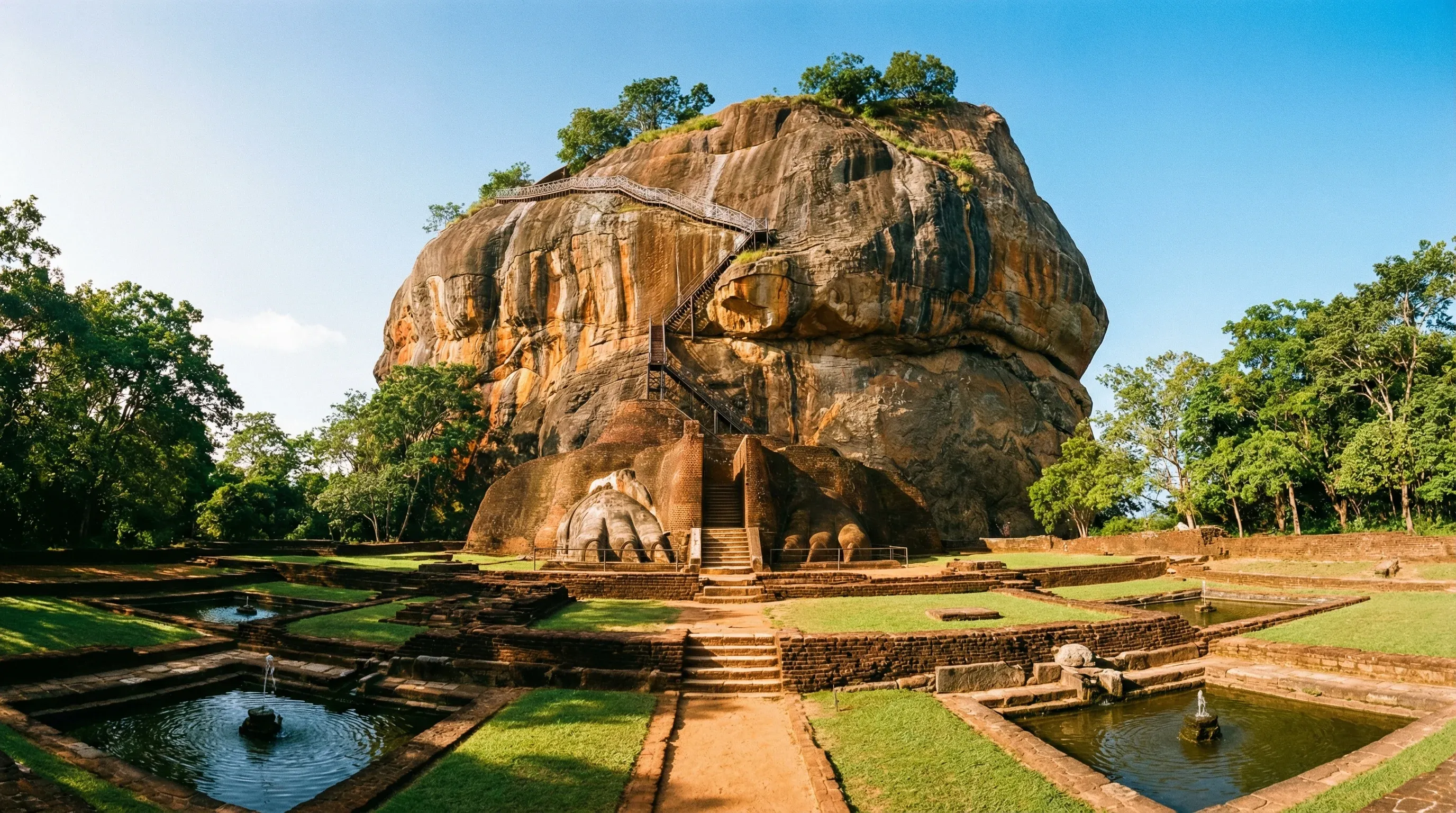
The undisputed highlight is the Sigiriya Rock Fortress. Known as the Lion Rock, this massive column of rock rises nearly 200 meters out of the forest. For kids, the climb is an adventure past giant lion paws carved into the stone and frescoes of ancient maidens. It is steep, so suitable for energetic children (ages 5+), but the views from the top are unbeatable. For a slightly wilder, less crowded climb, the nearby Pidurangala Rock Hike offers a fun scramble over boulders and a breathtaking view of Sigiriya itself—often a favorite for teenagers.
Nearby, the Dambulla Cave Temple offers a cooler, subterranean experience. Children are often awed by the cavernous spaces filled with hundreds of Buddha statues and the colorful paintings that cover every inch of the uneven rock ceiling. To break up the history, a jeep safari in Minneriya National Park is mandatory. Famous for 'The Gathering' (August–September) where hundreds of elephants congregate, it offers one of the best chances in the world to see wild elephants up close in their natural habitat, a memory that will likely outshine any temple visit.
Practical Advice
The heat here is intense. Plan all climbs and open-air visits for early morning (6:30 am–9:00 am) or late afternoon (4:00 pm onwards). Midday is for swimming or napping. Always carry socks—you must remove shoes at temples, and the granite floors get blistering hot under the tropical sun.
Food & Drink
Typical meal times: Lunch is a major affair, usually 12:00 pm to 2:00 pm. Dinner is served 7:00 pm to 9:30 pm.
Typical meal costs: Tourist buffets are common here, costing LKR 2,500–4,500 (approx. $8–15 USD / €7–14 EUR) per person. Local rice and curry spots are cheaper, around LKR 800–1,500 (approx. $2.50–5.00 USD / €2.50–4.50 EUR).
Dietary requirements: Excellent for vegetarians. This agricultural heartland produces amazing vegetables. Gluten-free is easy with rice-based meals, but check for flour in fried snacks.
Signature dishes:
- Wambatu Moju – A sweet, sour, and spicy eggplant pickle that is caramelized to perfection. Even kids who hate vegetables often like the sweet, sticky taste (if not too spicy).
- Lake Fish Curry – Freshwater fish (Tilapia) from the ancient reservoirs, cooked in a heavy coconut milk gravy.
- Woodapple Juice – A smoothie made from the hard-shelled woodapple fruit. It looks muddy but tastes like a sweet-sour tamarind jam; a local favorite beat-the-heat drink.
Why this score?
Adventure here is centered on physical exploration of ruins, such as the steep climb up Sigiriya Rock and Pidurangala. Wildlife safaris in Minneriya and Kaudulla add an element of unpredictability, though these are typically conducted in managed jeep tours. The terrain is flat and accessible, providing a moderate physical challenge without being truly remote.
Why this score?
Medical facilities in towns like Dambulla and Habarana are basic and primarily geared toward the local population. While they can handle minor injuries or ailments, any serious medical emergency usually requires a multi-hour transfer to Kandy or Colombo. Language barriers are more common in these rural clinics compared to the capital's private sector.
Why this score?
This region contains the country's most iconic UNESCO sites, including Sigiriya, which is a mandatory stop for most international tour circuits. Despite its cultural importance, it lacks the high-density 'mega-resort' infrastructure of places like Bali, maintaining a more moderate visitor flow. It serves as a specialized heritage destination rather than a high-volume leisure hub.

Entrance fees for foreign tourists are high here compared to the rest of the country. A family of four can spend over LKR 30,000 (approx. $100 USD / €92 EUR) just on tickets for Sigiriya and Polonnaruwa. Accommodation ranges from budget guesthouses at LKR 6,000 ($20 USD) to luxury eco-lodges at LKR 90,000+ ($300 USD) per night.
Family Travel Notice
Review specific requirements for travelling with minors and ensure all family members are enrolled in relevant safety notification programs.

Getting Here & Around
Getting Here
- Driving – The most common way to arrive is by private car/driver from Colombo (approx. 4–5 hours) or Kandy (2.5 hours).
- Train – Trains run to Habarana and Polonnaruwa from Colombo, but they can be slow. The station at Habarana serves as a central hub for the region.
- Air – Domestic flights (Cinnamon Air) land at Sigiriya airport, offering a spectacular aerial view of the Sigiriya Rock Fortress upon approach.
Getting Around
- Private Car – Highly recommended. Attractions like Dambulla Cave Temple and Sigiriya are kilometers apart, and public buses are hot and infrequent.
- Bicycle – Cycling is the best way to explore the ancient city of Polonnaruwa. The ruins are spread out on flat ground under trees, making it a safe and fun family activity.
- Jeep – Essential for visiting Minneriya National Park. These must be hired with a driver at the park entrance.
No airports in this region. See the country flight map for nearby connections.
Official Links

Packing List
Temple floors (stone/sand) get scorching hot; socks protect feet while respecting 'no shoes' rules.
You will be taking shoes on and off dozens of times a day at temple sites.
To cover shoulders or knees instantly for temple entry if wearing shorts/tank tops.
Essential for spotting elephants and birds in Minneriya or distant details on Sigiriya frescoes.
Dengue fever is a risk, so high-strength repellent is essential for the whole family.
Eating with your hands is common, and soap isn't always available at local eateries.
Roads in the hill country are extremely winding and can upset children's stomachs.
White is the respectful colour for temples, and clothes must cover shoulders and knees.
Sri Lanka uses a mix of plug types (D, G, and M), so a versatile adapter is crucial.

Activities & Best Times

Hiking, wildlife, outdoor exploration, ecotourism
Home to world-class wildlife spectacles like 'The Gathering' of elephants in Minneriya and iconic geological features like Sigiriya and Pidurangala. Peak conditions align with the dry season and the elephant migration; October and November see heavy monsoonal rains that can restrict park access.

Urban tourism, museums, historical sites, architecture
Offers an unparalleled density of UNESCO World Heritage sites including ancient cities, rock fortresses, and cave temples. High demand coincides with dry winter months and the summer festival season, while the October-November Maha monsoon makes outdoor site exploration difficult.

Sport tourism, fitness activities, active recreation
The region features world-class cycling loops through ancient ruins and segments of the internationally recognized Pekoe Trail. Peak months offer the most stable conditions for hiking and hot air ballooning, whereas monsoonal rains create slippery conditions and safety risks on rock climbs.

Events, celebrations, seasonal attractions
The Kandy Esala Perahera is genuinely world-renowned and the Great Elephant Gathering at Minneriya is a unique natural spectacle. The region deserves 'good' rating, though not 'excellent' as these are seasonal events rather than year-round festival infrastructure.

Spa retreats, wellness centers, peaceful getaways
Famous for ancient bathing complexes and a high concentration of luxury Ayurvedic retreats integrated into the natural landscape. While wellness facilities operate year-round, the peak experience relies on the pleasant weather of the dry seasons.

Scenic drives, countryside tours, route-based travel
Well-established scenic routes like the Heritage Route connect the triangle's points through lush landscapes and rural vistas. Driving conditions are best during the dry season; heavy rains in late autumn can lead to localized flooding and poor visibility on secondary roads.

Learning experiences, scientific sites, historical education
Features specialized museums like the Museum of Ancient Technology that showcase the region's advanced hydraulic civilizations. These provide significant context to the archaeological sites but are generally viewed as supplementary to the main cultural experience.

Attractions (20 total)



Public Holidays & Calendar Next 12 months
Public holidays, festivals, cultural celebrations, and seasonal natural phenomena coming up in Cultural Triangle (Sigiriya, Polonnaruwa, Anuradhapura) over the next 12 months.
Loading holidays and events...

Travel Advisory
All major agencies recommend exercising increased caution or a high degree of vigilance. Primary concerns include civil unrest, the threat of terrorism, and localized safety risks.
Safety Topics
Traveller Advice (4 groups)

Ensure you have an Electronic Travel Authorization (ETA) before arrival and maintain situational awareness during festivals or near political gatherings.

Female travellers should be aware of reports of verbal and physical harassment, particularly on public buses and in crowded areas. It is recommended to dress conservatively and avoid travelling alone at night.

Same-sex sexual activity is technically criminalized under colonial-era laws, and while rarely prosecuted, LGBTQ+ individuals may face social stigma and discrimination.

Review specific requirements for travelling with minors and ensure all family members are enrolled in relevant safety notification programs.
Agency Summaries
While no nationwide travel ban is in place, visitors are warned of a heightened threat of terrorism and likely demonstrations. Staying alert in public spaces and monitoring local news is strongly advised.
Increased caution is recommended because of civil unrest, the risk of terrorism, and potential landmine hazards in specific northern regions. Demonstrations can occur unexpectedly and disrupt essential services.
A high level of caution is necessary due to the threat of public protests and ongoing security risks. Terrorist attacks remain a possibility, potentially targeting areas frequented by foreigners.
The country has stabilized but significant security concerns remain, including the risk of terrorism and civil unrest. Economic issues continue to cause sporadic shortages of some basic goods.
Vigilance is required regarding personal security and local political developments. Visitors should ensure they have proper electronic travel authorizations and remain aware of local safety conditions.
Travellers should remain highly vigilant due to frequent public demonstrations, a persistent threat of terrorist activity, and general crime. Particular care is advised in remote areas where landmines may still exist.
Information is provided for general guidance only and does not constitute travel, safety, medical, or legal advice. Conditions may change. Users are responsible for independently verifying information before travel.