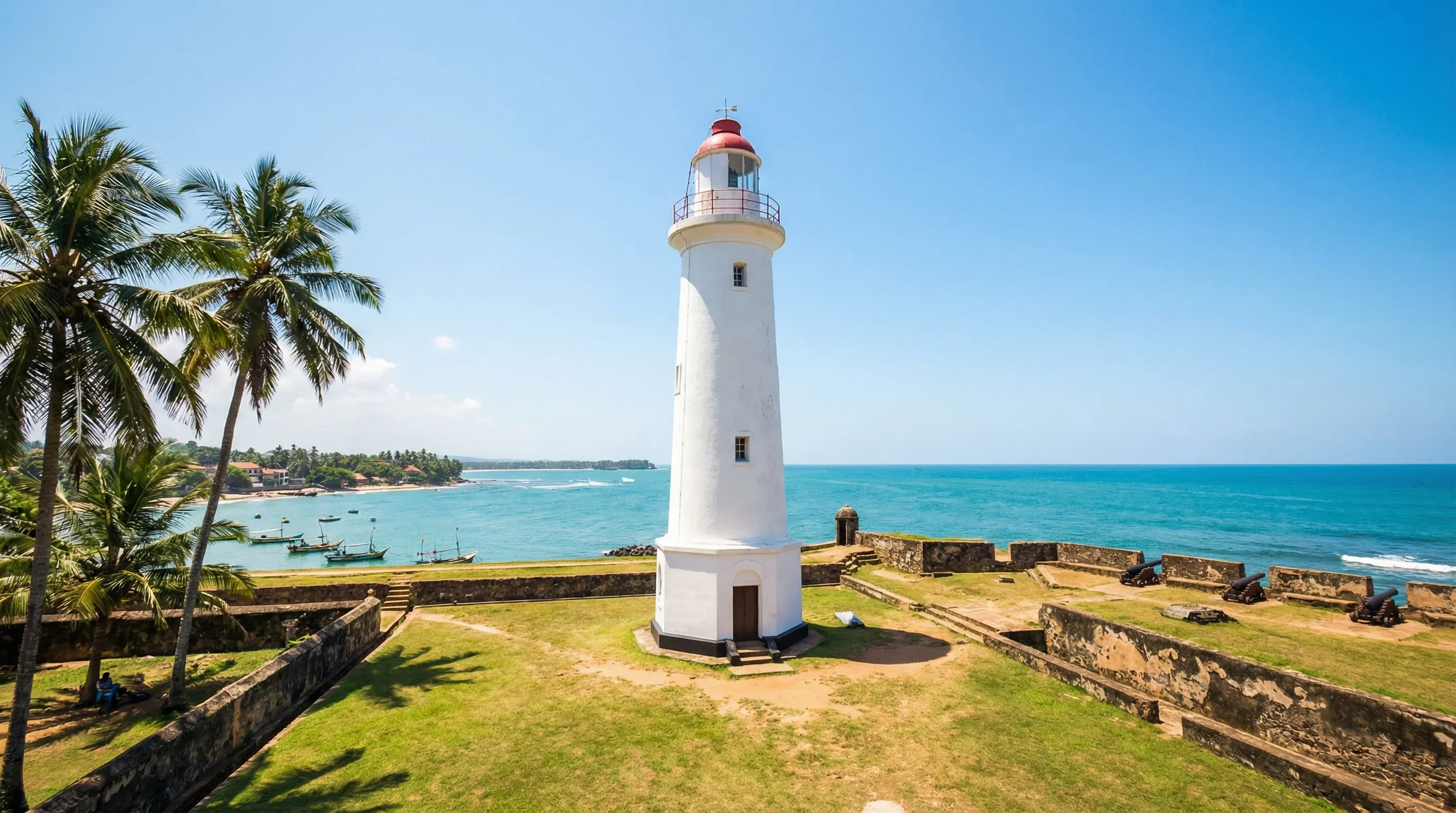

South Coast (Galle, Mirissa)
Colonial charm, turquoise bays, and sea turtles 🐢🏰
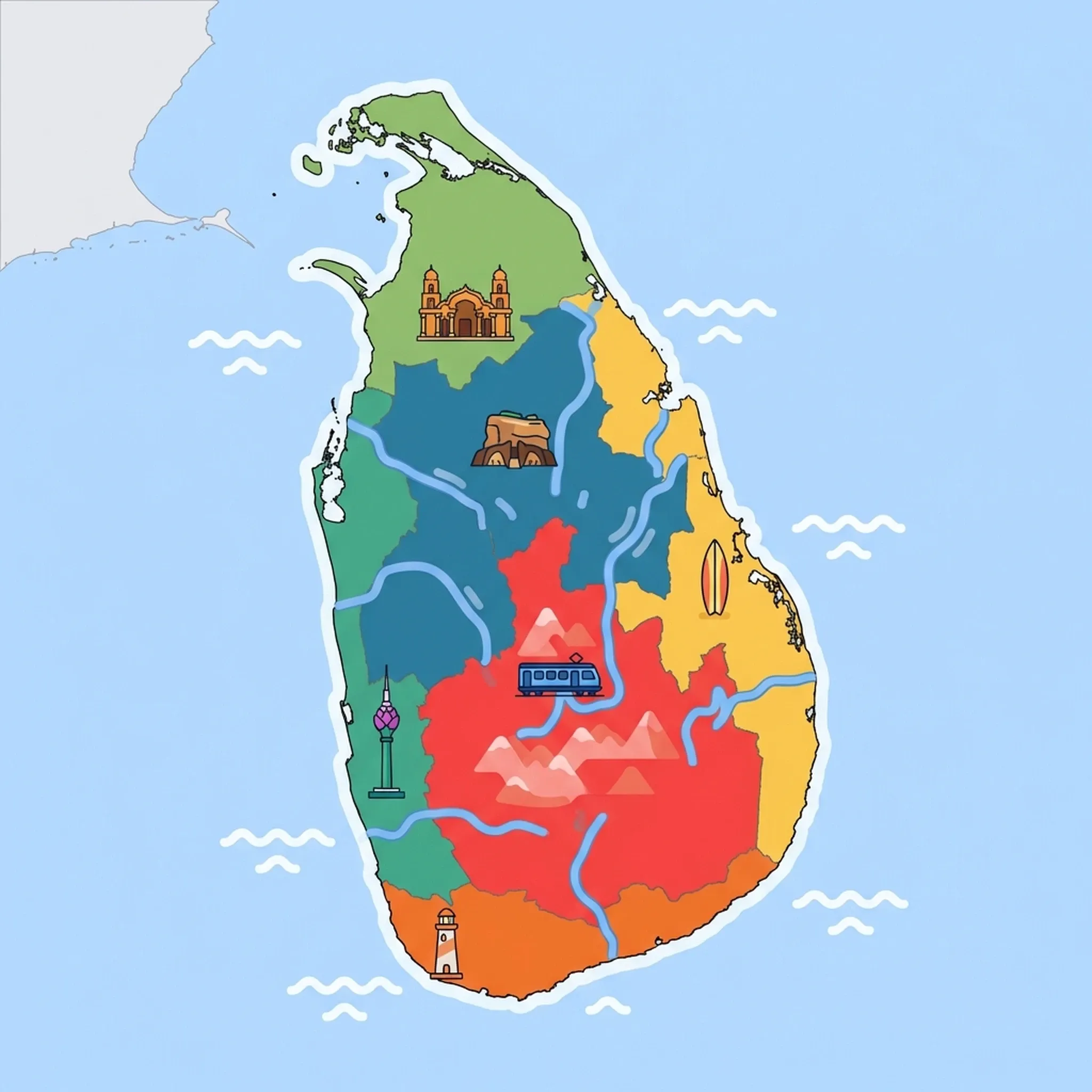
Click a region to explore
The South Coast is arguably the most family-friendly region of Sri Lanka. It offers the perfect mix of infrastructure, activity, and relaxation. The jewel in the crown is Galle Fort, a living UNESCO World Heritage site where 17th-century Dutch colonial buildings now house boutique shops, gelato parlors, and cafes. It is car-free in many parts and enclosed by massive ramparts, making it a safe and fascinating playground for children to explore. In the late afternoon, families gather on the walls to fly kites and watch the sun dip below the Indian Ocean—a daily ritual that defines the magic of Galle.
Beyond the fort, the coastline is a string of beautiful bays. Unawatuna Beach and Dalawella are famous for their calm waters and the 'Frog Rock', while Weligama is the best place in the country for children to learn surfing on gentle sand-bottom breaks. Wildlife is everywhere here: you can visit sea turtle hatcheries (choose ethical ones) to see rehabilitation efforts, or take a boat from Mirissa to see Blue Whales, the largest animals on earth. The vibe is holiday-centric, with plenty of western food options, easy transport, and a wide range of accommodation from beach villas to budget hostels. It is the easiest part of Sri Lanka to travel in with kids, requiring very little compromise on comfort.
Key Attractions
A walk around the Galle Fort ramparts is mandatory. Start near the iconic Galle Lighthouse and walk towards the clock tower. The Maritime Archaeology Museum inside the fort is also worth a visit to show kids artifacts recovered from shipwrecks around the island. Just outside Galle, the beaches are the main draw. Mirissa Beach is the starting point for whale watching tours; seeing a Blue Whale spout water is a life-changing moment for a child, though the boats can be rocky (choose a large boat).
For a calmer beach day, Unawatuna Beach offers plenty of shade and restaurants right on the sand. Nearby, the Mirijjawila Botanical Garden (further east near Hambantota) is a dry-zone garden that offers a starkly different, cactus-filled landscape compared to the hill country gardens, and golf carts are available to drive around, which is fun for little legs.
Practical Advice
The sea can be rough. Always swim between the red/yellow flags. At Mirissa, the waves can be powerful shore-dumps; Unawatuna is generally safer for toddlers. Whale watching season is November to April. Book morning tours as the sea gets rougher by afternoon.
Food & Drink
Typical meal times: Very flexible due to tourism. Lunch 12:00 pm to 3:00 pm. Dinner 6:00 pm to 10:00 pm.
Typical meal costs: Inside Galle Fort, prices are European: LKR 4,000–7,000 (approx. $13–23 USD / €12–21 EUR) per person. Beachside cafes in Mirissa are cheaper: LKR 1,500–2,500 (approx. $5–8 USD / €4.50–7.50 EUR).
Dietary requirements: extremely accommodating. You can find smoothie bowls, gluten-free bread, and vegan burgers easily in Galle, Unawatuna, and Mirissa.
Signature dishes:
- Ambul Thiyal (Sour Fish Curry) – Cubes of tuna cooked in a black pepper and goraka (dried fruit) paste. It is dry, sour, and not too spicy.
- Curd and Treacle – Buffalo curd (like thick greek yogurt) topped with kitul (palm) treacle. The dessert of the south, sold in clay pots.
- Hot Butter Cuttlefish – Battered, deep-fried cuttlefish tossed in butter, chili, and spring onions. A Sri Lankan-Chinese hybrid dish that is universally loved.
Why this score?
Adventure here is generally safe and well-packaged, such as whale watching tours, beginner surf lessons, and visiting turtle hatcheries. While Yala National Park offers more intense wildlife encounters nearby, the coastal strip itself is highly developed and tourist-friendly. It provides a 'soft adventure' experience that is ideal for families but lacks extreme ruggedness.
Why this score?
The region is relatively well-served by regional hospitals in Galle (Karapitiya) and Matara, which are accustomed to treating foreign visitors. There are numerous private clinics and pharmacies catering to the tourist population along the coast from Hikkaduwa to Mirissa. While significantly better than the North or East, complex cases are still usually referred back to Colombo's superior facilities.
Why this score?
This is Sri Lanka's most popular leisure region, boasting the highest concentration of boutique hotels, villas, and international restaurants. Destinations like Galle Fort and Mirissa are globally recognized and attract a high volume of European and Asian tourists. It represents the pinnacle of the country's tourism industry, though it remains a mid-tier destination on a global scale.

The South Coast fits all budgets, but Galle Fort is the most expensive real estate in the country. A boutique hotel inside the fort can cost LKR 75,000–150,000 (approx. $250–500 USD / €230–460 EUR). However, just 10 minutes away in Unawatuna, family rooms can be found for LKR 10,000 ($33 USD).
Family Travel Notice
Review specific requirements for travelling with minors and ensure all family members are enrolled in relevant safety notification programs.

Getting Here & Around
Getting Here
- Driving – The Southern Expressway (E01) connects Colombo to Galle in just 1.5–2 hours, making it a quick and smooth journey.
- Train – The coastal train from Colombo to Galle/Matara runs right along the sea edge. It is scenic but can be crowded.
- Bus – AC Highway buses run frequently from Makumbura (Colombo outer) to Galle and Matara. They are fast, cheap, and comfortable.
Getting Around
- Tuk-Tuk – Everywhere. In Galle Fort, walking is best, but for beach hopping, tuk-tuks are the way to go.
- Scooter Rental – Popular in beach towns, but traffic on the main Galle Road is fast and dangerous. Not recommended for families.
- Walking – Galle Fort is entirely walkable, as are the small beach towns of Mirissa and Unawatuna.
No airports in this region. See the country flight map for nearby connections.
Official Links

Packing List
Coral and sea urchins are common at some surf breaks and shallow reefs.
Flying kites on Galle Fort ramparts is a local tradition and great way for kids to make friends.
Long hours in the water surfing or snorkeling require serious sun protection.
Crucial for whale watching trips; the Indian Ocean swell is significant even on calm days.
You must remove shoes at temples, and the stone floors can be scorching hot or gravelly.
Dengue fever is a risk, so high-strength repellent is essential for the whole family.
Eating with your hands is common, and soap isn't always available at local eateries.
Roads in the hill country are extremely winding and can upset children's stomachs.
White is the respectful colour for temples, and clothes must cover shoulders and knees.
Sri Lanka uses a mix of plug types (D, G, and M), so a versatile adapter is crucial.

Activities & Best Times

Hiking, wildlife, outdoor exploration, ecotourism
A premier destination for marine and terrestrial wildlife, featuring world-renowned blue whale watching in Mirissa and proximity to leopard-dense Yala National Park. Peak wildlife viewing coincides with the dry season when ocean conditions are calmest and animals congregate at waterholes in the parks.

Urban tourism, museums, historical sites, architecture
Galle Fort is a globally unique UNESCO site blending 17th-century colonial Dutch architecture with a vibrant living culture and world-class boutique hospitality. The dry season from December to March offers the best conditions for exploring the historic ramparts and museums without the disruption of heavy monsoon rains.

Sport tourism, fitness activities, active recreation
Offers high-quality active infrastructure including renowned surfing breaks at Mirissa and Weligama, alongside well-maintained nature trails through the Rumassala Sanctuary. The sports season is strictly defined by the swell conditions, with the best surfing and hiking conditions found during the drier winter months.

Beach resorts, marine activities: diving, snorkelling, kite surfing, wind surfing, sailing
Features picturesque sandy bays like Unawatuna and Mirissa that offer authentic coastal experiences for families. While beautiful, swimming is highly seasonal; the southwest monsoon from May to September creates dangerous currents and rough surf, making it unsuitable for beach recreation.

Learning experiences, scientific sites, historical education
Provides destination-level educational sites including the Maritime Archaeology Museum and internationally significant sea turtle conservation centers. These facilities offer high-quality learning engagement for children, remaining accessible most of the year except during the peak rainfall of the inter-monsoon season.

Scenic drives, countryside tours, route-based travel
The Southern Coastal Scenic Road (A2) and the safari corridors offer spectacular driving routes with a mix of ocean views and jungle transitions. Road conditions are best during the high visibility months, whereas heavy rains in October and November can lead to local flooding and hazardous driving conditions.

Events, celebrations, seasonal attractions
Anchored by the internationally acclaimed Galle Literary Festival and the seasonal blue whale migration. These specific windows in the first quarter of the year offer high-quality cultural and natural events, but the region lacks a dense year-round festival calendar for global tourists.

Spa retreats, wellness centers, peaceful getaways
While boutique resorts offer high-end spa services, dedicated wellness infrastructure is sparse beyond the Madunagala Hot Springs. It provides a restorative backdrop for a holiday rather than being a dedicated wellness destination on par with global benchmarks like Bali or Kerala.

Amusement parks, family entertainment venues
Entertainment options are limited to regional agro-technology parks and local leisure parks which lack the scale and immersive quality of international-tier theme parks. These serve as supplementary activities rather than primary travel motivators for sophisticated international families.

Attractions (14 total)



Public Holidays & Calendar Next 12 months
Public holidays, festivals, cultural celebrations, and seasonal natural phenomena coming up in South Coast (Galle, Mirissa) over the next 12 months.
Loading holidays and events...

Travel Advisory
All major agencies recommend exercising increased caution or a high degree of vigilance. Primary concerns include civil unrest, the threat of terrorism, and localized safety risks.
Safety Topics
Traveller Advice (4 groups)

Ensure you have an Electronic Travel Authorization (ETA) before arrival and maintain situational awareness during festivals or near political gatherings.

Female travellers should be aware of reports of verbal and physical harassment, particularly on public buses and in crowded areas. It is recommended to dress conservatively and avoid travelling alone at night.

Same-sex sexual activity is technically criminalized under colonial-era laws, and while rarely prosecuted, LGBTQ+ individuals may face social stigma and discrimination.

Review specific requirements for travelling with minors and ensure all family members are enrolled in relevant safety notification programs.
Agency Summaries
While no nationwide travel ban is in place, visitors are warned of a heightened threat of terrorism and likely demonstrations. Staying alert in public spaces and monitoring local news is strongly advised.
Increased caution is recommended because of civil unrest, the risk of terrorism, and potential landmine hazards in specific northern regions. Demonstrations can occur unexpectedly and disrupt essential services.
A high level of caution is necessary due to the threat of public protests and ongoing security risks. Terrorist attacks remain a possibility, potentially targeting areas frequented by foreigners.
The country has stabilized but significant security concerns remain, including the risk of terrorism and civil unrest. Economic issues continue to cause sporadic shortages of some basic goods.
Vigilance is required regarding personal security and local political developments. Visitors should ensure they have proper electronic travel authorizations and remain aware of local safety conditions.
Travellers should remain highly vigilant due to frequent public demonstrations, a persistent threat of terrorist activity, and general crime. Particular care is advised in remote areas where landmines may still exist.
Information is provided for general guidance only and does not constitute travel, safety, medical, or legal advice. Conditions may change. Users are responsible for independently verifying information before travel.