
Darfur Highlands (Central Darfur State)
Volcanic peaks and ancient traditions in the west 🌋
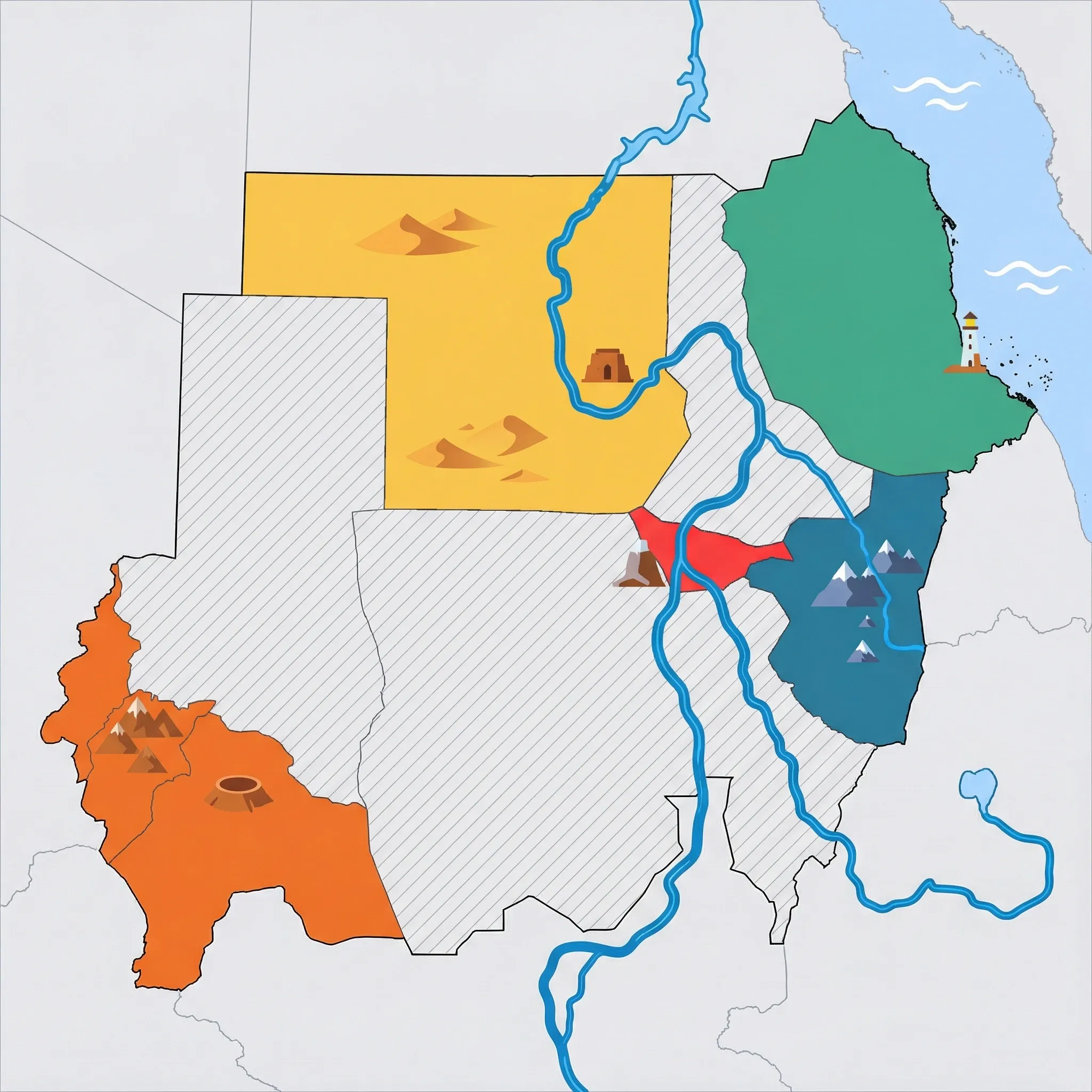
Click a region to explore
⚠️ SAFETY WARNING: Due to severe armed conflict, ethnic violence, and a catastrophic humanitarian situation, government agencies (including CA, USA, UK, AU, IE, NZ) advise travelers to avoid all travel to the Darfur region. The area is experiencing active warfare with no functioning security or tourism services. Families are strongly urged to consult their own government's official travel advisory before considering any movement in this area, as the risk to life is extreme.
Overview
The Darfur Highlands, specifically Central Darfur and the Jebel Marra massif, represent one of the most geographically distinct regions in Sudan. Rising sharply from the surrounding Sahelian plains, this area enjoys a milder, Mediterranean-like climate that allows for the cultivation of apples, strawberries, and citrus fruits—a stark contrast to the arid deserts of the north. The landscape is dominated by extinct volcanic peaks, deep gorges, and cascading waterfalls that flow after the rainy season. For the local Fur people, the mountains are not just a geographical feature but a spiritual and agricultural heartland. The terraced farming on the slopes of the mountains demonstrates centuries of adaptation to this unique environment.
Culturally, the region is a tapestry of African and Arab influences, though it retains a distinct identity centered on the Fur sultanate's history. Traditional villages with conical thatched roofs (tukuls) dot the hillsides, and the weekly markets (souqs) were historically vibrant hubs of trade for leather, spices, and the region's famous woven baskets. While the current conflict has devastated much of the infrastructure, the natural grandeur of the highlands remains undeniable. The region's isolation has preserved a way of life that is deeply connected to the seasons and the soil, offering a glimpse into a side of Sudan that is lush, mountainous, and dramatically different from the Nile Valley.
Key Attractions
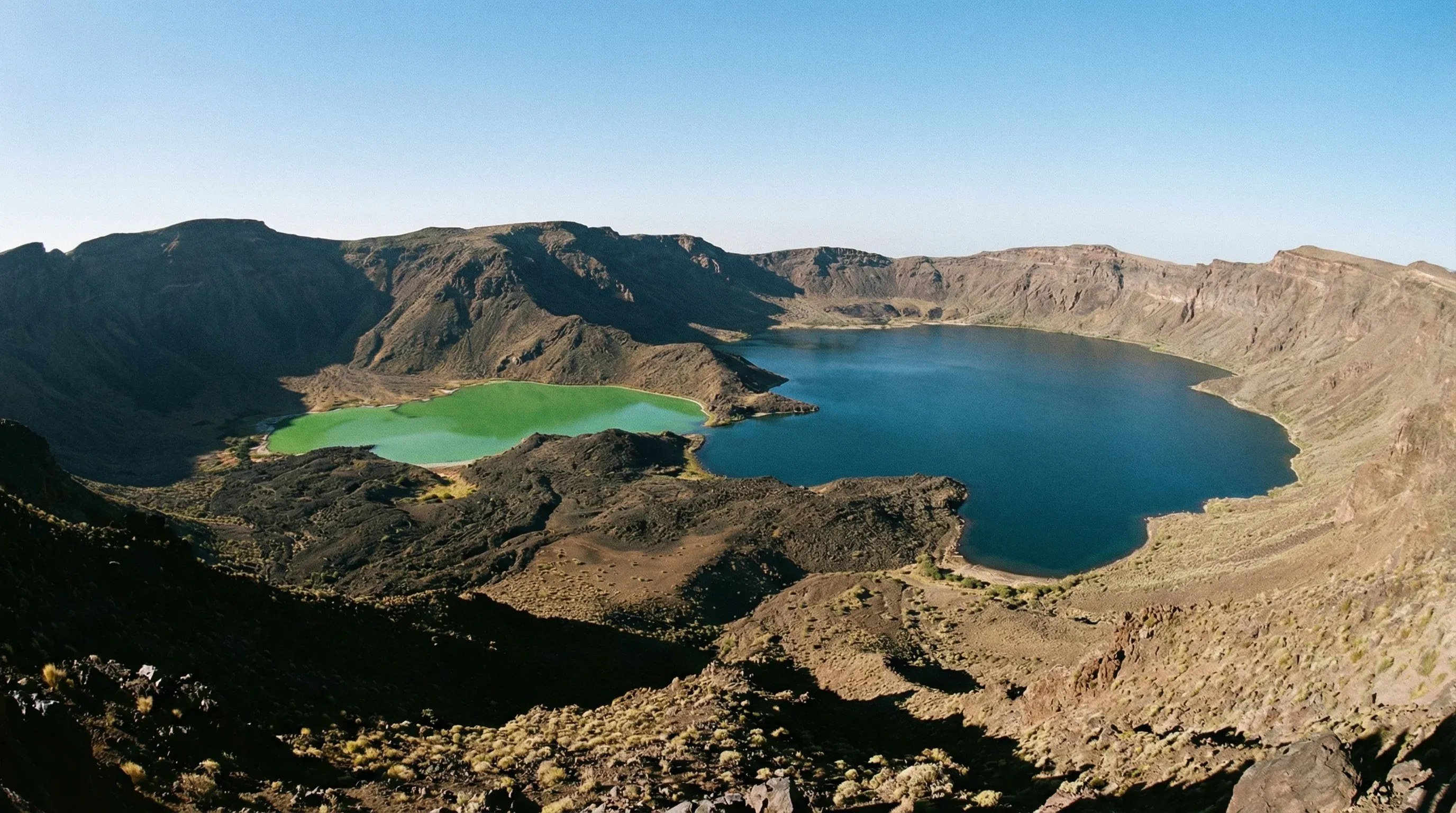
The crown jewel of the region is the Deriba Caldera, located at the highest point of the Jebel Marra range. This massive volcanic crater contains two lakes: a saline green lake and a freshwater lake, separated by a lava ridge. It is a geological marvel that, in times of peace, served as a premier trekking destination. The hike to the rim offers panoramic views that stretch for miles across the savannah, providing a sense of scale and isolation that is hard to find elsewhere. The caldera is dormant, but hot springs in the surrounding valleys hint at the geothermal activity beneath the surface.
Practical Advice
Best time to visit: Historically, the dry season from November to February offered the best conditions for trekking, with cool days and cold nights. The rainy season (June to September) turns the wadis into impassable rivers.
Logistics: Infrastructure is currently non-existent for tourism. Travel historically required 4WD convoys and local permits.
Food & Drink
Typical meal times: Breakfast is eaten early, around 7:00 am to 9:00 am. Lunch is the main meal, served between 1:00 pm and 3:00 pm. Dinner is lighter and eaten late, from 8:00 pm to 10:00 pm.
Typical meal costs: Prices are highly volatile due to scarcity. A basic local meal may cost SDG 6,000–9,000 (approx. $10–15 USD / €9–14 EUR).
Dietary requirements: The diet is heavily based on millet and sorghum. Vegetarian options are the norm due to the cost of meat, but vegan travelers should ask if ghee (clarified butter) is used in stews.
Signature dishes:
- Asida – A thick porridge made from sorghum or millet, served as a staple base for various stews and sauces, eaten with the right hand.
- Mulah – A savory stew made from dried meat, onions, and okra or dried cowpea leaves, commonly poured over Asida.
- Jebel Marra Honey – Not a meal, but a famous regional product; the mountain honey here is dark, rich, and prized across Sudan.
Why this score?
The Jebel Marra massif is extreme expedition territory featuring volcanic calderas and rugged peaks in a highly unstable environment. Navigating this terrain requires specialized logistics and involves significant physical and security challenges.
Why this score?
Medical infrastructure in Central Darfur is minimal and primarily focused on basic humanitarian aid rather than clinical services for travelers. There are almost no facilities capable of handling complex emergencies or providing English-speaking staff for tourists.
Why this score?
Due to decades of severe conflict and ongoing humanitarian crises, the region has virtually no international tourism. While Jebel Marra is a stunning geographical feature, it is currently inaccessible and off-limits to almost all foreign travelers.

Due to the collapse of the local economy and supply chains, prices for available goods are inflated. Historically a cheap region, scarcity now drives costs up. Basic supplies can be expensive. A bag of sorghum might cost SDG 15,000–20,000 (approx. $25–33 USD / €23–30 EUR). Cash is king, as banking systems are non-functional.

Getting Here & Around
Getting Here
- Airports – The nearest major airstrips are in El Geneina or Nyala, though commercial flights are currently suspended or irregular due to the conflict.
- Driving – Historically accessed via long-distance desert tracks from Khartoum (24+ hours). The route is currently extremely hazardous due to banditry and militia checkpoints.
Getting Around
- Car – 4WD vehicles are the only viable option for navigating the rugged terrain leading to Deriba Caldera. Roads are unpaved and often washed out.
- Walking – Within villages and specific mountain sites, walking is the primary mode of transport, though guides are essential for safety and navigation.
No airports in this region. See the country flight map for nearby connections.

Packing List
Clean water sources are scarce and infrastructure is damaged.
Mobile networks are frequently down or non-existent in the highlands.
Electricity is unavailable in most rural areas and towns.
Essential for protection against dust storms and strong mountain sun.
ATMs and cards do not work; notes must be post-2013 and unblemished to be exchanged.
Electricity cuts are frequent and can last for many hours or days.
Street lighting is non-existent in many areas and power outages are common.
Essential protection against sandstorms and dust, especially in the northern deserts.
Clean bottled water can be scarce in remote areas; tap water is generally unsafe.

Activities & Best Times

Hiking, wildlife, outdoor exploration, ecotourism
Features the unique Jebel Marra volcanic massif and Deriba Crater lakes, offering rare high-altitude trekking in the Sahel. Peak visiting occurs during the cooler dry season when mountain trails are accessible; the monsoon rains from June to September make the terrain difficult and hazardous.

Urban tourism, museums, historical sites, architecture
Home to iconic landmarks like Nierteti Falls and the Deriba Caldera, which hold deep cultural significance for the local Fur people. Tourism is restricted to the dry months to ensure safe passage to these remote highland sites, though infrastructure remains significantly underdeveloped for international family standards.



Public Holidays & Calendar Next 12 months
Public holidays, festivals, cultural celebrations, and seasonal natural phenomena coming up in Darfur Highlands (Central Darfur State) over the next 12 months.
Loading holidays and events...

Travel Advisory
All monitored agencies have issued their highest level of warning, advising against all travel due to extreme safety risks including active military conflict and severe civil instability.
Safety Topics
Traveller Advice (4 groups)

Personnel working for international aid organizations are being specifically targeted for violence and kidnapping; extreme caution and professional security coordination are mandatory.

There are disturbing reports of gender-based and sexual violence occurring within the context of the active military conflict.

Media professionals face a significant threat of detention, harassment, and arrest by various armed groups who view them as high-value targets.

Anyone currently in the country should consider immediate departure via safe commercial routes while they are still accessible. Individuals remaining should maintain an extensive supply of food, water, and essential medicine for prolonged periods of sheltering in place.
Agency Summaries
The Canadian government advises against any travel to the country due to the ongoing and violent military conflict, widespread civil disturbances, and a highly unstable safety environment.
New Zealanders are warned to completely avoid travel because of the high threat posed by armed conflict, kidnapping risks, and the near-total lack of official assistance.
U.S. authorities warn against all travel for any purpose because of extreme dangers including armed warfare, violent crime, kidnapping, terrorism, and significant health risks.
Irish citizens are directed not to travel to the country at this time, as the security environment is considered extremely volatile due to active military clashes and violence.
British officials strictly advise against visiting any part of the nation because of the hazardous military situation and the lack of diplomatic support available to citizens.
Australia urges its citizens to avoid all travel to the region, citing an extremely dangerous security climate characterized by armed hostilities and a high likelihood of civil unrest.
Information is provided for general guidance only and does not constitute travel, safety, medical, or legal advice. Conditions may change. Users are responsible for independently verifying information before travel.