
Eastern Sudan Highlands (Kassala State, Gedaref State)
Granite peaks and coffee culture on the border ☕
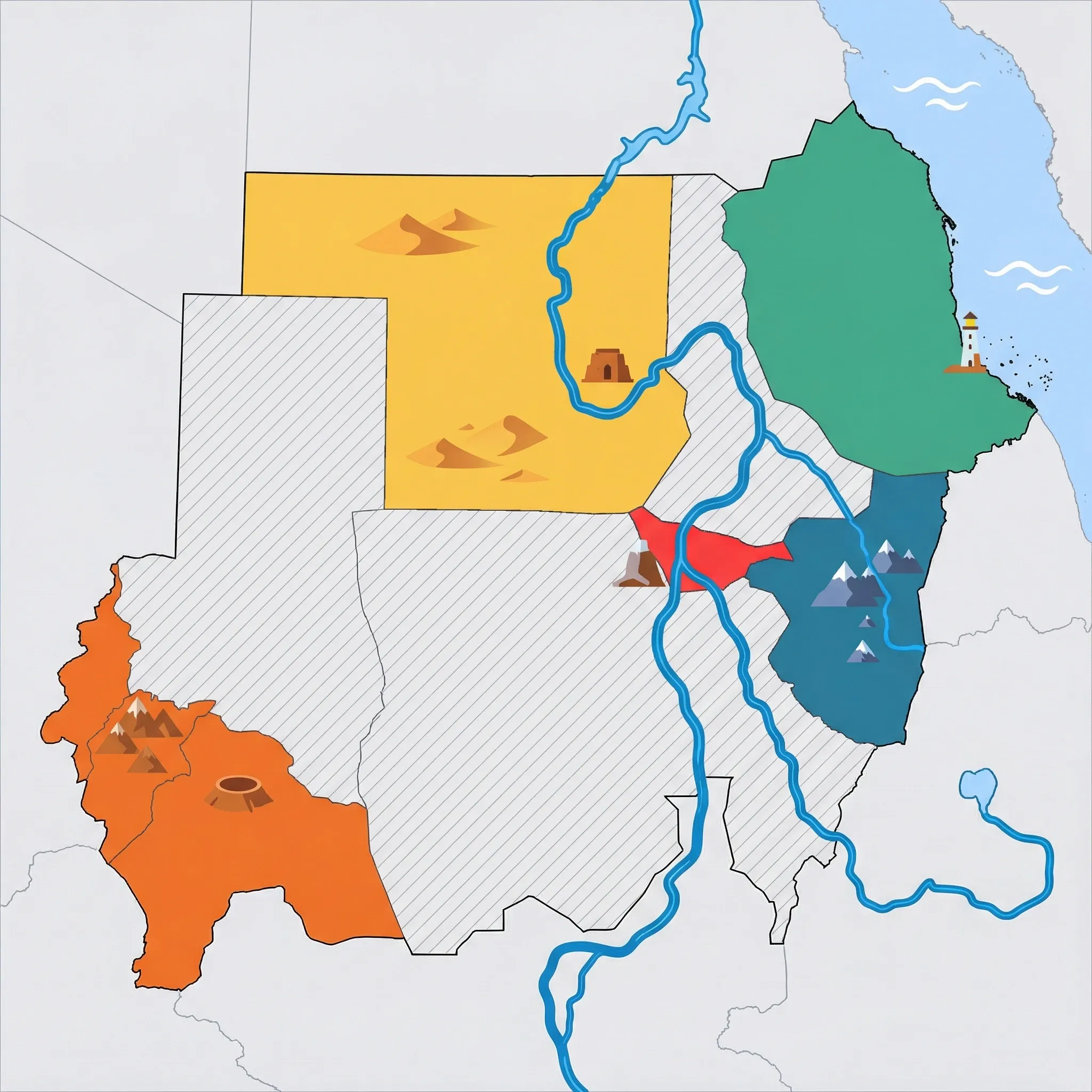
Click a region to explore
⚠️ SAFETY WARNING: Due to the ongoing national crisis, strained resources, and unpredictable security near the border regions, government agencies (including CA, USA, UK, AU, IE, NZ) advise travelers to avoid all travel to Eastern Sudan. While less affected by direct urban combat than Khartoum, the region hosts large displaced populations and security services are overwhelmed. Families should consult their government's official travel advisory.
Overview
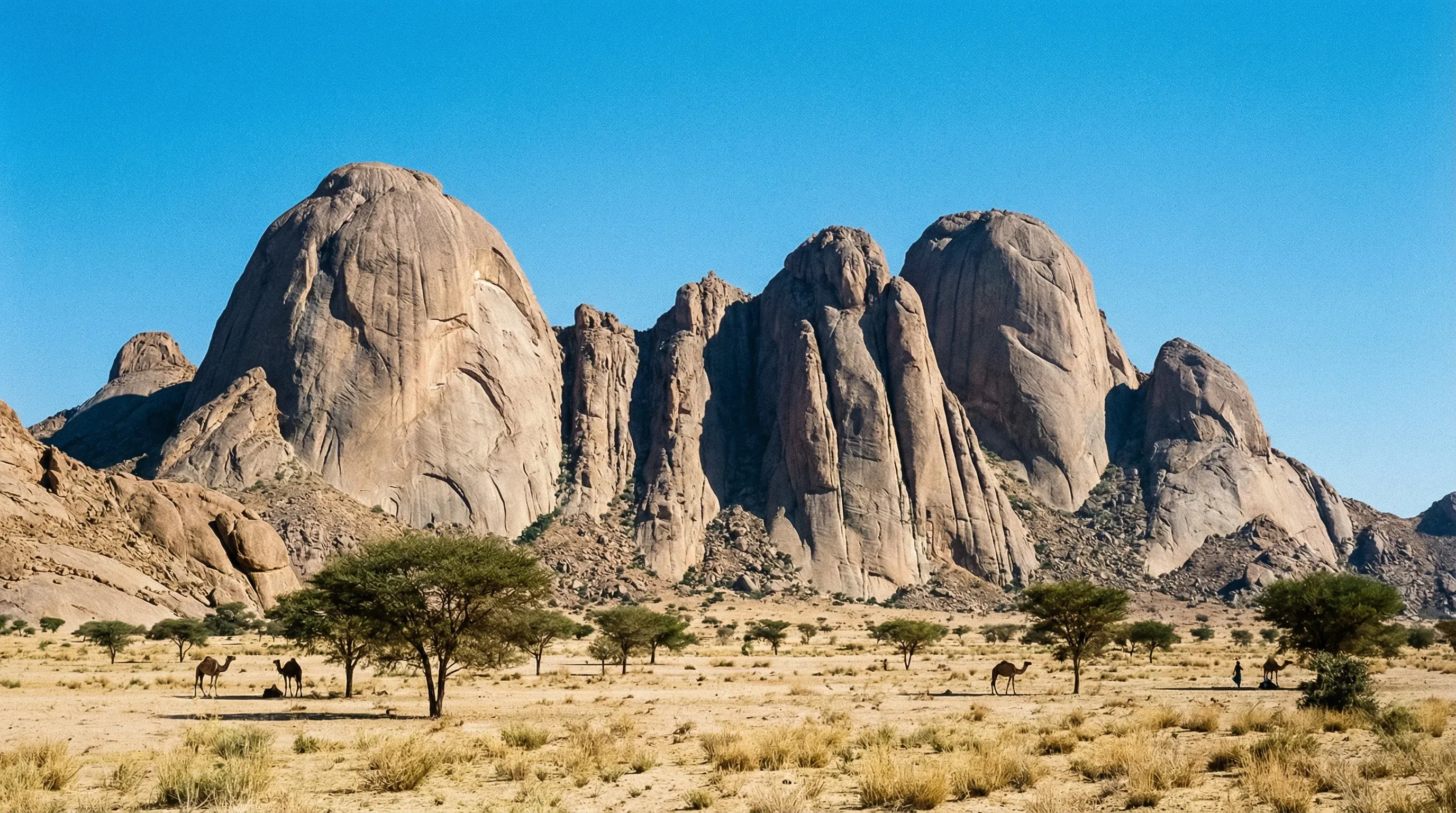
Eastern Sudan offers a landscape that is visually striking and culturally distinct. The city of Kassala is the jewel of the region, sitting at the foot of the Taka Mountains—bizarre, rounded granite domes that look like they have been dropped from the sky onto the flat desert floor. These mountains, particularly Totil and Taka, are popular spots for locals to gather, drink coffee, and watch the sunset turn the rocks a deep shade of orange. The region is a melting pot of the Beja, Rashaida, and other ethnic groups, creating a vibrant atmosphere filled with colorful clothing, sword dances, and a strong tradition of hospitality. The Gash River, which flows seasonally, feeds the lush fruit orchards that surround the city, known for producing some of the best mangoes and bananas in the country.
To the south lies Gedaref, known as the granary of Sudan, where vast fields of sorghum and sesame stretch to the horizon. This area serves as the transition zone between the arid north and the lush Ethiopian highlands. The culture here is heavily influenced by the coffee ceremony (Jebena), a ritual that is central to social life. Families visiting this region (in safer times) would find a slower pace of life, deeply rooted in Sufi traditions and pastoralism. The proximity to the Eritrean border adds a unique flair to the food, music, and architecture, making it feel distinct from the Nile Valley.
Key Attractions
While the city life and mountains are the main draw in Kassala, the region is also the northern jumping-off point for Dinder National Park. Although Dinder is geographically centered in Sennar/Blue Nile states, tours historically organized from the Gedaref side allow access to this massive biosphere reserve. It is one of the largest parks in Africa, home to lions, leopards, kudus, and baboons, offering a raw safari experience very different from East Africa's commercialized parks. Within Kassala itself, the Khatmiya Mosque at the base of the mountains is a must-see ruin, blending mud-brick architecture with the natural rock face.
Practical Advice
Best time to visit: The coolest months are November to February. Avoid the rainy season (July-September) when flash floods (khors) can cut off roads.
Logistics: Kassala is a major hub with bus connections, but the border areas are strictly controlled. Travelers must carry multiple copies of permits.
Food & Drink
Typical meal times: Breakfast 8:00 am to 10:00 am; Lunch 2:00 pm to 4:00 pm; Dinner 8:30 pm to 10:30 pm.
Typical meal costs: A meal in a market area costs SDG 4,500–7,500 (approx. $7.50–12.50 USD / €7–11.50 EUR).
Dietary requirements: Vegetarian options are easy to find (lentils, beans). The coffee culture is significant, and tea is often served very sweet.
Signature dishes:
- Agashe – Spicy grilled meat (usually chicken or beef) coated in peanut powder and spices, a favorite street food influenced by West African pilgrims.
- Sajeer – A slow-cooked meat dish, often prepared for guests or special occasions.
- Jebena – Not a food, but the traditional coffee ceremony. Green beans are roasted over charcoal, ground with ginger, and brewed in a clay pot (jebena).
Why this score?
The Taka Mountains offer notable hiking and granite climbing opportunities for the intrepid traveler, while Dinder National Park represents a vast, remote wilderness. The lack of paved roads in many areas and the ruggedness of the granite peaks provide a solid adventure profile.
Why this score?
Medical services are limited to basic hospitals in Kassala and Gedaref that struggle with supply shortages and lack specialized equipment. Foreigners would likely require evacuation to Khartoum or abroad for anything beyond minor ailments.
Why this score?
This region sees very few international visitors, with most arrivals being regional travelers from Ethiopia or Eritrea. Attractions like Jebel Taka are locally iconic but lack the infrastructure to draw significant global tourism.

Eastern Sudan is generally cheaper than the capital or the coast. Accommodation is basic but affordable. A simple guesthouse room costs SDG 12,000–18,000 (approx. $20–30 USD / €18–27 EUR) per night. Street food and coffee are very inexpensive, with a cup of coffee costing less than SDG 600 (approx. $1 USD / €0.90 EUR). Cash is essential.

Getting Here & Around
Getting Here
- Bus – Long-distance coaches connect the region with Port Sudan. The journey is long (6-8 hours) but scenic as it skirts the Red Sea Hills.
- Driving – The road from Port Sudan to Kassala is paved and generally in fair condition, though checkpoints are frequent. Accessing Dinder National Park requires a sturdy 4WD and a driver who knows the seasonal tracks.
Getting Around
- Rickshaw (Bajaj) – The most common way to navigate Kassala city. They are cheap, plentiful, and children usually enjoy the open-air ride.
- Walking – The area around the Taka Mountains is best explored on foot to scramble up the lower rocks for views.
No airports in this region. See the country flight map for nearby connections.

Packing List
Power cuts are frequent and street lighting is minimal in towns.
Frequent removal required for entering homes, mosques, and coffee mats.
The harmattan winds can whip up significant dust in the dry season.
Malaria is a risk and budget accommodation may not provide intact nets.
ATMs and cards do not work; notes must be post-2013 and unblemished to be exchanged.
Electricity cuts are frequent and can last for many hours or days.
Street lighting is non-existent in many areas and power outages are common.
Essential protection against sandstorms and dust, especially in the northern deserts.
Clean bottled water can be scarce in remote areas; tap water is generally unsafe.

Activities & Best Times

Hiking, wildlife, outdoor exploration, ecotourism
The Taka Mountains (Jebel Kassala) offer iconic, jagged granite peaks that provide a visually stunning and authentic wilderness experience for adventurous families. Peak visitation occurs during the cooler winter months, while the monsoon season (July-September) offers a unique greening of the desert landscape despite higher humidity.

Urban tourism, museums, historical sites, architecture
While Khatmiyya Mosque is architecturally unique and the traditional markets are vibrant, a single distinctive mosque and souqs do not meet the threshold for 'very_good' (internationally outstanding cultural density). This represents nationally significant but not globally exceptional cultural offerings. Downgrade to 'good' for international calibration consistency.

Scenic drives, countryside tours, route-based travel
The scenic drive between Gedaref and Kassala highlights the dramatic transition from agricultural plains to the sudden rise of the Eastern Highlands. While the views are noteworthy, international travelers should be prepared for basic road infrastructure and limited services outside major towns.

Sport tourism, fitness activities, active recreation
Challenging hiking and scrambling routes on Jebel Kassala and Jebel Totil provide rugged physical activity for fit families. These routes are best tackled in the winter; they are dangerously hot in the spring and becomes treacherous during the summer rains when granite surfaces are slippery.




Public Holidays & Calendar Next 12 months
Public holidays, festivals, cultural celebrations, and seasonal natural phenomena coming up in Eastern Sudan Highlands (Kassala State, Gedaref State) over the next 12 months.
Loading holidays and events...

Travel Advisory
All monitored agencies have issued their highest level of warning, advising against all travel due to extreme safety risks including active military conflict and severe civil instability.
Safety Topics
Traveller Advice (4 groups)

Personnel working for international aid organizations are being specifically targeted for violence and kidnapping; extreme caution and professional security coordination are mandatory.

There are disturbing reports of gender-based and sexual violence occurring within the context of the active military conflict.

Media professionals face a significant threat of detention, harassment, and arrest by various armed groups who view them as high-value targets.

Anyone currently in the country should consider immediate departure via safe commercial routes while they are still accessible. Individuals remaining should maintain an extensive supply of food, water, and essential medicine for prolonged periods of sheltering in place.
Agency Summaries
The Canadian government advises against any travel to the country due to the ongoing and violent military conflict, widespread civil disturbances, and a highly unstable safety environment.
New Zealanders are warned to completely avoid travel because of the high threat posed by armed conflict, kidnapping risks, and the near-total lack of official assistance.
U.S. authorities warn against all travel for any purpose because of extreme dangers including armed warfare, violent crime, kidnapping, terrorism, and significant health risks.
Irish citizens are directed not to travel to the country at this time, as the security environment is considered extremely volatile due to active military clashes and violence.
British officials strictly advise against visiting any part of the nation because of the hazardous military situation and the lack of diplomatic support available to citizens.
Australia urges its citizens to avoid all travel to the region, citing an extremely dangerous security climate characterized by armed hostilities and a high likelihood of civil unrest.
Information is provided for general guidance only and does not constitute travel, safety, medical, or legal advice. Conditions may change. Users are responsible for independently verifying information before travel.