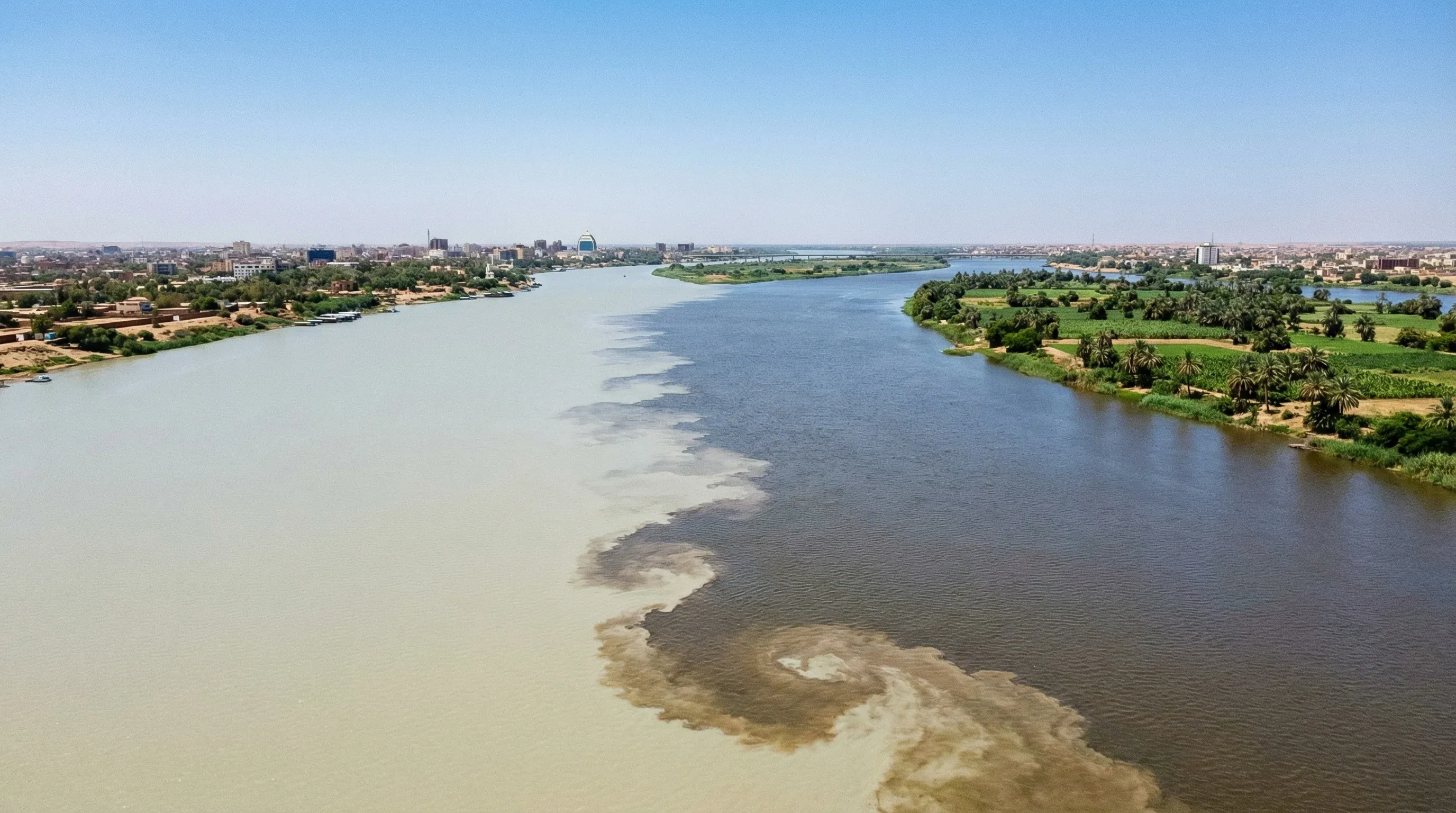

Khartoum & Confluence (Khartoum State)
Where the two Niles meet 🌊
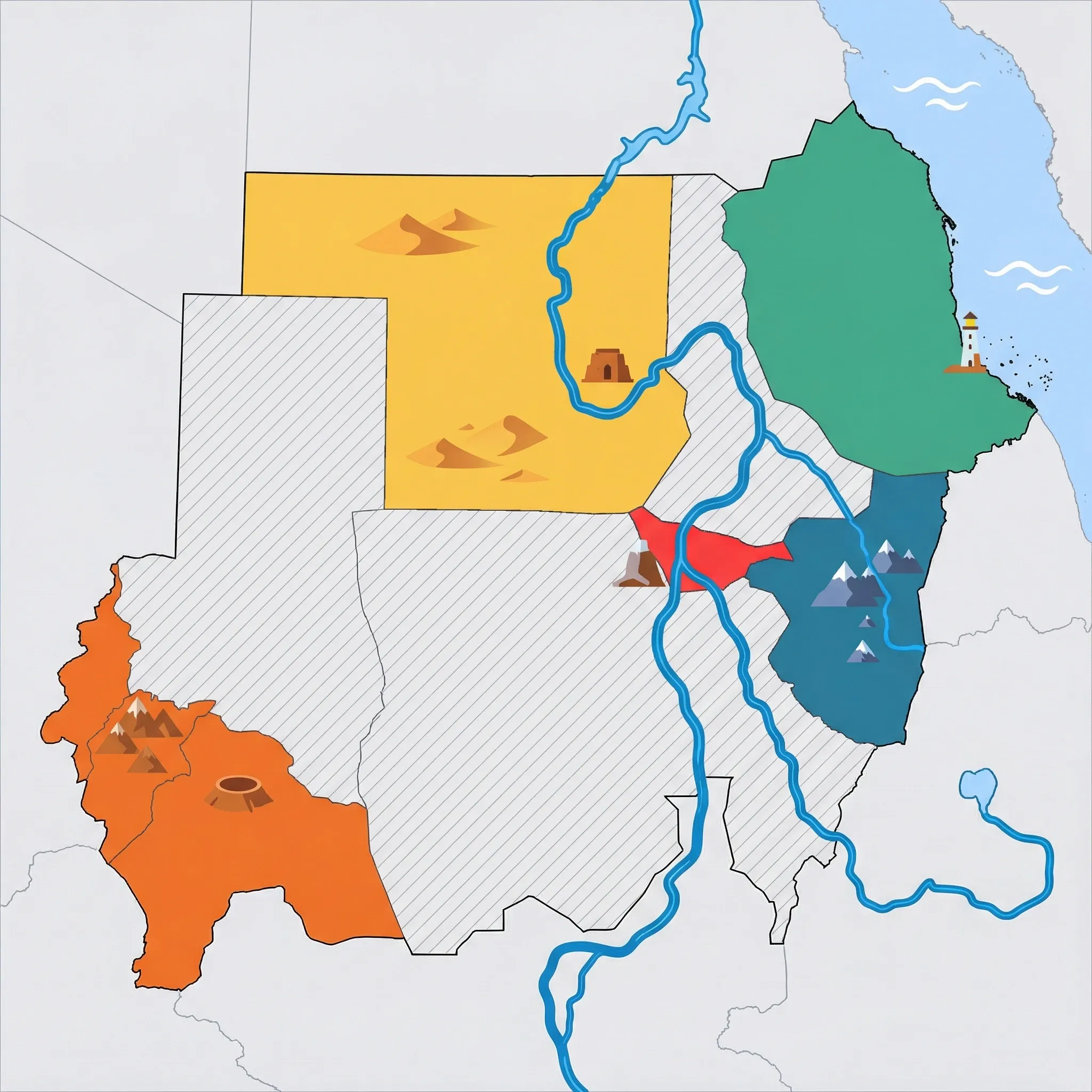
Click a region to explore
⚠️ SAFETY WARNING: Due to intense urban warfare, artillery strikes, and a total breakdown of law and order, government agencies (including CA, USA, UK, AU, IE, NZ) advise travelers to avoid all travel to Khartoum. The capital has been the epicenter of conflict since April 2023. Infrastructure is heavily damaged, the airport is closed to commercial traffic, and there are no emergency services. Families must not travel to this region.
Overview
Khartoum was historically the beating heart of Sudan, a tri-city metropolis built around the convergence of two great rivers. The city comprises three distinct sections: Khartoum (the administrative center), Omdurman (the historic and cultural soul), and Bahri (the industrial north). The most defining feature is undoubtedly The Nile Confluence (Al-Mogran). Standing on the bridge or the point of land at Al-Mogran, visitors can witness the physical merging of the White Nile, carrying pale clay sediments from Lake Victoria, and the dark, silt-heavy Blue Nile from the Ethiopian highlands. It is a powerful symbol of connection in a land often defined by its geography.
Omdurman, across the river, offers a glimpse into traditional Sudanese life. It is a city of low-rise mud-brick buildings, bustling souqs, and Sufi mysticism. On Friday evenings (pre-war), the Hamed al-Nil Tomb would erupt in the rhythmic chanting and swirling green robes of the Dervishes, a spectacle of movement and devotion that mesmerized adults and children alike. The Omdurman Souq is the largest in the country, a labyrinth of alleys selling everything from ebony carvings to spices and gold. While the modern center of Khartoum featured high-rises and colonial architecture, the soul of the region has always been on the banks of the Nile, where tea ladies set up plastic chairs and families gather to catch the cooling river breeze.
Key Attractions
Beyond the city limits, the Sabaloka Gorge (the Sixth Cataract) is a favorite weekend escape. Here, the Nile forces its way through a narrow rocky passage, creating rapids and deep pools. It is a popular spot for boat rides and picnics, offering a rugged natural contrast to the flat plains of the capital. Within the city, seeing The Nile Confluence (Al-Mogran) remains the primary bucket-list experience, often combined with a visit to the botanical gardens nearby (though currently inaccessible).
Practical Advice
Best time to visit: Winter (November to February) is pleasant with highs around 30°C. Summer (April to June) is dangerously hot, often exceeding 45°C.
Logistics: The city is currently a combat zone. Pre-war, taxis and the 'Amjad' (minivans) were the main transport. Now, movement is restricted.
Food & Drink
Typical meal times: Lunch is late, 2:00 pm to 4:00 pm. Dinner is a social affair, often eaten after 9:00 pm.
Typical meal costs: Inflation is severe. A meal might cost SDG 9,000–15,000 (approx. $15–25 USD / €14–23 EUR) depending on availability.
Dietary requirements: Broad bean dishes (ful) are ubiquitous and vegan-friendly. Gluten-free travelers might struggle with the reliance on bread (eish).
Signature dishes:
- Ful Medames – The national dish of fava beans stewed with oil, cumin, and sometimes cheese, eaten with bread for breakfast or dinner.
- Kisra – A thin, fermented sorghum crepe that serves as both food and utensil, used to scoop up stews.
- Tamiyah – Sudanese falafel made from chickpeas or black-eyed peas, often larger and crispier than Middle Eastern varieties.
Why this score?
The region is almost entirely urbanized, with activities centered on markets, museums, and riverfront walks. While Sabaloka Gorge offers a minor outdoor escape, the environment is mostly developed and low-impact for families.
Why this score?
Khartoum hosts the country's best private clinics and hospitals, some of which have experience treating expatriates and foreign visitors. However, services are currently severely strained by political instability and lack the world-class standards found in major global hubs.
Why this score?
As the national capital and primary transport hub, Khartoum receives the majority of Sudan's international visitors, including business travelers and diplomats. While it features the Nile confluence and historic markets, it remains a niche destination compared to major African capitals.

Khartoum is the most expensive region in Sudan due to the concentration of wealth and now, war-economy inflation. Rent and imported goods are priced at a premium. A mid-range hotel night (pre-war) would cost SDG 30,000–45,000 (approx. $50–75 USD / €45–70 EUR). Transport costs are currently extremely high due to fuel shortages.

Getting Here & Around
Getting Here
- Airports – Khartoum International Airport (KRT) is the country's main hub, but it is currently closed to commercial traffic due to the conflict.
- Bus – Major highways connect Khartoum to the north (Dongola) and the coast (Port Sudan), though roadblocks make travel perilous.
Getting Around
- Car – Essential for visiting the Sabaloka Gorge, which is about an hour's drive north of the city.
- Boat – River taxis and feluccas (traditional sailboats) were the most scenic way to view The Nile Confluence (Al-Mogran) from the water.
No airports in this region. See the country flight map for nearby connections.

Packing List
Hotel sinks rarely have plugs; useful for washing clothes or kids' items.
The dry heat and desert wind cause chapped lips very quickly.
Mobile data is unreliable and GPS signals can be jammed.
Dust is omnipresent; essential for cleaning hands before eating street food.
ATMs and cards do not work; notes must be post-2013 and unblemished to be exchanged.
Electricity cuts are frequent and can last for many hours or days.
Street lighting is non-existent in many areas and power outages are common.
Essential protection against sandstorms and dust, especially in the northern deserts.
Clean bottled water can be scarce in remote areas; tap water is generally unsafe.

Activities & Best Times

Hiking, wildlife, outdoor exploration, ecotourism
The unique confluence of the Blue and White Niles and the traditional agricultural life of Tuti Island offer authentic riverine exploration. Winter months provide the only comfortable window for exploration, as the summer brings extreme Saharan heat and seasonal dust storms.

Scenic drives, countryside tours, route-based travel
Khartoum is the gateway for the iconic desert drive to the Pyramids of Meroë and features the scenic Sharia Al-Nil corniche. Peak season avoids the dangerous heat of the desert summer and the limited visibility caused by Haboob dust storms.

Sport tourism, fitness activities, active recreation
The historic Blue Nile Sailing Club provides a unique, though basic, venue for river-based recreation in a desert environment. Activity is strictly seasonal, as outdoor exertion is physically taxing during the intense heat of the April to September period.

Attractions (3 total)



Public Holidays & Calendar Next 12 months
Public holidays, festivals, cultural celebrations, and seasonal natural phenomena coming up in Khartoum & Confluence (Khartoum State) over the next 12 months.
Loading holidays and events...

Travel Advisory
All monitored agencies have issued their highest level of warning, advising against all travel due to extreme safety risks including active military conflict and severe civil instability.
Safety Topics
Traveller Advice (4 groups)

Personnel working for international aid organizations are being specifically targeted for violence and kidnapping; extreme caution and professional security coordination are mandatory.

There are disturbing reports of gender-based and sexual violence occurring within the context of the active military conflict.

Media professionals face a significant threat of detention, harassment, and arrest by various armed groups who view them as high-value targets.

Anyone currently in the country should consider immediate departure via safe commercial routes while they are still accessible. Individuals remaining should maintain an extensive supply of food, water, and essential medicine for prolonged periods of sheltering in place.
Agency Summaries
The Canadian government advises against any travel to the country due to the ongoing and violent military conflict, widespread civil disturbances, and a highly unstable safety environment.
New Zealanders are warned to completely avoid travel because of the high threat posed by armed conflict, kidnapping risks, and the near-total lack of official assistance.
U.S. authorities warn against all travel for any purpose because of extreme dangers including armed warfare, violent crime, kidnapping, terrorism, and significant health risks.
Irish citizens are directed not to travel to the country at this time, as the security environment is considered extremely volatile due to active military clashes and violence.
British officials strictly advise against visiting any part of the nation because of the hazardous military situation and the lack of diplomatic support available to citizens.
Australia urges its citizens to avoid all travel to the region, citing an extremely dangerous security climate characterized by armed hostilities and a high likelihood of civil unrest.
Information is provided for general guidance only and does not constitute travel, safety, medical, or legal advice. Conditions may change. Users are responsible for independently verifying information before travel.