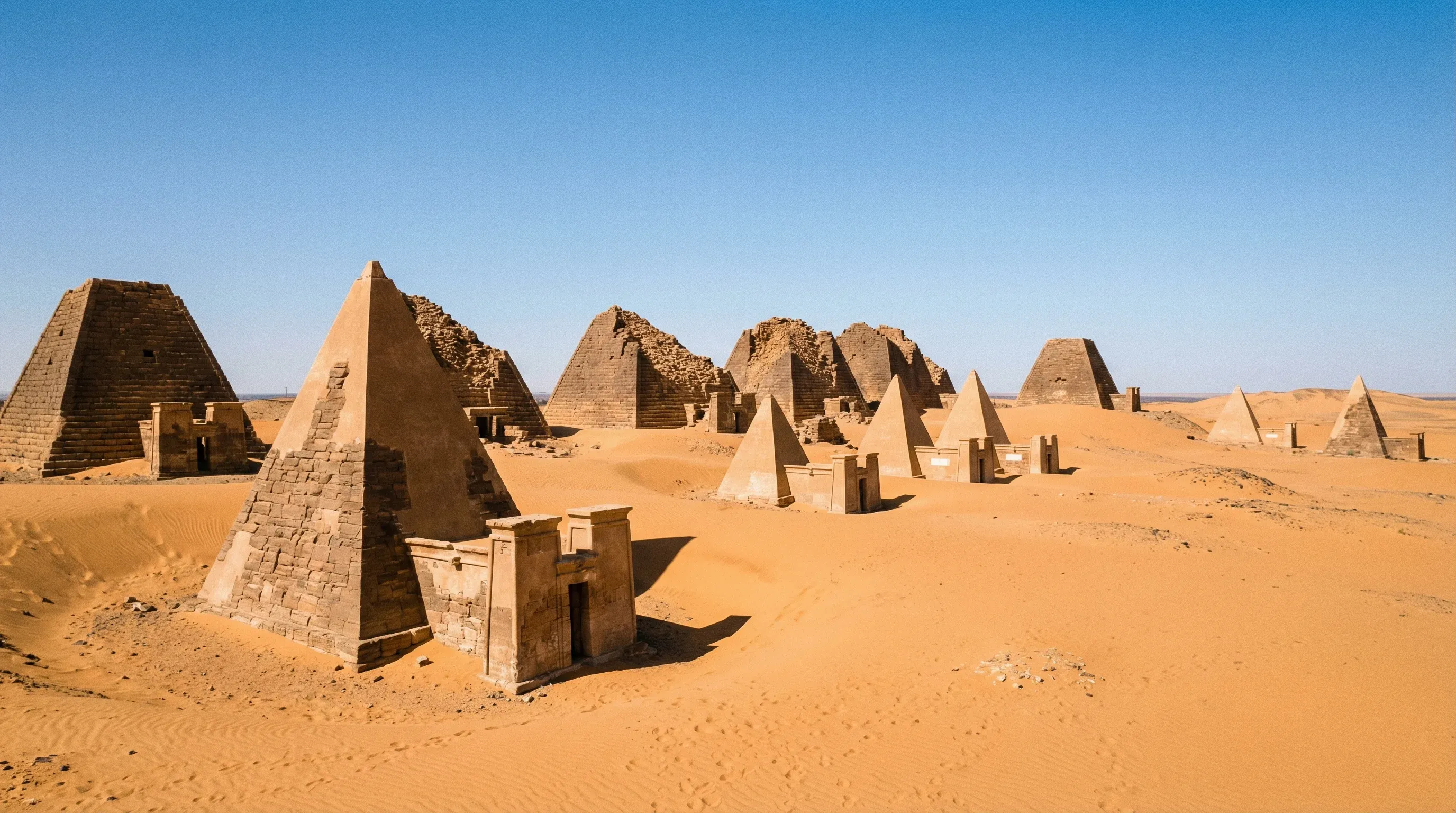

Nubian Nile Valley (Northern State)
Ancient pyramids and golden dunes along the Nile 🐫
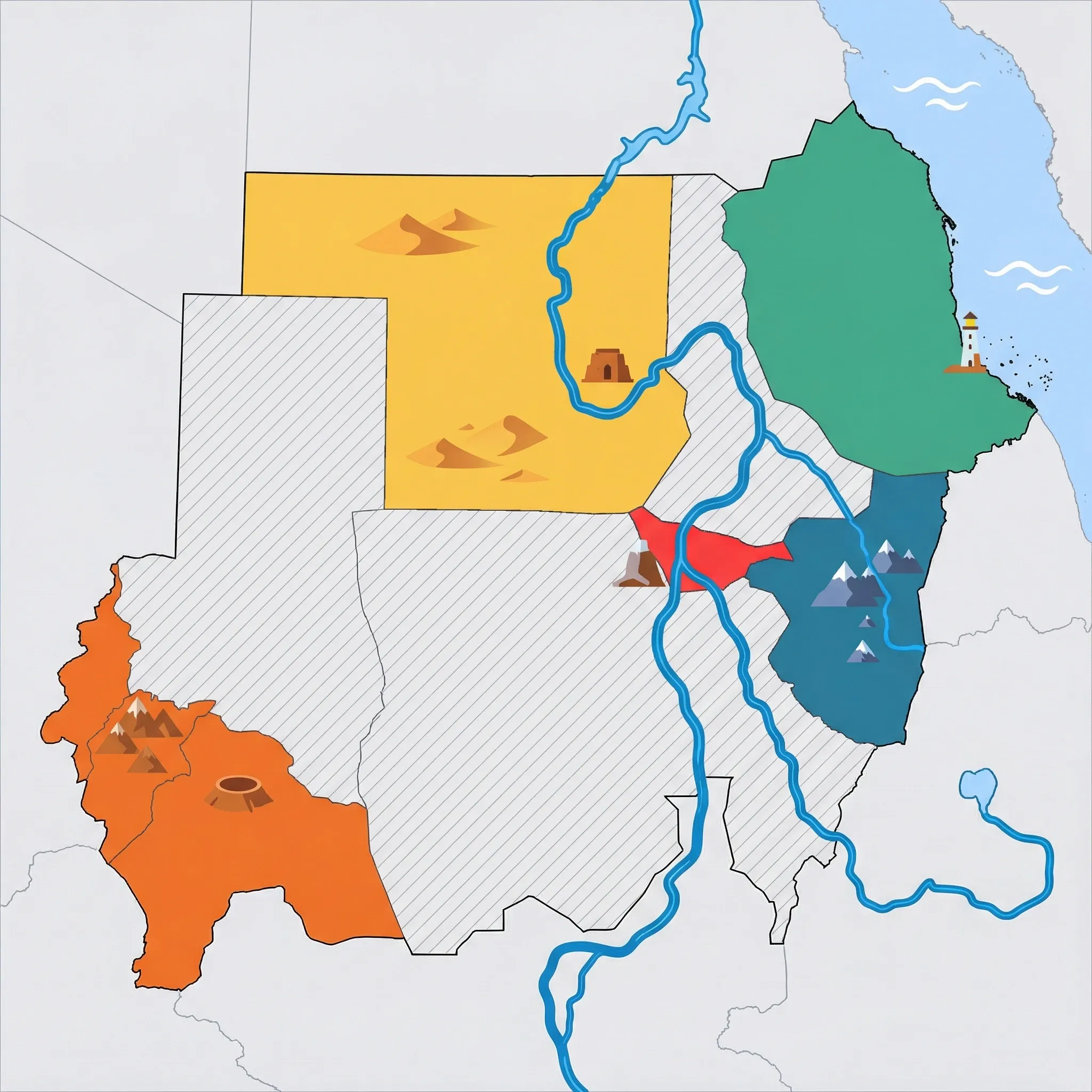
Click a region to explore
⚠️ SAFETY WARNING: Although the Northern State has been relatively calmer than the capital, government agencies (including CA, USA, UK, AU, IE, NZ) advise travelers to avoid all travel to Sudan. The breakdown of national infrastructure, fuel shortages, and lack of consular support make travel here extremely risky. Emergency medical evacuation is not available.
Overview
The Nubian Nile Valley is arguably the most captivating region for families interested in history and nature. Here, the Nile winds through the golden sands of the Sahara, creating a ribbon of vivid green palm groves that sustains life. This was the heart of the Kingdom of Kush, a civilization that rivaled and conquered Ancient Egypt. The landscape is surreal: vast, silent deserts punctuated by black rocky outcrops and ancient ruins that stand unguarded and open to exploration. Unlike the crowded sites in Egypt, visitors here can often have an entire pyramid field to themselves, allowing children to play explorer in a setting that feels timeless and untouched.
Life in the north revolves around the river. The Nubian people are famous for their hospitality and their distinct, brightly decorated mud-brick houses. The pace of life is slow and gentle. Travelers often stay in traditional guesthouses (Nubian houses) where meals are shared in a communal courtyard under the stars. The contrast between the harsh, dry desert and the cool, fertile riverbank is a constant theme. Watching the sunset turn the Nile a deep blue while the call to prayer echoes across the dunes is a magical experience. It is a place of profound silence and history, where the past feels incredibly present.
Key Attractions
The most iconic site is the Pyramids of Meroe. These smaller, steeper pyramids are the resting places of the Black Pharaohs. There are dozens of them scattered across the dunes, and the lack of barriers means you can walk right up to the ancient sandstone. Further north near the town of Karima lies Jebel Barkal, a flat-topped mountain considered sacred by both ancient Egyptians and Kushites. At its base lie the ruins of a massive Temple of Amun. Energetic families can hike to the summit of Jebel Barkal for one of the most spectacular views in Africa—looking down on the temples and the bend of the Nile.
Practical Advice
Best time to visit: Winter (October to March) is essential. Daytimes are 25-30°C, but nights can be chilly. Summer is unbearably hot.
Logistics: Distances are vast. A private vehicle with a driver is the best way to move between Meroe, Karima, and Dongola.
Food & Drink
Typical meal times: Breakfast 7:00 am to 9:00 am; Lunch 1:00 pm to 3:00 pm; Dinner 8:00 pm to 10:00 pm.
Typical meal costs: Very affordable. A family meal might cost SDG 6,000–10,500 (approx. $10–17.50 USD / €9–16 EUR).
Dietary requirements: The diet is wheat-heavy. Fresh vegetables are available near the river. Fish is common in Dongola and Karima.
Signature dishes:
- Gurassa – A thick, spongy wheat pancake (similar to Ethiopian injera but not sour), served with various stews (meat or okra) on top.
- Fasuliya – White kidney beans stewed in tomato sauce, a hearty and common lunch dish.
- Dates – The Northern State produces the best dates in Sudan; they are served fresh, dried, or as a sweet paste.
Why this score?
Exploring the ancient ruins and the Bayuda Desert involves long drives on desert tracks and camping in remote areas. The combination of heat, vast desert distances, and the lack of luxury facilities provides a moderate but accessible level of adventure.
Why this score?
Medical facilities in towns like Karima and Dongola are very basic and intended for the local population. Travelers face significant delays in accessing emergency care, and specialized medical supplies are often unavailable in the region.
Why this score?
Home to the UNESCO-listed Pyramids of Meroe and Jebel Barkal, this is Sudan's cultural tourism heartland, yet it remains significantly under-visited on a global scale. Most visitors are dedicated archaeology enthusiasts or niche travelers rather than mass-market tourists.

The Northern State is traditionally very budget-friendly. The main costs are vehicle hire and fuel. Entrance fees to sites like the pyramids are payable in cash. A night in a traditional Nubian guesthouse costs SDG 12,000–18,000 (approx. $20–30 USD / €18–27 EUR) including meals. Local transport is cents on the dollar.

Getting Here & Around
Getting Here
- Driving – The artery of the north is the tarmac road following the Nile from Khartoum. The drive to Pyramids of Meroe takes about 3-4 hours from the capital (when safe).
- Bus – Regular buses run between Khartoum, Atbara, and Karima, dropping passengers near the main sites.
Getting Around
- Car – Essential for covering the distance between the Pyramids of Meroe and the town of Shendi.
- Tuk-tuk – In towns like Karima, tuk-tuks are perfect for short hops from hotels to Jebel Barkal.
- Ferry – Small local ferries cross the Nile at various points, offering a cheap and scenic way to see the riverbanks.
No airports in this region. See the country flight map for nearby connections.

Packing List
Many ancient tombs have no lighting; essential for seeing the hieroglyphs.
The sand at Meroe is extremely fine and will jam electronics instantly.
The sand can be surprisingly cold at night and scorching hot at midday.
The desert air is extremely dry and dusty, causing eye irritation.
ATMs and cards do not work; notes must be post-2013 and unblemished to be exchanged.
Electricity cuts are frequent and can last for many hours or days.
Street lighting is non-existent in many areas and power outages are common.
Essential protection against sandstorms and dust, especially in the northern deserts.
Clean bottled water can be scarce in remote areas; tap water is generally unsafe.

Activities & Best Times

Hiking, wildlife, outdoor exploration, ecotourism
The region offers profound desert immersion through UNESCO-listed landscapes like Jebel Barkal and the Bayuda Desert. Winter months provide the only safe window for trekking and exploration, as the Saharan heat between April and September presents significant physical risk.

Urban tourism, museums, historical sites, architecture
Home to the world-class Pyramids of Meroe and Nuri, these sites offer a unique, non-commercialized window into ancient Kushite civilization. Peak visitation occurs from November to February when the desert climate is mild; extreme summer heat makes the sites virtually inaccessible for comfortable exploration.

Scenic drives, countryside tours, route-based travel
The Nubian Desert Circuit and Bayuda Desert Route offer spectacular, high-standard desert driving for experienced overlanders. These routes are seasonally restricted by extreme heat, with the November-February window providing necessary safety for long-distance desert travel.

Sport tourism, fitness activities, active recreation
Includes internationally recognized long-distance cycling segments and established hiking trails around the pyramids of Karima and Meroe. Physical activity is concentrated in the cooler months to avoid the life-threatening peak summer temperatures common in the Northern State.

Spa retreats, wellness centers, peaceful getaways
Features authentic, historic thermal sites such as the Royal Baths of Meroe and Akasha Hot Springs, offering a rustic experience for intrepid travelers. These are best enjoyed in the cooler peak winter months to balance the water temperature with ambient air conditions.




Public Holidays & Calendar Next 12 months
Public holidays, festivals, cultural celebrations, and seasonal natural phenomena coming up in Nubian Nile Valley (Northern State) over the next 12 months.
Loading holidays and events...

Travel Advisory
All monitored agencies have issued their highest level of warning, advising against all travel due to extreme safety risks including active military conflict and severe civil instability.
Safety Topics
Traveller Advice (4 groups)

Personnel working for international aid organizations are being specifically targeted for violence and kidnapping; extreme caution and professional security coordination are mandatory.

There are disturbing reports of gender-based and sexual violence occurring within the context of the active military conflict.

Media professionals face a significant threat of detention, harassment, and arrest by various armed groups who view them as high-value targets.

Anyone currently in the country should consider immediate departure via safe commercial routes while they are still accessible. Individuals remaining should maintain an extensive supply of food, water, and essential medicine for prolonged periods of sheltering in place.
Agency Summaries
The Canadian government advises against any travel to the country due to the ongoing and violent military conflict, widespread civil disturbances, and a highly unstable safety environment.
New Zealanders are warned to completely avoid travel because of the high threat posed by armed conflict, kidnapping risks, and the near-total lack of official assistance.
U.S. authorities warn against all travel for any purpose because of extreme dangers including armed warfare, violent crime, kidnapping, terrorism, and significant health risks.
Irish citizens are directed not to travel to the country at this time, as the security environment is considered extremely volatile due to active military clashes and violence.
British officials strictly advise against visiting any part of the nation because of the hazardous military situation and the lack of diplomatic support available to citizens.
Australia urges its citizens to avoid all travel to the region, citing an extremely dangerous security climate characterized by armed hostilities and a high likelihood of civil unrest.
Information is provided for general guidance only and does not constitute travel, safety, medical, or legal advice. Conditions may change. Users are responsible for independently verifying information before travel.