
Nature Reserves
Where giant turtles nest and granite mountains rise 🐢⛰️
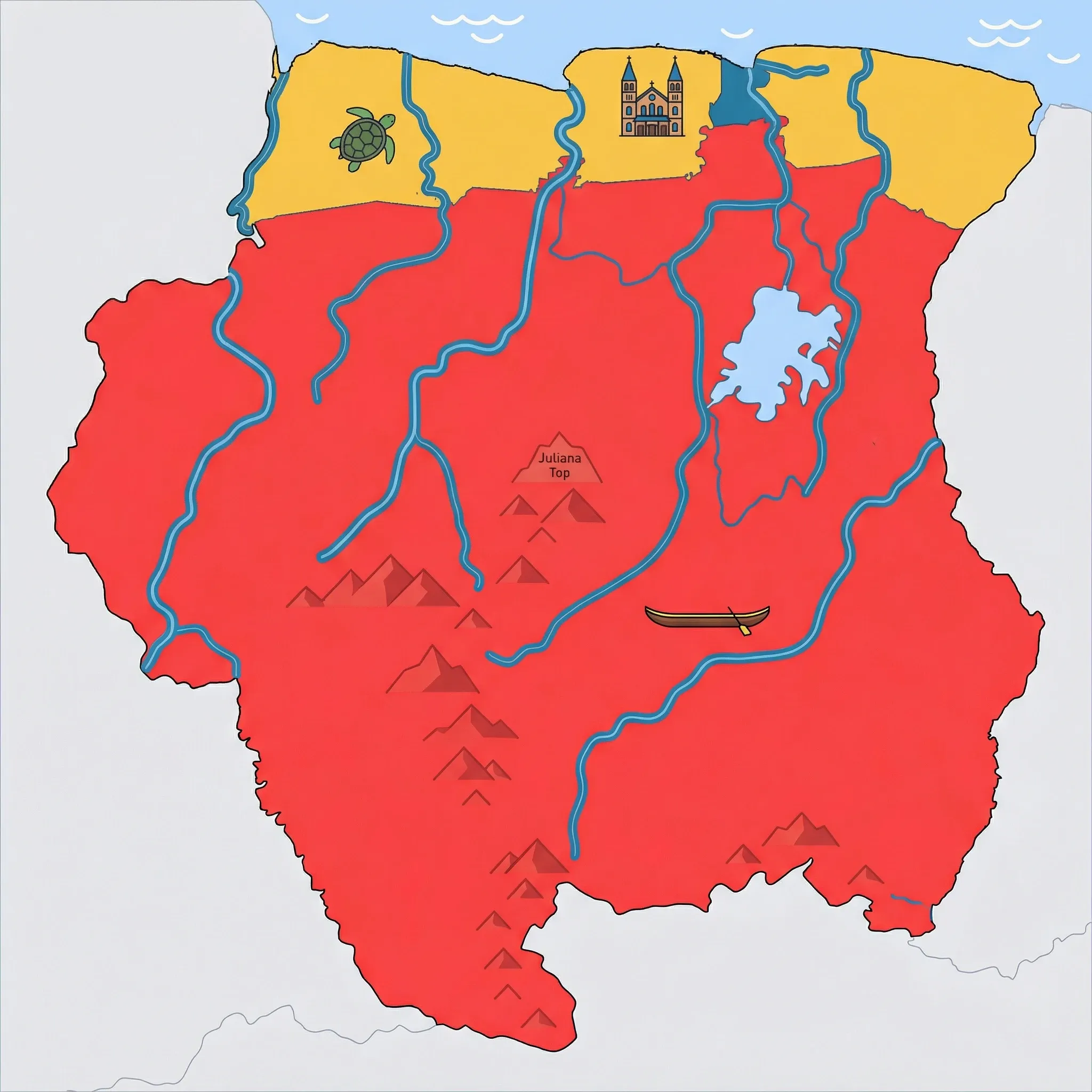
Click a region to explore
Overview
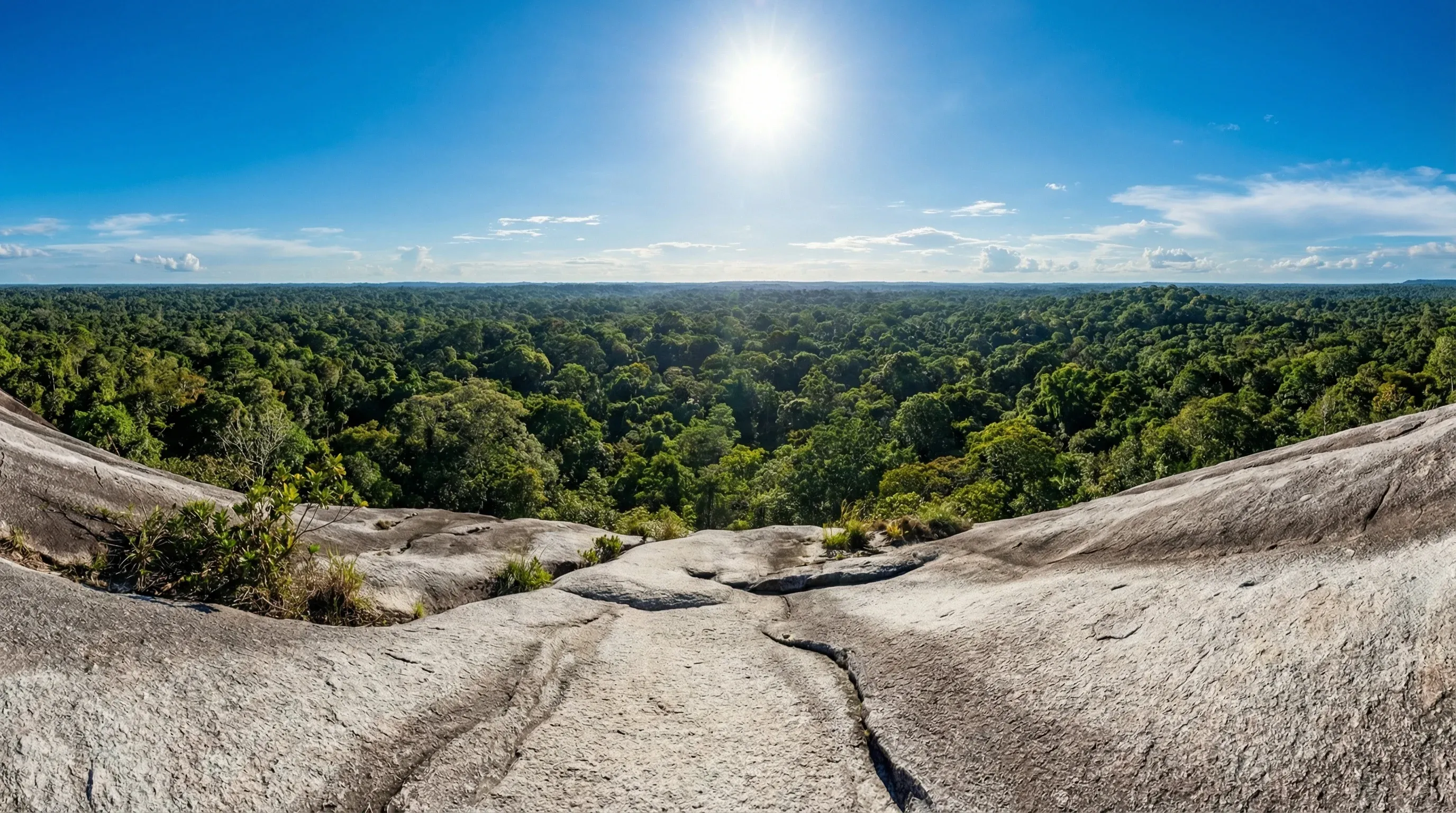
Suriname is one of the greenest countries on Earth, and its designated Nature Reserves are the guardians of this biodiversity. This region is not a single contiguous area but a collection of protected zones that showcase the country's varied ecosystems. From the estuarine mangroves of the coast to the granite inselbergs of the deep interior, these reserves offer families a front-row seat to the theatre of the Amazon. The climate is tropical rainforest: hot, humid, and subject to sudden, heavy downpours that keep the forests lush. For families, these reserves provide a structured way to explore the wilderness, often with better trail markings and guide availability than the general interior.
The appeal for children is direct and visceral. In the coastal reserves, the spectacle of giant Leatherback and Green turtles hauling themselves onto the beach to lay eggs is a life-changing sight (seasonal). Further inland, the reserves transform into high-canopy jungle where the ground vibrates with the calls of nature. Unlike the manicured parks of Europe or North America, these reserves feel ancient and untamed. Whether it is swimming in the cola-colored waters (tannin-stained) of a jungle creek or spotting the brilliant flash of a morpho butterfly, the experiences here are tactile and immersive.
Key Attractions
One of the most biologically diverse spots is the Central Suriname Nature Reserve, a massive protected area. Within it lies Raleighvallen (Raleigh Falls), located on the Coppename River. It is a haven for birdwatchers and famous for the Guianan Cock-of-the-rock, a bright orange bird that looks almost cartoonish. Nearby, the Voltzberg Dome offers a physical challenge for active families: a hike up a massive granite monolith that rises above the jungle floor, providing a view that stretches for miles without a single sign of human civilization.
Closer to the capital, Brownsberg Nature Park is the most popular reserve. It sits on a plateau, making the temperature slightly cooler, and offers trails to waterfalls like Leo Val and Irene Val. The drive there involves the Afobakaweg, a road that cuts through the wilderness. For a completely different landscape, the drive along the East-West Link (Eastern Section) leads toward the coastal reserves like Galibi (distinct from the interior parks), where indigenous communities protect the nesting grounds of marine turtles.
Practical Advice
The turtle nesting season at Galibi runs roughly from February to July, which is the prime time for coastal visits. For the interior reserves like Raleighvallen, the dry seasons (Feb-Apr, Aug-Nov) are essential as rapids can become dangerous or impassable in high water. Always hire a local guide; the jungle is dense and disorienting.
Food & Drink
Typical meal times: Lunch is usually a hot meal served between 12:00 pm and 2:00 pm. Dinner is served around 7:30 pm to 9:00 pm.
Typical meal costs: Meals within reserve lodges are usually included in tour packages. If buying independently at roadside stops near reserves, expect to pay SRD 180–300 (approx. $6–10 USD / €5.50–9 EUR).
Dietary requirements: Options are limited in remote reserves. Vegetarians will likely eat a lot of rice, kidney beans, and stir-fried greens. Gluten-free travelers must bring their own snacks/bread as cassava bread is the only guaranteed alternative.
Signature dishes:
- Wild Game (Pingo/Kapasi) – Occasionally served in interior communities near reserves (though protected in reserves themselves), dishes featuring wild boar or armadillo are part of the local diet.
- Telo with Bakkeljauw – Fried cassava served with salted codfish, a hearty energy-packed meal perfect before a hike.
- Dawet – A sweet, pink coconut milk and lemongrass drink with tapioca pearls, refreshing after a humid jungle trek.
Why this score?
This region offers notable outdoor adventure, from hiking the steep trails of Brownsberg Nature Park to multi-day expeditions to see the Raleighvallen waterfalls and the Voltzberg dome. The terrain is often humid and physically demanding, requiring a good level of fitness and tolerance for remote wilderness conditions.
Why this score?
While some parks like Brownsberg are within a few hours' drive of Paramaribo, others like Galibi or Raleighvallen are highly isolated. Medical infrastructure is virtually non-existent within the reserves themselves, and access to English-speaking doctors or advanced care is only possible upon return to the capital.
Why this score?
Reserves like Galibi and the Central Suriname Nature Reserve are world-class for biodiversity but remain off the beaten path for the average global traveler. They serve as secondary destinations for the small pool of tourists visiting Paramaribo, resulting in very low annual international footfall.

Day trips to accessible parks like Brownsberg cost around SRD 2,400–3,600 (approx. $80–120 USD / €75–110 EUR) per person. Multi-day expeditions to deeper reserves like Raleighvallen are more expensive due to boat fuel, costing SRD 9,000–15,000 (approx. $300–500 USD / €280–460 EUR) for a 3-4 day tour.
Family Travel Notice
Parents should closely supervise children due to the presence of rabies in local dogs and wildlife. Ensure all routine vaccinations are up to date before visiting.

Getting Here & Around
Getting Here
- Driving – The Afobakaweg is a paved road leading south from Paramaribo towards Brownsberg. A 4x4 is often required for the final ascent to the park headquarters.
- Boat – Reaching Raleighvallen requires a long boat journey (4-6 hours) up the Coppename River from the local boat landing at Witagron.
- Tours – Due to the logistics of permits and transport, most families visit these reserves via organized tours departing from Paramaribo.
Getting Around
- Hiking – Inside the reserves, your feet are your transport. Trails range from flat walks to steep scrambles up Voltzberg Dome.
- Boat – Essential for moving between different sections of river-based reserves.
- Accessibility – Generally low. These are wild environments with uneven terrain, roots, and mud; not suitable for strollers.
No airports in this region. See the country flight map for nearby connections.

Packing List
Strictly required for turtle watching at night to avoid disturbing nesting mothers.
The humidity causes rapid dehydration during hikes; water alone is often not enough.
Useful for deep jungle trekking in the rainy season to prevent bites.
To keep camera gear and electronics dry in the intensely humid environment.
Jungle lodges often rely on generators that turn off at night; essential for navigating cabins in the dark.
River travel in dugout canoes (korjaals) is frequent; keeps cameras and phones safe from splashes and sudden rain.
ATMs are scarce outside Paramaribo; interior lodges and villages often only accept cash for tips and souvenirs.
Tuck trousers into socks during jungle hikes to prevent tick bites and keep insects out.
Wildlife like sloths, monkeys, and toucans is often high in the canopy; essential for kids to see the action.

Activities & Best Times

Hiking, wildlife, outdoor exploration, ecotourism
Home to pristine primary rainforest and the UNESCO-listed Central Suriname Nature Reserve, offering high biodiversity and authentic jungle immersion. The experience is best during dry seasons when river levels are manageable and trails are accessible.

Sport tourism, fitness activities, active recreation
Features challenging, internationally recognized hiking routes such as the Voltzberg Dome summit and Brownsberg trails. Peak dry months are essential for navigating these rugged jungle terrains safely.

Urban tourism, museums, historical sites, architecture
Offers unique cultural heritage at Jodensavanne and Galibi Indigenous villages, providing authentic insights into the region's complex history. Travel to these remote sites is significantly easier outside the heavy rainy season.

Scenic drives, countryside tours, route-based travel
Scenic routes like the Afobakaweg offer dramatic jungle views, though road infrastructure is basic and requires the driest conditions for a smooth family experience. The long dry season from August to November provides the best driving conditions.

Beach resorts, marine activities: diving, snorkelling, kite surfing, wind surfing, sailing
Galibi Nature Reserve is a world-class site for nesting leatherback and green turtles. This specific seasonal phenomenon peaks between March and June, though the beaches are silty and unsuitable for traditional diving or snorkeling.




Public Holidays & Calendar Next 12 months
Public holidays, festivals, cultural celebrations, and seasonal natural phenomena coming up in Nature Reserves over the next 12 months.
Loading holidays and events...

Travel Advisory
The majority of international agencies classify Suriname as a destination requiring standard safety awareness. While Ireland maintains a higher caution level, the consensus among five other major agencies supports a baseline risk assessment, provided travelers remain vigilant against local crime in the capital.
Safety Topics
Traveller Advice (4 groups)

All visitors must pay an entry fee prior to arrival and complete a digital immigration form. It is recommended to use only licensed hotel taxis and avoid the Palm Garden area after sunset.

Female travelers should be particularly cautious when traveling alone, especially at night in Paramaribo. Harassment and petty crime are reported risks in secluded areas or near major tourist hotels.

While same-sex acts are not illegal, social acceptance remains limited. Travelers should be mindful of local cultural sensitivities regarding public displays of affection.

Parents should closely supervise children due to the presence of rabies in local dogs and wildlife. Ensure all routine vaccinations are up to date before visiting.
Agency Summaries
Australia recommends standard vigilance. Travelers should be aware of high crime levels in Paramaribo, including armed robbery and theft. Ensure comprehensive travel insurance is obtained before departure.
The overall security situation is stable, though street crime and occasional political demonstrations in the capital require vigilance. Specific attention is given to road safety and the risk of flooding during rainy seasons.
No specific travel warning is in effect, but travelers are urged to maintain common sense security practices. Focus is placed on health risks in the region and the necessity of medical evacuation coverage.
Visitors should maintain standard safety awareness. Common concerns include petty crime in urban centers and limited medical infrastructure in remote areas. Health alerts are active for mosquito-borne illnesses such as Chikungunya.
Travelers are advised to follow standard safety measures. While the country is generally safe, urban areas like Paramaribo experience pickpocketing and robberies. Avoid displaying wealth and walking alone after dark.
Ireland advises increased vigilance due to risks associated with serious crime, potential civil unrest, and limited healthcare facilities. Travelers should avoid large gatherings and monitor local news.
Information is provided for general guidance only and does not constitute travel, safety, medical, or legal advice. Conditions may change. Users are responsible for independently verifying information before travel.