
Fann Mountains
Turquoise lakes and ancient ruins in the high peaks 🏔️
Click a region to explore
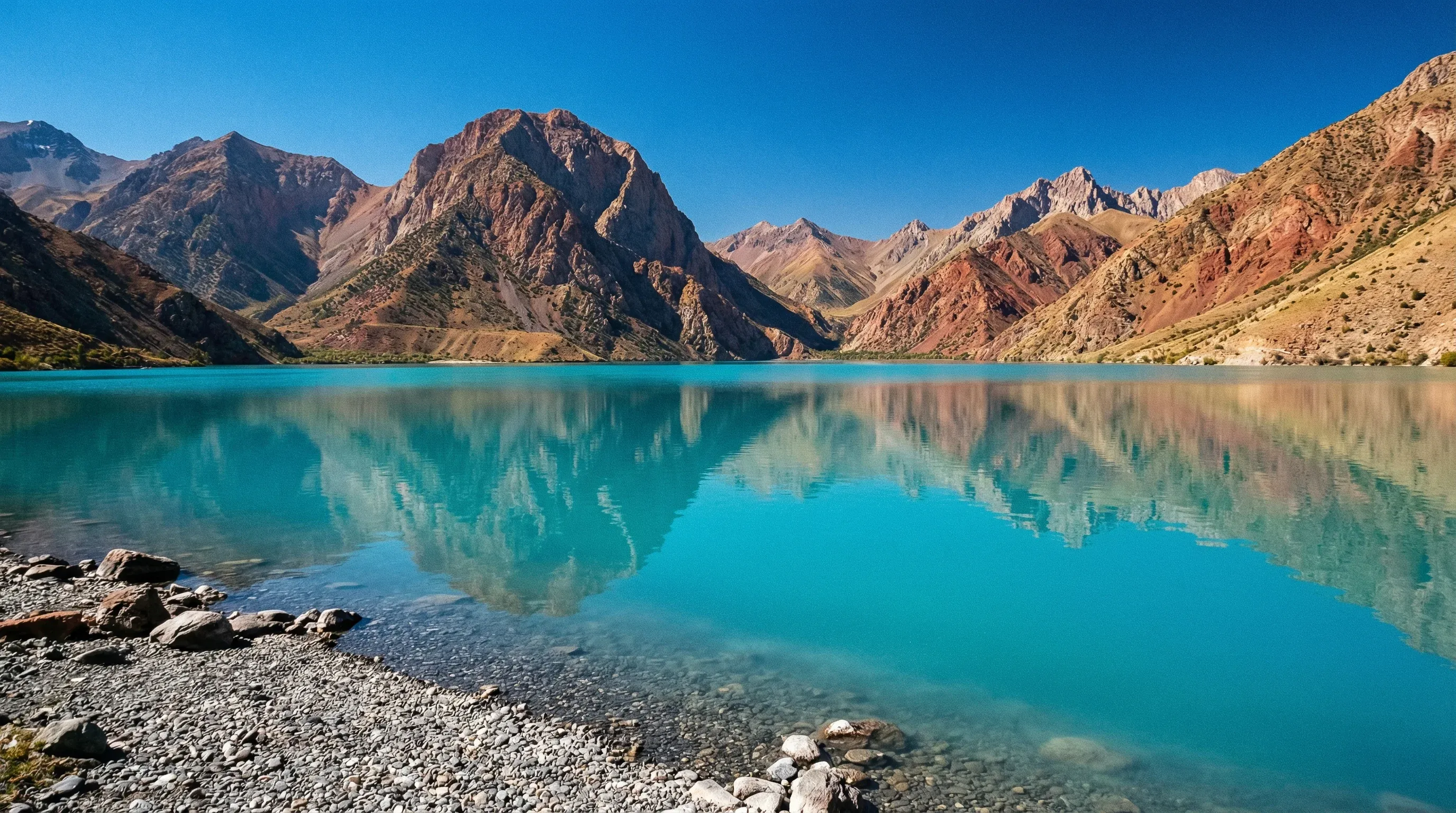
The Fann Mountains represent the sweet spot of Tajik tourism: spectacular alpine scenery that is far more accessible than the remote Pamirs. For families, this region offers the chance to experience the "Roof of the World" vibes without the extreme altitude risks or multi-day drives. The landscape is characterized by deep, narrow valleys, rushing rivers, and over 30 turquoise and emerald lakes scattered among peaks exceeding 5,000 meters. The region is dotted with Tajik villages where hospitality is legendary; families often find themselves invited for tea and fresh apricots in local homes. Unlike the stark moonscapes of the east, the Fanns are lush in the valleys, filled with juniper forests and wildflowers in early summer.
Culturally, this area is the heart of the ancient Sogdian civilization. It offers a mix of outdoor adventure and history. You aren't just hiking; you are walking paths used by Silk Road traders for millennia. The infrastructure here is Community Based Tourism (CBT) at its best. Families can stay in simple but comfortable homestays, giving children a genuine insight into rural mountain life—feeding livestock, seeing how bread is baked in a tandyr, and sleeping on thick mattresses (kurpacha) on the floor. It’s an adventure, but one with a safety net of relatively close civilization.
Key Attractions
The jewel of the region is undoubtedly Iskanderkul. Named after Alexander the Great, this massive alpine lake is surrounded by legends and distinct triangular peaks. It is accessible by car, making it perfect for families who want views without a three-day trek. Nearby, a short hike leads to the "Fann Niagara" waterfall. For history lovers, the ruins of Ancient Panjakent offer a look at a 5th-century city with visible foundations of houses and temples, allowing kids to visualize the past. Further down the valley lies the UNESCO-listed Sarazm Archaeological Site, dating back 5,500 years, showcasing the deep roots of civilization here.
Practical Advice
Best Time to Visit: June to September is hiking season. July and August are best for swimming in the lakes, though the water is always cold. May is beautiful for flowers but high passes may still have snow.
Logistics: While shorter than the Pamir Highway, drives are still on bumpy, unpaved roads. Motion sickness medication for children is essential. "Donkey trekking" is a popular option here—you can hire donkeys to carry luggage (or tired children) on multi-day hikes.
Food & Drink
Typical meal times: Breakfast is early (7:00 am to 8:30 am) before trekking. Dinner is served around 7:00 pm to 8:00 pm in guesthouses.
Typical meal costs: Most tourism here is homestay-based where meals are included or cheap. A lunch stop costs 40–70 TJS (approx. $3.50–6.50 USD / €3–6 EUR). Full board in a homestay is often around 250–350 TJS (approx. $23–32 USD / €21–29 EUR) per person.
Dietary requirements: Options are limited in the mountains. Meals are heavy on mutton, potatoes, and bread. Vegetarians will eat a lot of potato soup and fresh salad. Let guides know in advance.
Signature dishes:
- Oshi toki – Also known as "raw plov," a specialty of Panjakent where ingredients are layered in grape leaves and steamed, giving it a unique tart flavor.
- Apricot Jam – The Zarafshan valley is famous for apricots. You will be served apricot jam, juice, and dried apricots at every meal.
- Non-i-fatri – A heavy, layered bread specific to the region, perfect for sustaining energy on hikes.
Why this score?
This region is a premier trekking destination featuring high-altitude passes, turquoise alpine lakes, and steep mountain terrain. Families must rely on homestays and donkey transport in many areas, providing a rugged and immersive wilderness experience far from modern conveniences. The lack of paved roads in the upper valleys and the physical demand of the trails define it as a significant adventure destination.
Why this score?
Medical services are virtually non-existent within the mountain range itself, with only basic rural clinics available in towns like Panjakent or Ayni. Emergency evacuation is difficult and time-consuming, requiring a long drive back to the capital for any significant treatment. Travelers are advised to carry comprehensive first-aid kits and be self-sufficient in the event of an injury.
Why this score?
Known for the Seven Lakes and Iskanderkul, this region is a favorite for regional trekkers but remains obscure on a global scale. The infrastructure consists mostly of small village homestays and seasonal campsites, reflecting its status as an emerging, low-volume destination. While it is the most accessible mountain range from the capital, it lacks the high-volume visitor flow seen in more famous alpine regions.

One of the best value adventure destinations. Homestays usually charge 150–250 TJS (approx. $14–23 USD / €12–21 EUR) per person including dinner and breakfast. Private 4WD hire is the main expense, costing roughly 800–1,100 TJS (approx. $73–100 USD / €67–92 EUR) per day.

Getting Here & Around
Getting Here
- Driving – The main route is a scenic 4-5 hour drive from Dushanbe via the Anzob Tunnel (the "Tunnel of Death," though now much safer/lit).
- Border Crossing – Panjakent is a major border crossing with Samarkand, Uzbekistan. Many families combine the two cities. The drive from the border to Panjakent town is only 20 minutes.
Getting Around
- 4WD / Private Driver – Public transport to the lakes (like Iskanderkul) is non-existent. You must hire a 4WD driver or join a tour.
- Donkeys & Horses – For trekking the Seven Lakes or Artuch, hiring pack animals is standard practice and a highlight for children.
- Walking – The best way to see the scenery. Trails range from flat lakeside strolls to steep mountain passes.
No airports in this region. See the country flight map for nearby connections.

Packing List
Tap water is unsafe and buying plastic bottles in remote mountains creates waste.
Even in July, temperatures drop significantly at night near the lakes.
Small items like postcards or sweets are appreciated in homestays.
Showers can be cold or bucket-style; wipes are useful for quick cleans.
Tap water is generally unsafe. A Steripen or filter bottle saves money and reduces plastic waste in remote areas where recycling doesn't exist.
Power outages are frequent, even in cities. Street lighting is minimal, and navigating homestay toilets at night requires light.
ATMs are rare outside Dushanbe. You must bring cash in pristine condition (no tears/marks) to exchange; old notes are often refused.
Public bathrooms are often simple pit latrines with no running water or paper. Essential for hygiene on the road with kids.
"Tajik Tummy" is common. Electrolytes are vital for recovery, especially given the altitude and long travel days.
Roads in the Pamirs and Fanns are incredibly winding and rough. Essential for children prone to car sickness.

Activities & Best Times

Hiking, wildlife, outdoor exploration, ecotourism
Offers world-class high-altitude trekking and stunning turquoise alpine lakes like Iskanderkul and Haft Kul. Peak conditions are strictly limited to the summer window when high passes are clear of snow; shoulder months allow for lower-elevation exploration.

Urban tourism, museums, historical sites, architecture
Rich in Silk Road history with the UNESCO-listed Sarazm and Ancient Panjakent offering authentic archaeological exploration. Spring and autumn provide ideal temperatures for site visits, while mid-summer can be uncomfortably hot in the valley floors.

Scenic drives, countryside tours, route-based travel
The M34 and Zarafshan Valley routes provide spectacular mountain scenery and remote village access for experienced drivers. Summer months are essential to ensure high-altitude passes like Anzob are safe and accessible for family travel.

Sport tourism, fitness activities, active recreation
Features internationally recognized trekking circuits like the Kulikalon Lakes and Chimtarga Pass, though infrastructure remains rugged. Activity is highly seasonal, requiring the dry, snow-free conditions of late summer for safe passage.

Learning experiences, scientific sites, historical education
The Rudaki Museum and Sarazm excavations offer significant historical value for families interested in Central Asian heritage. While culturally important, they lack the interactive, large-scale infrastructure of global destination-level educational centers.

Spa retreats, wellness centers, peaceful getaways
Local thermal springs and traditional hammams provide an authentic but modest wellness experience rooted in Tajik culture. These facilities are regional in character and lack the luxury or comprehensive retreat infrastructure found in global wellness hubs.




Public Holidays & Calendar Next 12 months
Public holidays, festivals, cultural celebrations, and seasonal natural phenomena coming up in Fann Mountains over the next 12 months.
Loading holidays and events...

Travel Advisory
All major agencies maintain an elevated risk level for Tajikistan. The primary nationwide concerns are terrorism and crime, while severe regional warnings are in place for the Afghan and Kyrgyz borders and the Gorno-Badakhshan region due to conflict and landmines.
Safety Topics
Traveller Advice (4 groups)

While not illegal, same-sex relationships are not widely accepted in this socially conservative society, and there are no specific legal protections against discrimination.

Be aware that mountain rescue services are extremely limited. Avoid trekking in remote border areas due to the high risk of unexploded landmines, which are often poorly marked.

Exercise high vigilance, particularly at night, due to reports of sexual assault and drink-spiking targeting foreigners. Modest dress is recommended to respect local cultural and religious norms.

Ensure you carry a photocopy of your identification at all times as local police frequently conduct identity checks. Stays exceeding 10 days require mandatory registration with local authorities (OVIR).
Agency Summaries
Irish citizens are advised to be highly cautious. Tensions along disputed border areas often lead to clashes involving firearms, and travel to the Gorno-Badakhshan Autonomous Region is discouraged.
Increased safety precautions are recommended due to the threat of terrorism and common street crimes such as muggings and drink-spiking. Regional instability justifies higher risk ratings in border zones.
Visitors should maintain elevated vigilance due to the persistent threat of terrorism and organized crime. Travel near the Afghan border is strongly discouraged due to extreme security risks, and visits to the Gorno-Badakhshan region should be limited to essential purposes only.
While general travel is permitted, significant regional risks exist. Specific areas, including those near the Afghan and Kyrgyz borders, are subject to heightened security warnings due to the potential for localized violence and terrorism.
A high level of caution is advised countrywide because of the risk of civil unrest and terrorist activity. Security conditions near the border with Afghanistan are particularly volatile and should be avoided.
Heightened awareness is necessary throughout the country due to terrorism risks and the presence of unexploded landmines. Conflict potential is notably higher in Gorno-Badakhshan and along the borders with Afghanistan and Kyrgyzstan.
Information is provided for general guidance only and does not constitute travel, safety, medical, or legal advice. Conditions may change. Users are responsible for independently verifying information before travel.