
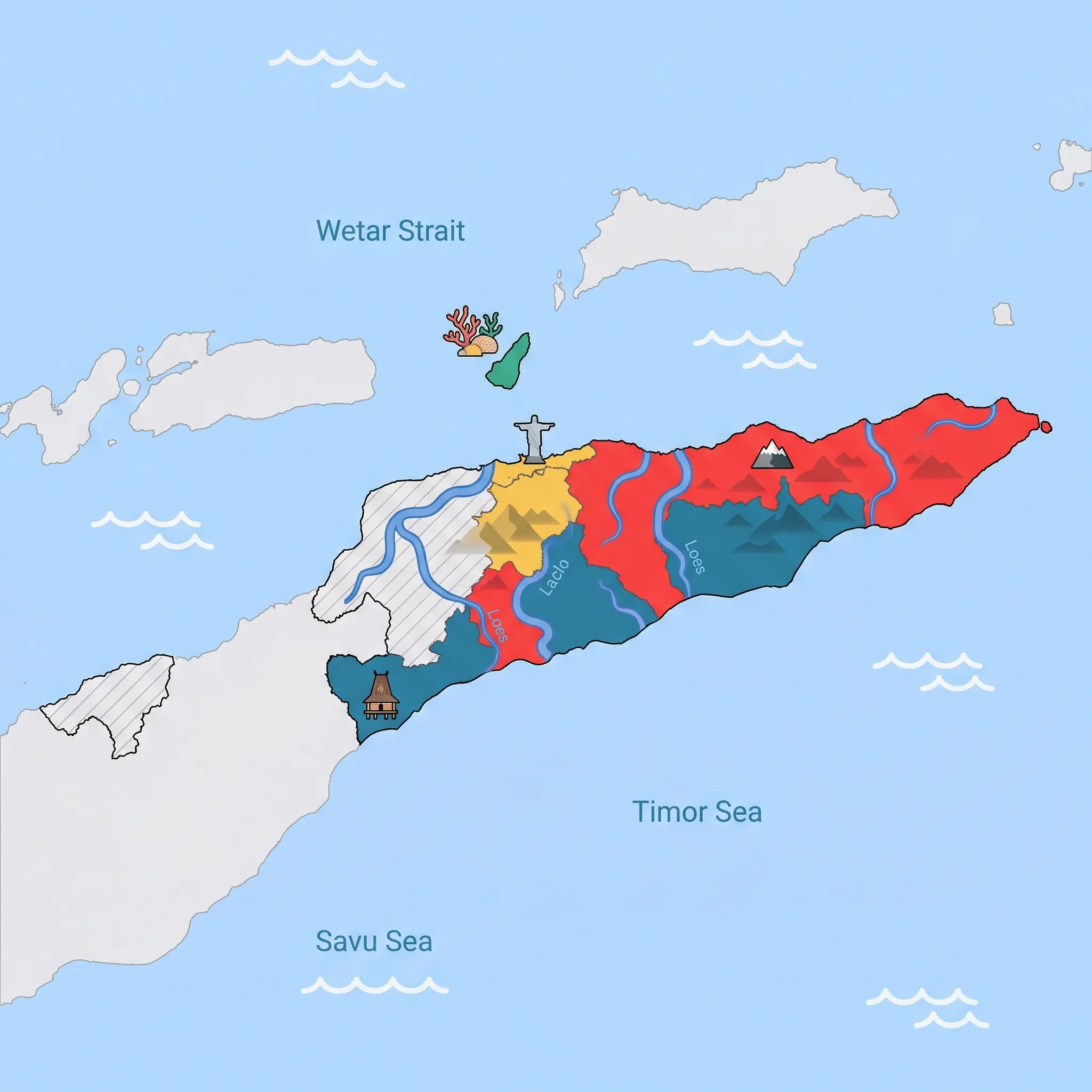
Click a region to explore
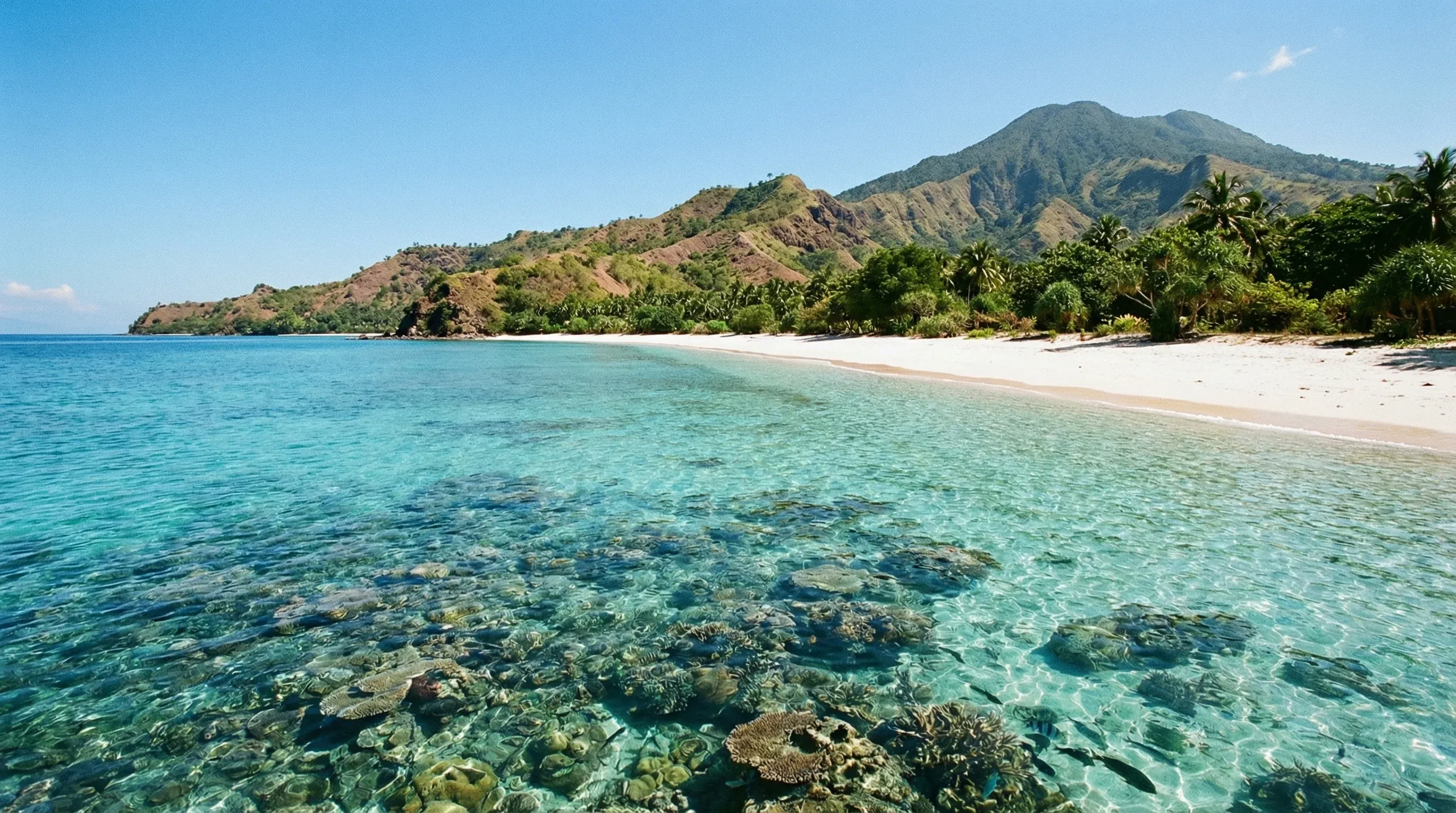
Just a short boat ride across the Wetar Strait from the capital lies Ataúro Island, a rugged and beautiful escape that feels worlds away from modern life. For families, this is a place to disconnect from screens and reconnect with nature. The island is renowned globally for its marine biodiversity, boasting more species of reef fish per site than anywhere else on earth. The vibe here is slow and communal; electricity often runs on generators or solar power, and the "entertainment" consists of watching dolphins play in the channel or hiking up the lush slopes of Mount Manukoko.
The island is split into several villages, with Beloi and Vila Maumeta being the main entry points on the east coast, and the secluded Adara on the west. Cultural tourism is vibrant here; families can visit the Boneca de Atauro cooperative to see how local women make rag dolls—a hit with younger children. The beaches are often pebbly rather than powdery white sand, but the water clarity is exceptional, making it a safe and exciting environment for children to learn snorkeling. While it lacks large resorts, the eco-lodges offer a warm, family-style welcome that makes visitors feel part of the community.
Key Attractions
While the island itself is the main attraction, the journey begins with a view of the Cristo Rei of Dili fading into the distance. Once on Ataúro, the primary activity is exploring the underwater world. The reefs are accessible right off the beach, perfect for little legs that can't swim far. On land, visiting the Boneca de Atauro cooperative is a must-do educational experience. On the return trip, families often spot whales or dolphins in the strait, framed by the distant view of Cristo Rei Beach on the mainland horizon.
Practical Advice
The best time to visit is during the dry season (May to November) when the seas are calmest for the crossing. Bring enough cash (USD) for your entire stay as there are no ATMs on the island. Internet connection is spotty, so download entertainment for kids beforehand.
Food & Drink
Typical meal times: Breakfast is usually 7:00 am to 9:00 am, lunch 12:00 pm to 2:00 pm, and dinner 6:30 pm to 8:00 pm (earlier than the city).
Typical meal costs: Meals are often included in accommodation packages. Independent meals cost $5–10 (approx. €4.50–9 / £4–8) per person.
Dietary requirements: Options are limited. Fresh fish and vegetables are staples, but specialized gluten-free or dairy-free products are unavailable. Inform your eco-lodge in advance.
Signature dishes:
- Ikan Bakar – Fresh fish grilled over charcoal, often served with lime and chili on the side.
- Katupa – Rice cooked in coconut milk inside woven palm pouches, a perfect portable snack for hikes.
- Ai-Manas – A spicy chili paste condiment found on every table (keep away from young kids!).
Why this score?
Accessing the island involves a boat crossing of the Wetar Strait, and the interior features rugged peaks like Mount Manukoko with limited trail markings. The lack of luxury amenities and the reliance on basic eco-camps provide a notable sense of isolation and adventure for travelers.
Why this score?
Medical facilities on the island are limited to very basic local clinics that are not equipped for emergencies or specialized care. Any serious condition requires a sea evacuation back to the capital, which can be delayed by weather or limited boat schedules.
Why this score?
Known for world-class marine biodiversity, Ataúro is the most popular excursion for visitors to Timor-Leste, yet it remains a niche destination with very low annual visitor volume. Most infrastructure consists of small-scale eco-lodges, reflecting its status as an emerging rather than established international spot.

Accommodation is pricier than the mainland due to logistics. Simple eco-lodges charge $40–80 (approx. €37–74 / £32–63) per night including meals. Transport is cheap, but boat charters can be $50–100 (approx. €46–92 / £40–79). Bring small USD bills.

Getting Here & Around
Getting Here
- Ferry – The Dragon or Success fast boats take roughly 1 hour from Dili, departing near the Timorese Resistance Archive and Museum area of the waterfront.
- Public Ferry – The Berlin Nakroma is a slower, cheaper car ferry (approx. 2-3 hours) that runs on Saturdays.
- Charter Boat – Dive resorts can arrange private transfers for groups.
Getting Around
- Tuk-tuk – Three-wheeled auto-rickshaws operate between Beloi and Vila Maumeta.
- Walking – The villages are small and walkable, though the heat can be intense for toddlers.
- Boat Taxi – Essential for reaching the west coast (Adara) or specific snorkeling spots.
No airports in this region. See the country flight map for nearby connections.
Official Links

Packing List
Many beaches are rocky or coral-heavy, making entry painful for barefoot children.
There are no ATMs on the island and credit cards are rarely accepted.
Electricity is often turned off at night in eco-lodges and villages.
The crossing across the Wetar Strait can be choppy, especially in the afternoon.
ATMs are rare outside Dili and vendors often cannot change large notes ($50/$100).
Mountain roads are incredibly winding and journey times are long.
Street lighting is minimal and power cuts can occur, especially in rural districts.
Rental gear is often adult-sized or poor quality; bring your own for the kids.

Activities & Best Times

Hiking, wildlife, outdoor exploration, ecotourism
Offers rugged, authentic wilderness experiences including the Mount Manukoko summit and protected marine areas for eco-conscious families. The dry season is essential for safe trekking on steep, unpaved trails and accessing remote coastal nature reserves.

Beach resorts, marine activities: diving, snorkelling, kite surfing, wind surfing, sailing
Renowned for some of the world's highest marine biodiversity, offering exceptional snorkeling and diving directly from shore. Peak season aligns with the dry season when sea conditions are calmest and underwater visibility is at its maximum.

Urban tourism, museums, historical sites, architecture
Features unique cultural heritage such as the Boneca de Ataúro women's collective and colonial history in Vila Maumeta. Travel between villages and outdoor markets is most pleasant during the dry months when regional logistics are most reliable.

Sport tourism, fitness activities, active recreation
Home to established hiking circuits and challenging summit routes that provide world-class panoramic views of the Wetar Strait. Activity is restricted during the monsoon (Dec-Mar) due to heavy precipitation making the volcanic terrain slippery and hazardous.




Public Holidays & Calendar Next 12 months
Public holidays, festivals, cultural celebrations, and seasonal natural phenomena coming up in Ataúro Island over the next 12 months.
Loading holidays and events...

Travel Advisory
All major agencies agree that travellers should exercise increased caution in Timor-Leste. The primary concerns involve civil unrest, gang-related violence in urban areas, and a higher-than-average risk of crime. Additionally, the limited medical infrastructure means serious health issues often necessitate expensive air evacuation.
Safety Topics
Traveller Advice (3 groups)

Female travellers face a high risk of sexual harassment, including verbal abuse and indecent exposure. It is strongly recommended to avoid walking or using public transport alone, particularly after dark.

Infrastructure for mobility and accessibility is very limited throughout the country. Travellers with physical disabilities should prepare for significant challenges in transport and public facilities.

Be aware that dual nationals may face different entry and exit requirements, and consular assistance from their other country of citizenship may be restricted by local authorities.
Agency Summaries
Travellers should remain highly vigilant because of the inconsistent security situation and prevalent criminal activity across the country.
While the general security environment has seen improvements, underlying political friction remains. Foreigners should avoid large public gatherings and be mindful of crime, which frequently includes theft and assault.
Irish citizens are urged to be very careful regarding their personal safety and health. Medical facilities are extremely limited, and most serious cases require evacuation to neighboring countries.
Increased vigilance is recommended due to risks of civil disturbances and crime. Public demonstrations can occasionally result in forceful police interventions, and gang-related incidents like stone-throwing are common.
Heightened awareness is necessary due to the threat of criminal acts and a lack of comprehensive medical infrastructure. Protests can occur without much warning, especially in the capital.
There are notable safety concerns, including the potential for robbery targeting foreigners and sudden escalations in civil unrest. Travellers are advised to monitor local news closely.
Information is provided for general guidance only and does not constitute travel, safety, medical, or legal advice. Conditions may change. Users are responsible for independently verifying information before travel.