
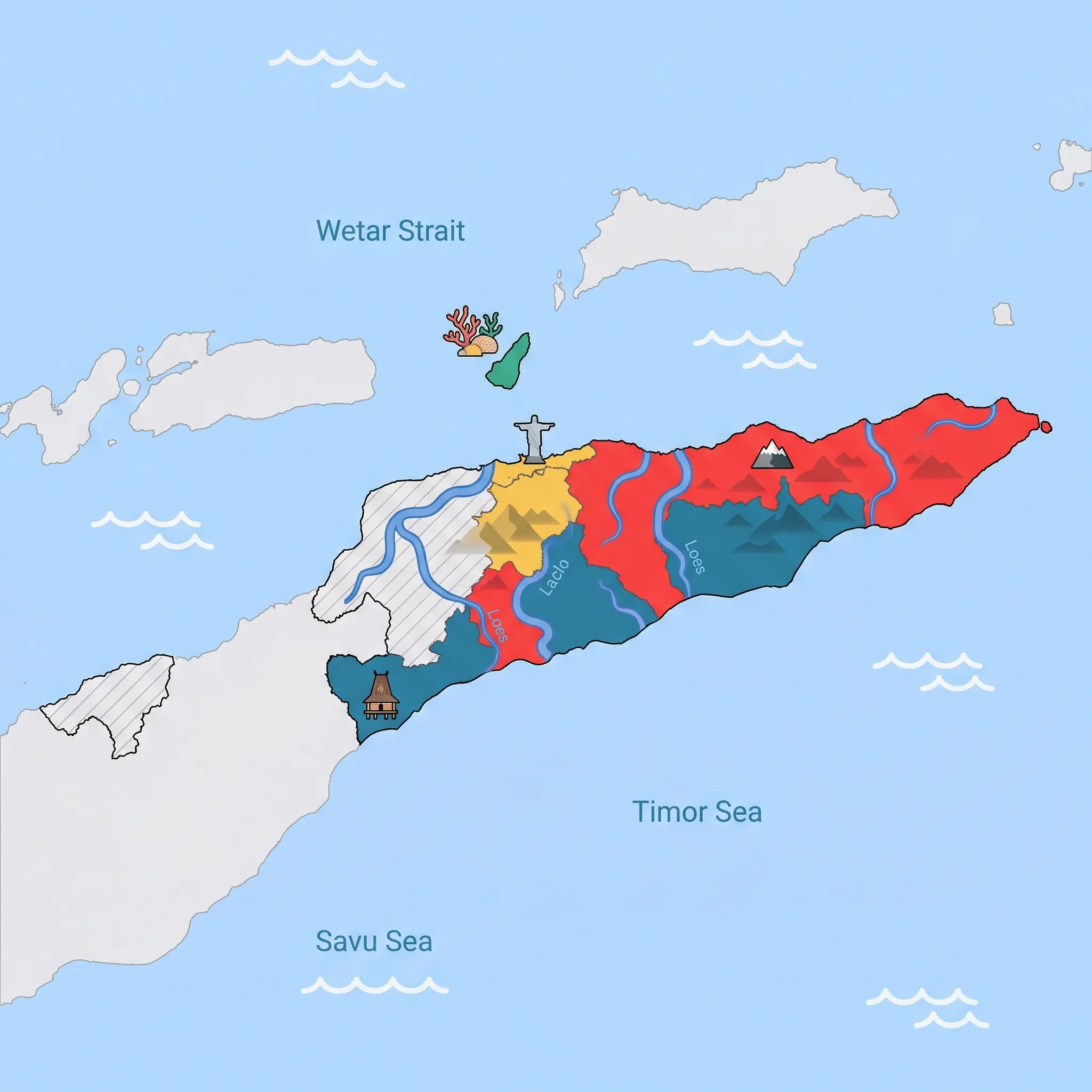
Click a region to explore
Warning: Saltwater crocodiles are present in many rivers and beaches on the South Coast. Always seek local advice before swimming and stay well back from the water's edge in unknown areas.
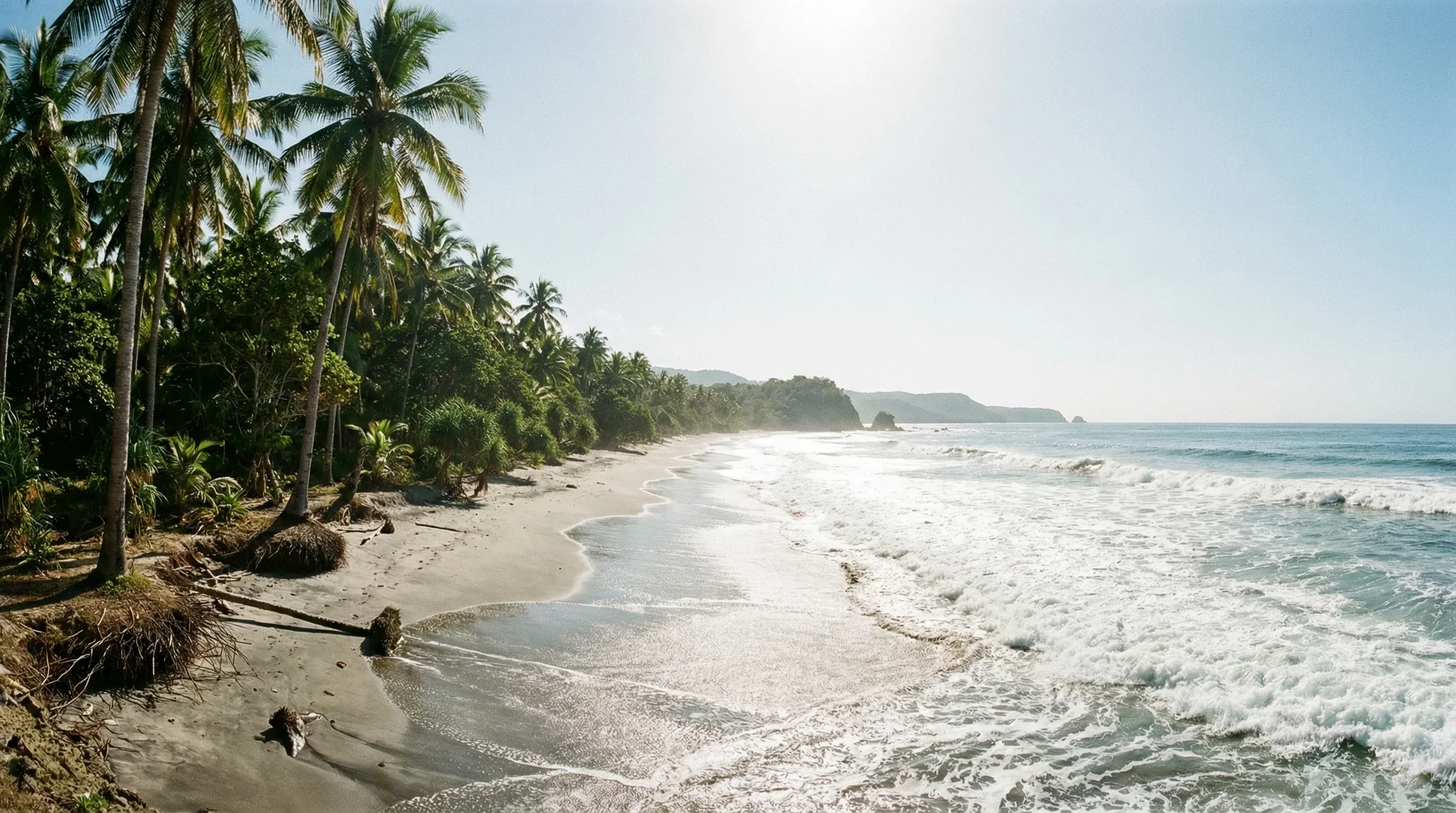
The South Coast is the frontier of Timor-Leste—a region of raw, sweeping beauty where the jungle meets the Timor Sea. Unlike the calmer north coast, the ocean here is more powerful, and the landscape is greener and wilder. For adventurous families, this is a destination for expedition-style travel. The region encompasses vast plains, traditional thatched villages, and significant historical sites from WWII, particularly around Betano. It feels undiscovered and remote, offering a true sense of adventure for older children interested in nature and history.
The jewel of the broader region (stretching to the eastern tip) is the Nino Konis Santana National Park. This protected area covers coral reefs, coastal forests, and caves with ancient rock art. While infrastructure is sparse—expect simple guesthouses and long car rides—the payoff is seeing a side of Southeast Asia that has remained largely unchanged for decades. Birdwatching here is exceptional, and the sheer emptiness of the beaches (viewed safely from the sand) is breathtaking.
Key Attractions
The primary draw is the Nino Konis Santana National Park, a vast area that protects both land and sea. Within or near this zone, families can visit the village of Com (a common base) or venture to Jaco Island (technically east, but part of the park system). In the south proper, Suai is the main town, known for its traditional culture and Tais weaving. The geography here is vast, so travel times between "attractions" can be long, but the route offers glimpses of traditional life that you won't see in Dili.
Practical Advice
This region is for the adventurous. Roads are currently being upgraded (Tasi Mane project) but can still be rough. Malaria risk is higher in the south than in Dili; consult a doctor for prophylaxis and use strong repellent. Dry season (July-October) is best for road access.
Food & Drink
Typical meal times: 12:00 pm to 2:00 pm for lunch. Dinner is early, around 6:30 pm.
Typical meal costs: Very cheap. Local meals $3–5 (approx. €2.75–4.50 / £2.30–4). Fancy options do not exist.
Dietary requirements: Extremely difficult. You will mostly find rice, fried fish, and boiled vegetables. Bring your own snacks for children.
Signature dishes:
- Tukir – Meat (often goat or deer) marinated in spices and cooked slowly inside bamboo stalks over a fire.
- Feijoada – A local version of the Portuguese bean and pork stew, common in Suai.
- Local Bananas – The south produces many varieties of sweet, small bananas sold by the bunch.
Why this score?
This is a serious frontier destination where the landscape is wild and the infrastructure is extremely limited, especially during the rainy season. The presence of saltwater crocodiles in coastal areas and the isolation of the Nino Konis Santana National Park provide a high-stakes adventure environment.
Why this score?
Medical infrastructure is minimal, consisting of small rural health posts that are ill-equipped for anything beyond basic first aid. The extreme distance from Dili and the challenging road conditions mean that any major injury would face significant delays in receiving professional treatment.
Why this score?
The South Coast is the least visited region in one of the world's least visited countries, with virtually no established tourist facilities. Most international presence is related to energy projects rather than leisure travel, making foreign tourists a genuine rarity.

Costs are low, but value is variable. You might pay $40 (approx. €37 / £32) for a very basic room simply because it's the only option. Fuel and car hire will be your biggest expenses, likely exceeding $100 (approx. €92 / £79) per day.

Getting Here & Around
Getting Here
- Driving – Access is via mountain roads crossing the spine of the country. Allow 5-7 hours from Dili depending on the destination.
- Air – Suai has a new airport (Oecusse route), but flights can be irregular. Check local schedules in Dili.
Getting Around
- 4x4 Rental – The only viable option for families. Standard cars will struggle with river crossings or mud.
- Walking – Only recommended within villages or with a local guide due to wildlife risks.
No airports in this region. See the country flight map for nearby connections.

Packing List
great for safe wildlife viewing (crocodiles/birds) from a distance.
The southern coast has a higher risk of malaria than Dili; check with a doctor.
Electricity in remote southern villages is often limited to a few hours a night.
Protection against mosquitoes and leeches if hiking in the wetter months.
ATMs are rare outside Dili and vendors often cannot change large notes ($50/$100).
Essential for coral beaches and rocky shores to protect feet from cuts and stonefish.
Mountain roads are incredibly winding and journey times are long.
Street lighting is minimal and power cuts can occur, especially in rural districts.
Rental gear is often adult-sized or poor quality; bring your own for the kids.

Activities & Best Times

Hiking, wildlife, outdoor exploration, ecotourism
Home to the massive Nino Konis Santana National Park and Tilomar Nature Reserve, offering raw, high-biodiversity wilderness experiences for intrepid families. Peak months align with the dry season, ensuring trail accessibility and better conditions for wildlife observation in dense jungle environments.

Beach resorts, marine activities: diving, snorkelling, kite surfing, wind surfing, sailing
Pristine, undeveloped beaches like Lore and Betano offer an authentic, 'off-the-map' coastal experience far from commercial tourism. The South Coast faces the Timor Sea, where heavy monsoon swells from December to March make beaches unsuitable and potentially dangerous for swimming.

Scenic drives, countryside tours, route-based travel
The Tasi Mane Highway and Southern Coastal Route provide dramatic coastal vistas and access to remote villages. Peak travel is restricted to the driest months when road conditions are most stable and the risk of landslides or flooding is minimal.

Sport tourism, fitness activities, active recreation
Significant trekking routes like Mount Kablaki and Mundo Perdido offer world-class hiking challenges for active families. These high-altitude adventures are best undertaken in the coolest, driest months to avoid slippery terrain and persistent cloud cover that obscures summit views.

Urban tourism, museums, historical sites, architecture
While lacking major urban centers, the region offers unique cultural sites like the Lore Traditional Houses and Ave Maria Cathedral in Suai. Cultural tourism is most viable during the dry season when remote heritage villages remain accessible by road.




Public Holidays & Calendar Next 12 months
Public holidays, festivals, cultural celebrations, and seasonal natural phenomena coming up in South Coast over the next 12 months.
Loading holidays and events...

Travel Advisory
All major agencies agree that travellers should exercise increased caution in Timor-Leste. The primary concerns involve civil unrest, gang-related violence in urban areas, and a higher-than-average risk of crime. Additionally, the limited medical infrastructure means serious health issues often necessitate expensive air evacuation.
Safety Topics
Traveller Advice (3 groups)

Female travellers face a high risk of sexual harassment, including verbal abuse and indecent exposure. It is strongly recommended to avoid walking or using public transport alone, particularly after dark.

Infrastructure for mobility and accessibility is very limited throughout the country. Travellers with physical disabilities should prepare for significant challenges in transport and public facilities.

Be aware that dual nationals may face different entry and exit requirements, and consular assistance from their other country of citizenship may be restricted by local authorities.
Agency Summaries
Travellers should remain highly vigilant because of the inconsistent security situation and prevalent criminal activity across the country.
While the general security environment has seen improvements, underlying political friction remains. Foreigners should avoid large public gatherings and be mindful of crime, which frequently includes theft and assault.
Irish citizens are urged to be very careful regarding their personal safety and health. Medical facilities are extremely limited, and most serious cases require evacuation to neighboring countries.
Increased vigilance is recommended due to risks of civil disturbances and crime. Public demonstrations can occasionally result in forceful police interventions, and gang-related incidents like stone-throwing are common.
Heightened awareness is necessary due to the threat of criminal acts and a lack of comprehensive medical infrastructure. Protests can occur without much warning, especially in the capital.
There are notable safety concerns, including the potential for robbery targeting foreigners and sudden escalations in civil unrest. Travellers are advised to monitor local news closely.
Information is provided for general guidance only and does not constitute travel, safety, medical, or legal advice. Conditions may change. Users are responsible for independently verifying information before travel.