
Kara & Northern Togo
Ancient mud castles and savannah wildlife 🦁🏘️
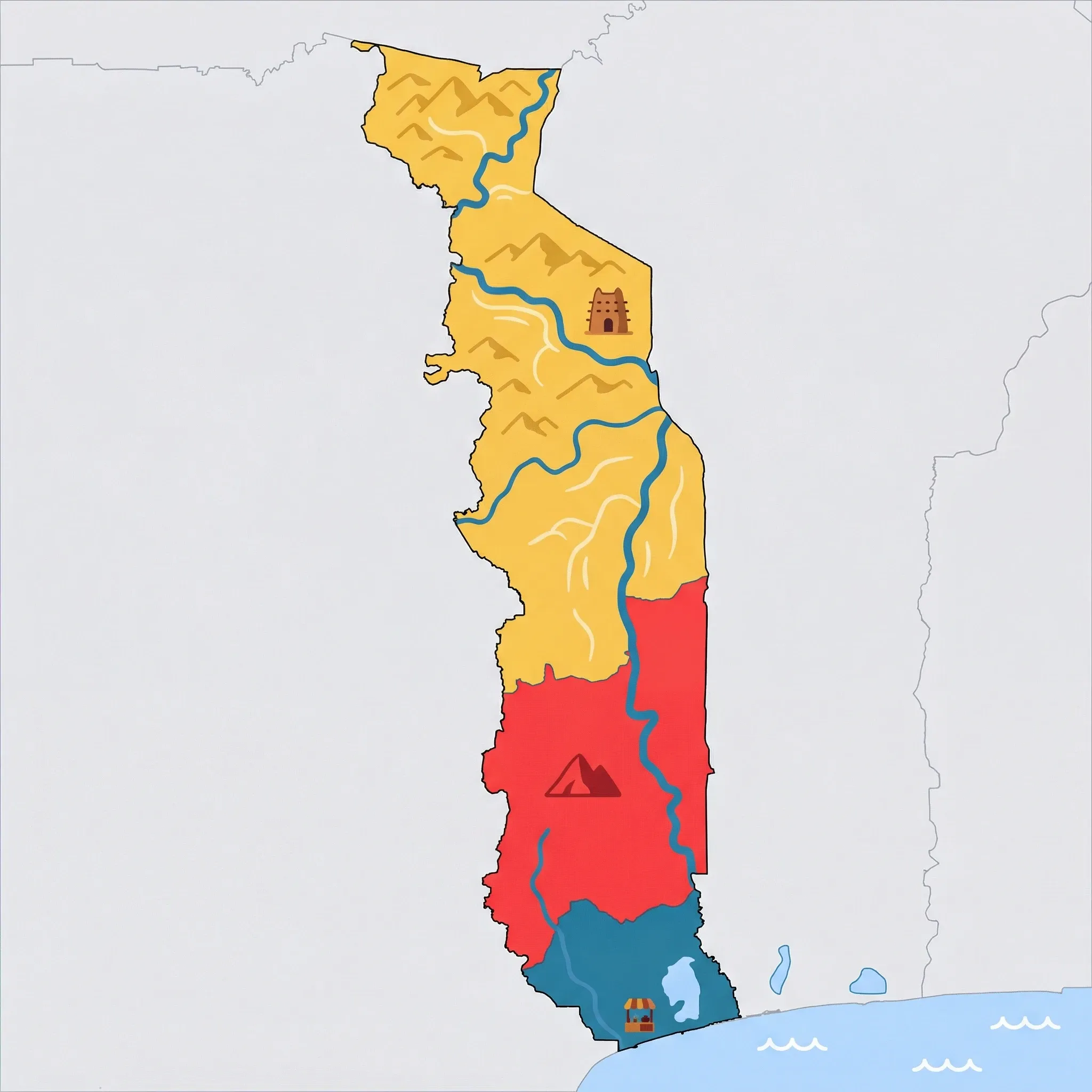
Click a region to explore
⚠️ SAFETY WARNING: Due to the volatile security situation near the northern border with Burkina Faso, government agencies (including the UK, USA, and Australia) advise travelers to exercise a high degree of caution. The US Department of State specifically assigns a Level 2 (Exercise Increased Caution) to the country, with higher risks in the Savanes region due to potential terrorism and kidnapping. Families should strictly avoid areas immediately adjacent to the northern border, stick to main roads and established tourist sites like Kara city, and are strongly urged to consult their own government's official travel advisory before considering a trip, as circumstances and risk assessments vary.
Despite the necessary precautions, the Kara and Northern region represents the cultural soul of Togo, offering a landscape and atmosphere vastly different from the coastal south. This is a land of rugged beauty, characterized by the Atakora mountain range, rocky outcrops, and sweeping savannas that turn lush green during the rainy season and golden brown during the harmattan. For families, this region provides a living history lesson that feels like stepping into a National Geographic documentary. The air here is drier, the pace is slower, and the traditions are deeply entrenched in the daily lives of the local Kabyé and Batammariba peoples. It is a place for families who enjoy off-the-beaten-path adventures, willing to trade the comforts of modern resorts for the privilege of witnessing authentic West African heritage.
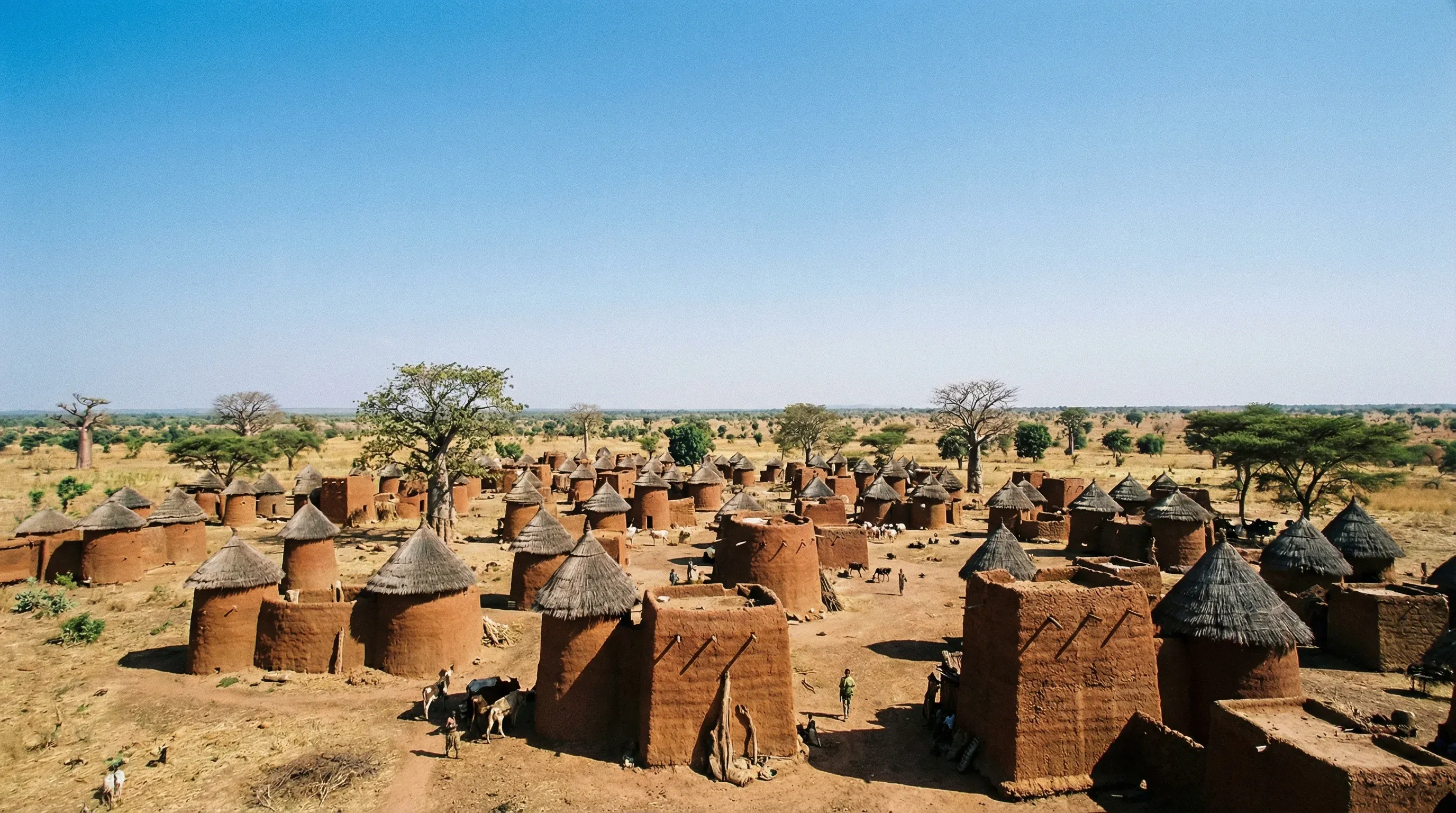
The cultural highlight is undoubtedly the architecture. Unlike the colonial buildings of the coast, the north is famous for its fortress-like mud dwellings. Exploring these villages allows children to see how families have lived in harmony with the harsh environment for centuries. The people are welcoming, often inviting visitors to climb the rooftops of their castle-like homes to dry grain or see the shrines that protect the household. While the infrastructure is basic, the warmth of the interactions and the stunning, stark scenery create memories of a Togo that few casual tourists get to see.
Key Attractions
The absolute must-see destination is Koutammakou, the Land of the Batammariba. This UNESCO World Heritage landscape is dotted with Takienta—spectacular mud tower-houses that serve as both dwellings and defensive forts. Kids love exploring the multi-story structures, climbing the traditional wooden ladders, and learning how the 'souls' of the ancestors are kept in conical shrines outside the front door. It is a tactile, immersive history lesson that brings African architectural ingenuity to life.
For a change of pace, the Sarakawa Wildlife Reserve offers a manageable and safe safari experience perfect for younger children. Unlike massive, overwhelming parks elsewhere in Africa, Sarakawa is compact, meaning you are almost guaranteed to see zebras, kobs, buffalo, and ostriches within a short drive. The reserve was once a private hunting ground, but now serves as a protected sanctuary where animals roam freely in the savanna, allowing for close-up encounters that will thrill wildlife-loving kids.
Practical Advice
The best time to visit is during the dry season (November to February), though the Harmattan wind can bring dust from the Sahara, creating a haze. Travel here requires patience; roads can be potholed, and distances are long. It is highly recommended to hire a private 4x4 with a knowledgeable local driver who knows the safe routes and speaks the local dialects. Medical facilities are limited, so carry a comprehensive first-aid kit.
Food & Drink
Typical meal times: Lunch is usually eaten between 12:00 pm and 2:00 pm, while dinner is served from 7:00 pm to 9:00 pm.
Typical meal costs: Street food is incredibly cheap, but sit-down meals in hotels run about 3,000–8,000 XOF (approx. $5–13 USD / €4.50–12 EUR). A family dinner can cost 15,000–25,000 XOF (approx. $25–40 USD / €23–38 EUR).
Dietary requirements: Vegetarian options are sparse. Most sauces contain fish stock or meat. You must explicitly ask for plain rice or yam chips with a fresh tomato salad if you wish to avoid animal products.
Signature dishes:
- Pâte (or Tuo Zaafi) – A dense, dough-like staple made from corn or millet flour, eaten with hands and dipped into various okra or leaf-based sauces.
- Wagasi – A local soft cheese made from cow's milk, often fried and dipped in a spicy pepper sauce; a rare indigenous cheese in West Africa that kids often enjoy.
- Tchoukoutou – A cloudy, fermented sorghum beer brewed in large clay pots. While alcoholic, the process of making it is a fascinating cultural sight.
Why this score?
Travelers encounter rugged terrain in the Atakora mountains and must navigate remote areas with minimal tourist infrastructure. The cultural immersion required to visit the semi-isolated Tamberma mud towers and the lack of reliable transport represent a significant adventure.
Why this score?
Medical services in Northern Togo are extremely basic and often inaccessible to foreigners, with few facilities capable of handling emergencies. Most serious medical issues would require a difficult and lengthy evacuation to the capital or out of the country.
Why this score?
The region is home to the UNESCO-listed Koutammakou, yet its remote location and Togo's overall low tourism volume keep international visitor numbers very low. It remains a niche destination for specialized cultural travelers and researchers rather than a mainstream choice for global families.

Northern Togo is generally cheaper than the coast, though tourism infrastructure is scarce. A decent family room in a hotel in Kara costs between 25,000–45,000 XOF (approx. $40–75 USD / €38–68 EUR) per night. Entrance fees to reserves like <a data-attraction-id="57135">Sarakawa</a> are roughly 5,000 XOF (approx. $8 USD / €7.50 EUR) per adult, with discounts for children.

Getting Here & Around
Getting Here
- Driving – The drive from Lomé to Kara takes approximately 7–8 hours (approx. 410km) on the N1 highway. The road condition varies significantly, with some sections recently paved and others heavily potholed. A sturdy 4x4 vehicle is essential for family comfort.
- Bus – Comfortable, air-conditioned buses (such as those run by La Poste or Rakieta) run daily between Lomé and Kara. The journey takes 8–9 hours.
- Air – Niamtougou International Airport (LRL) is located about 40km north of Kara, but scheduled commercial flights from Lomé are sporadic and subject to cancellation. Check with local operators for current availability.
Getting Around
- Car with Driver – This is the only recommended option for families in the north. A private car allows you to visit Koutammakou, the Land of the Batammariba and Sarakawa Wildlife Reserve at your own pace.
- Zémidjans (Moto-taxis) – Ubiquitous in Kara city, but generally unsafe for children and not suitable for long distances on dusty rural roads.
No airports in this region. See the country flight map for nearby connections.

Packing List
The Harmattan winds (Dec-Feb) fill the air with fine Saharan dust that can irritate lungs.
Small items like kola nuts or school notebooks are customary when visiting Batammariba villages.
Power cuts are frequent in the north and street lighting is minimal in rural areas.
The extremely dry air can cause nosebleeds in children unaccustomed to the climate.
Mandatory physical document. You will be refused entry without the original yellow card.
Power cuts (load shedding) are common, and streets are often poorly lit at night.
The CFA Franc is pegged to the Euro. Euros are the easiest currency to exchange; USD is harder to use.
English is rarely spoken outside major hotels; basic French is essential for daily interactions.
Essential for cleaning dusty hands before eating fufu and for humid travel days.

Activities & Best Times

Hiking, wildlife, outdoor exploration, ecotourism
Offers unique trekking through the Atakora mountains and wildlife viewing in the Sarakawa Reserve; peak season (Nov-Feb) provides cooler nights and dry trails, avoiding the heavy summer rains.

Urban tourism, museums, historical sites, architecture
Home to the UNESCO-listed Koutammakou, featuring the iconic Batammariba mud tower houses which offer a world-class authentic cultural experience; best visited when dry conditions allow access to remote valley communities.

Scenic drives, countryside tours, route-based travel
Features dramatic mountain driving through the Aledjo Fault and scenic loops in the Kabyè Mountains; peak months offer stable road conditions and better visibility before the extreme pre-monsoon heat of April.

Sport tourism, fitness activities, active recreation
Significant trekking and cycling infrastructure exists via the Koutammakou and Kabyè trails; activity is highly seasonal, restricted to the dry months when mountain paths are safe and navigable for families.

Attractions (5 total)



Public Holidays & Calendar Next 12 months
Public holidays, festivals, cultural celebrations, and seasonal natural phenomena coming up in Kara & Northern Togo over the next 12 months.
Loading holidays and events...

Travel Advisory
Travelers should exercise increased vigilance across the country. Significant security risks exist in northern border areas due to terrorism, while urban centers face risks from crime and occasional political demonstrations.
Safety Topics
Traveller Advice (3 groups)

Aid workers should exercise extreme care in the Savanes region due to the specific targeting of foreign nationals by extremist groups.

Same-sex relationships are prohibited by law, and individuals may face fines or imprisonment for participating in activities deemed 'unnatural' or 'indecent'.

Female visitors are advised to dress modestly and respect local customs to avoid unwanted attention or cultural offense.
Agency Summaries
No specific travel warning is in place, but travelers are encouraged to ensure they have comprehensive insurance and stay informed about local health risks.
A high degree of caution is necessary, especially near the border with Burkina Faso, where the security environment is unstable due to kidnapping and extremist threats.
While general travel is permitted, there is a serious threat of terrorism and kidnapping near the northern border. Demonstrations can occur and may become confrontational.
Visitors should maintain significant vigilance due to the potential for social disturbances, political protests, and incidents of violent crime.
Heightened caution is recommended due to the activities of criminal and extremist groups, particularly in border regions, alongside risks of civil unrest and kidnapping.
Australians are advised to be highly alert to security threats, including the risk of terrorist attacks and civil instability across the country.
Information is provided for general guidance only and does not constitute travel, safety, medical, or legal advice. Conditions may change. Users are responsible for independently verifying information before travel.