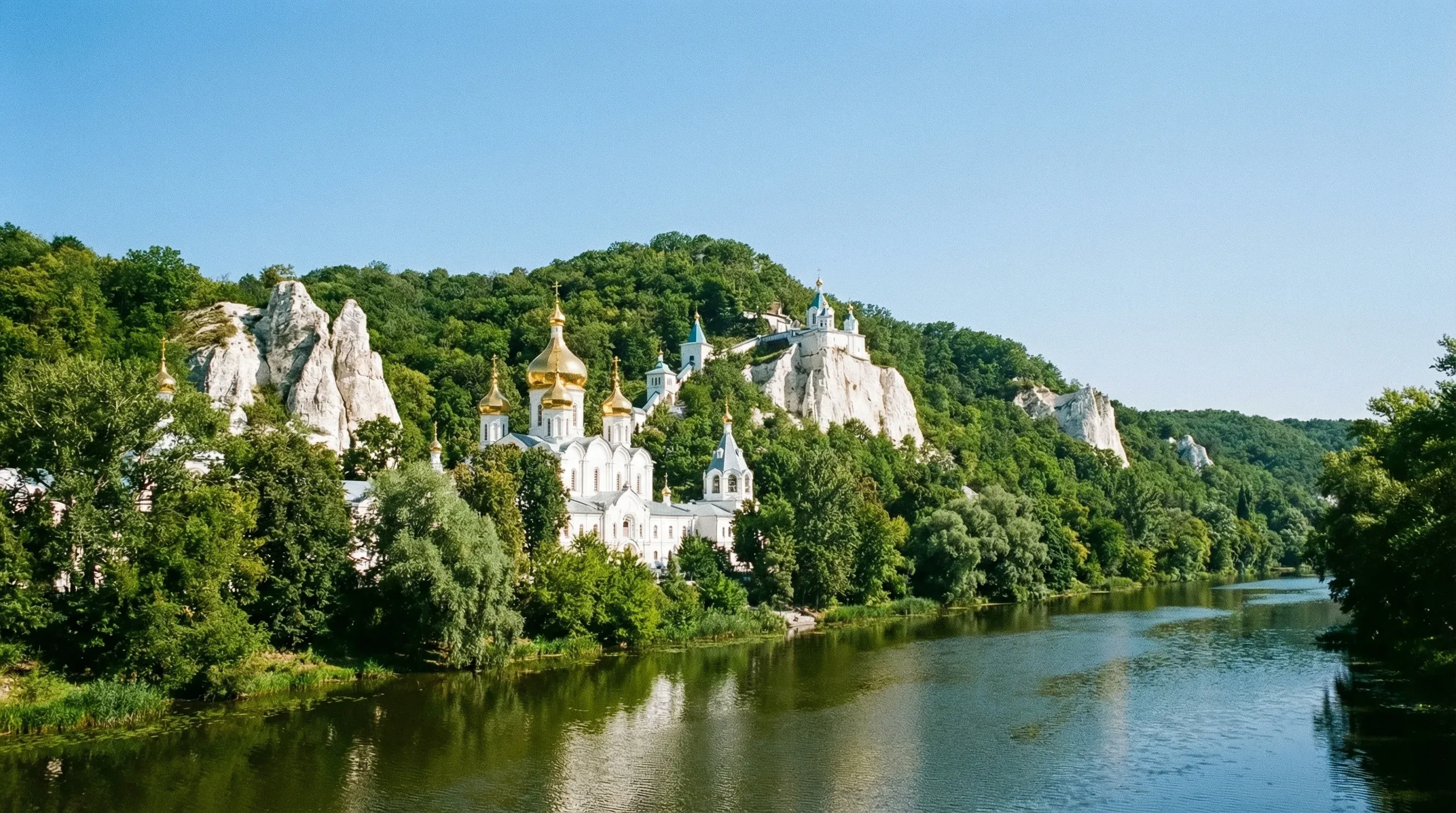

Eastern regions (conflict zone; check advisories)
A region of industrial giants and vast steppes 🏭🌾
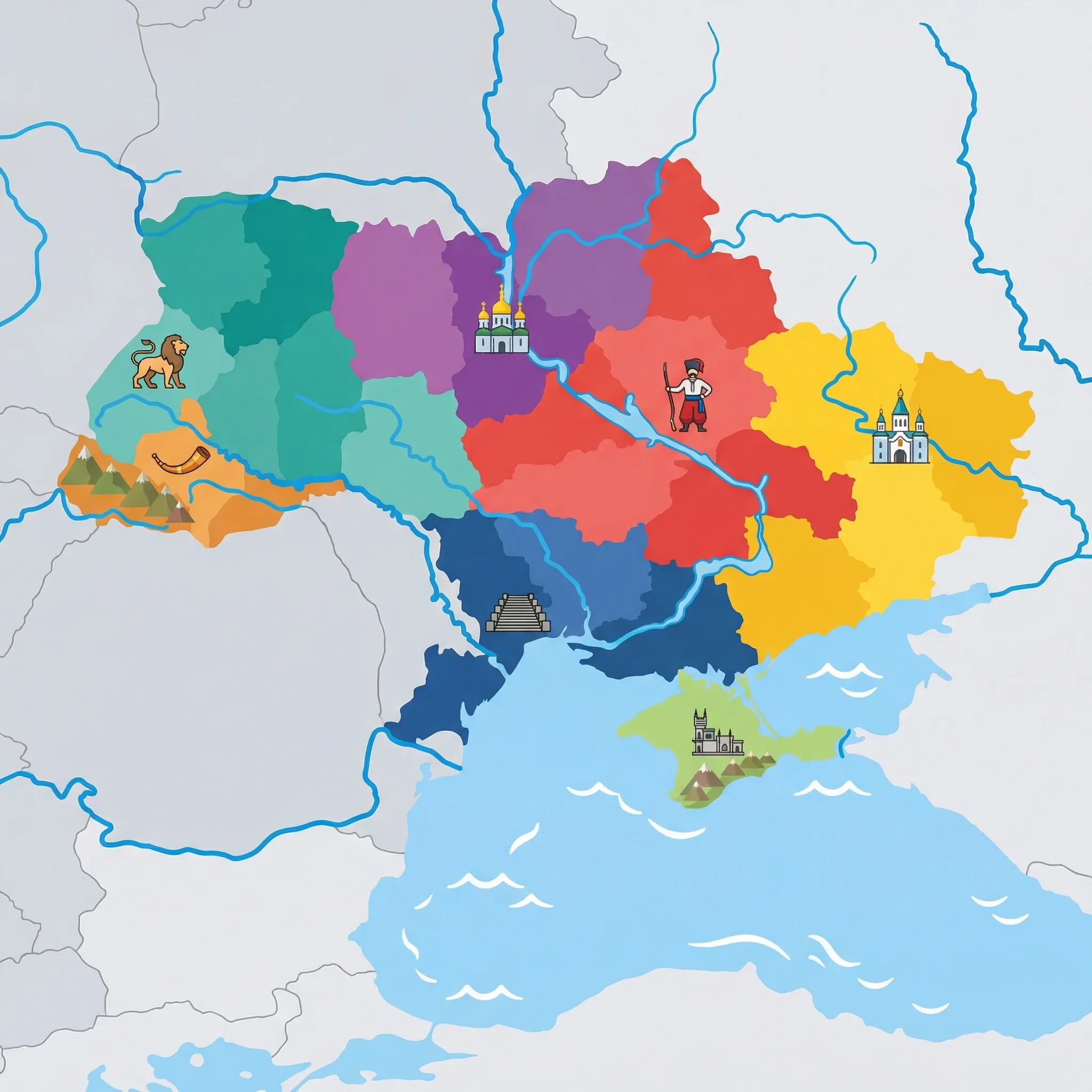
Click a region to explore
⚠️ SAFETY WARNING: Due to active ground combat and artillery bombardment, government agencies (including CA, USA, UK, AU, IE, NZ) advise to absolutely do not travel to Eastern Ukraine. This is an active war zone with widespread destruction. Cities like Bakhmut have been devastated. Parts of the region are under temporary occupation. Families are strongly urged to consult their own government's official travel advisory, as the risk to life is critical.
Eastern Ukraine is a land of contrasts, where golden sunflower fields meet the towering winding towers of coal mines. Geographically, it is dominated by the steppe—flat, open grasslands that stretch to the horizon—and the industrial basin of the Donbas. Historically, this was the industrial heart of the former Russian Empire and Soviet Union, leading to a unique urban culture centered around massive factories and distinct worker settlements. However, the region also possesses pockets of serene natural beauty, particularly along the winding Siverskyi Donets River, which cuts through chalk hills and pine forests.
Before the full-scale invasion, Kharkiv was a vibrant university city with a youthful energy and some of the best parks in the country. The region's character is defined by resilience and a stark, rugged beauty. While tourism is currently impossible, the cultural footprint of the East—from its constructivist architecture to its specific dialect and hearty cuisine—remains an integral part of Ukraine's identity. The area is also home to significant religious sites carved directly into the chalk mountains, offering a unique blend of nature and spirituality.
Key Attractions
In peaceful times, Kharkiv Central Park (often called the "Disneyland of Ukraine") was a top family destination with world-class rides and landscaping. The Feldman Ecopark nearby served as a beloved animal sanctuary and rehabilitation center. Further south, the Holy Mountains Lavra in Sviatohirsk is a breathtaking Orthodox monastery complex built into white chalk cliffs overlooking the river; it has suffered damage but remains a spiritual symbol. The Donetsk Botanical Garden and V. N. Karazin Kharkiv National University Botanical Garden were also major green lungs for their respective cities.
Practical Advice
Best time to visit: N/A - Active conflict zone.
Logistics: Civilian infrastructure in many areas is severely damaged. Transport links are frequently disrupted or used solely for military and humanitarian purposes.
Food & Drink
Typical meal times: Lunch 12:00 pm to 2:00 pm, Dinner 6:00 pm to 8:00 pm.
Typical meal costs: In accessible areas (e.g., parts of Kharkiv), a meal costs 400–700 UAH (approx. $10–17 USD / €9–16 EUR). Prices can be higher due to supply chain risks.
Dietary requirements: Food availability can be sporadic in frontline cities. Humanitarian aid is a primary source in some zones.
Signature dishes:
- Okroshka – A cold summer soup made with raw vegetables, boiled potatoes, eggs, and cooked meat, served with kvass or kefir.
- Slobozhansky Borscht – A regional variation of borscht, often made with beans and meatballs for extra heartiness.
- Cutlet de volaille – A breaded chicken breast rolled with butter, popular in local cafeterias.
Why this score?
While the physical geography features unique chalk cliffs and the Holy Mountains, the presence of landmines and active hostilities makes any form of family adventure impossible. In a non-conflict context, the rugged steppe terrain would offer moderate outdoor appeal.
Why this score?
Healthcare infrastructure in the east is either overwhelmed by military casualties or completely non-functional in many areas. Access to civilian medical services for foreigners is virtually non-existent and extremely dangerous to attempt.
Why this score?
As an active conflict zone, international tourism is non-existent and strictly advised against by all governments. The region's infrastructure for visitors has been largely destroyed or repurposed for military use.

In accessible cities like Kharkiv, costs are moderate, but the risk premium on goods can be high. A basic hotel room (if operating) costs 1,200–2,500 UAH (approx. $29–60 USD / €27–55 EUR). Many businesses operate on reduced hours.

Getting Here & Around
Getting Here
- Train – Trains still run to Kharkiv from Kyiv, but schedules are subject to change based on security alerts.
- Driving – Extremely dangerous due to shelling and landmines. Many roads are closed to civilians.
- Bus – Limited services connect to Kharkiv, but travel further east is restricted or impossible.
Getting Around
- Restricted – Movement is heavily controlled by military checkpoints. Curfews are strictly enforced.
- Metro – The Kharkiv Metro serves as both transport and a bomb shelter during air raids.
No airports in this region. See the country flight map for nearby connections.
Official Links

Packing List
Essential due to high risk of kinetic activity and delayed ambulance response
Precautionary measure due to proximity to nuclear power infrastructure risks
Body armor is standard for press and volunteers in this region
Mobile internet is often jammed or infrastructure is destroyed
Frequent power outages due to infrastructure attacks make backup power essential for phones.
Street lights are often turned off for camouflage or energy saving; essential for walking at night.
Visibility is poor in unlit streets; drivers cannot see pedestrians without reflective gear.
Mobile internet can be unstable or jammed; offline navigation is a critical backup.
ATMs and card terminals often fail during blackouts; cash is king in emergencies.
Air raid sirens are extremely loud and frequent, often disrupting sleep.

Activities & Best Times

Urban tourism, museums, historical sites, architecture
Home to the world-class constructivist Derzhprom building and the historic Holy Mountains Lavra, offering a unique blend of Soviet-era architecture and deep religious heritage. Late spring and early autumn avoid the extremes of continental heat and freezing winters.

Hiking, wildlife, outdoor exploration, ecotourism
The region features unique chalk cliffs in the Holy Mountains National Park and distinctive river-based ecosystems. Peak months provide mild temperatures ideal for trekking the Donets Ridge, while winter months are too cold for meaningful nature immersion.

Sport tourism, fitness activities, active recreation
Established mountain biking loops in Kharkiv Lisopark and adventure centers like S-Park provide solid infrastructure for active families. These outdoor facilities are most enjoyable during the dry, mild periods of spring and fall.

Amusement parks, family entertainment venues
Kharkiv Central Park is recognized as a top-tier regional amusement destination with high-quality facilities. Peak demand aligns with summer school holidays, though indoor water parks and festive events provide some shoulder season appeal.

Learning experiences, scientific sites, historical education
The Nemo Oceanarium offers specialized educational experiences, though it serves more as a supplementary attraction rather than a primary global travel motivator. Best visited alongside city cultural highlights during temperate months.

Scenic drives, countryside tours, route-based travel
The Holy Mountains Scenic Drive offers attractive landscapes through the steppe and river valleys, particularly during the October autumn colors. Poor road conditions in winter and early spring mud (bezdorizhzhia) make touring difficult outside the warmer seasons.

Winter sports, ski resorts, snow activities
Limited to small-scale urban ski centers like Kharkiv Switzerland which offer basic winter sports for domestic enthusiasts. These lack the infrastructure and verticality of international resorts, with a very short reliable season in mid-winter.




Public Holidays & Calendar Next 12 months
Public holidays, festivals, cultural celebrations, and seasonal natural phenomena coming up in Eastern regions (conflict zone; check advisories) over the next 12 months.
Loading holidays and events...

Travel Advisory
Extreme risk; travel strongly discouraged or prohibited due to ongoing full-scale military invasion and country-wide security threats.
Safety Topics
Traveller Advice (3 groups)

While the desire to help is recognized, the environment is too dangerous for individual volunteers. It is recommended to support established humanitarian organizations from abroad rather than traveling to the conflict zone.

All foreign nationals are strongly urged to avoid entering the country and to depart immediately if they are currently present. Safety cannot be guaranteed in any region due to the risk of indiscriminate strikes and active ground combat.

Media professionals are at extreme risk of injury, kidnapping, or death in combat zones. Proper military accreditation is mandatory for anyone attempting to report from the field, and the risk of being targeted is high.
Agency Summaries
United States authorities advise against all travel to Ukraine because of the active war. While some western regions are technically classified as Level 3 (Reconsider Travel), the national alert remains at the highest level. Citizens are warned of the risk of being targeted by security officials in occupied zones and the limited ability of the embassy to provide emergency assistance.
Australia continues to warn its citizens to avoid Ukraine entirely due to the volatile security environment and active military conflict. The advisory stresses that the security situation can change without notice and that the Australian Embassy in Kyiv is unable to provide advance warnings of attacks or in-person consular services.
New Zealand advises its citizens against all travel to Ukraine due to the invasion and military aggression. The government notes a real risk to life from heavy fighting and unexploded ordnance. Those currently in the country should seek shelter in secure locations until it is safe to depart via land borders.
Ireland maintains its highest warning level for Ukraine, advising against all travel for any purpose, including surrogacy arrangements. Citizens are told to leave immediately if they can do so safely, as drone and missile strikes occur almost daily and target civilian infrastructure like hotels and residential buildings.
British officials recommend against all travel to most of Ukraine, with only highly essential travel suggested for certain western regions. The warning highlights a significant increase in drone and missile attacks over the past year, resulting in high civilian casualties. Nationals are advised to stay alert to air raid sirens and be prepared to seek immediate shelter.
The Canadian government strongly advises against any travel to Ukraine due to the ongoing full-scale military invasion by Russia. Safety is at extreme risk throughout the country from missile and drone strikes targeting both government and civilian areas. Canadians currently present are urged to leave if safe and are warned that consular help is highly restricted.
Information is provided for general guidance only and does not constitute travel, safety, medical, or legal advice. Conditions may change. Users are responsible for independently verifying information before travel.