
Click a region to explore
Overview
Colonia del Sacramento is arguably the most charming and atmospheric destination in Uruguay, offering families a peaceful retreat that feels entirely removed from the modern world. Founded by the Portuguese in 1680, the city’s UNESCO World Heritage Barrio Histórico is a maze of cobbled streets, sycamore trees, and low-slung colonial houses that delight children with their fairy-tale appearance. The region’s geography is defined by its position on the Río de la Plata, where the brown river waters are so vast they resemble the ocean. The climate is temperate, with warm summers perfect for river swimming and crisp, cool winters that make the historic lantern-lit streets feel even more cozy.
For families, Colonia is exceptionally approachable. Unlike the bustle of a capital city or the glitz of a beach resort, the vibe here is slow and safe. One of the most popular activities for kids is renting a golf cart or buggy to zip around the town—a novelty that turns sightseeing into an adventure. The absence of heavy traffic in the historic center allows parents to relax while children explore the old city walls and bastions. Beyond the history, the surrounding department offers sandy river beaches and a countryside dotted with vineyards and cheese producers, reflecting the area’s strong Swiss and Italian immigrant roots.
Key Attractions
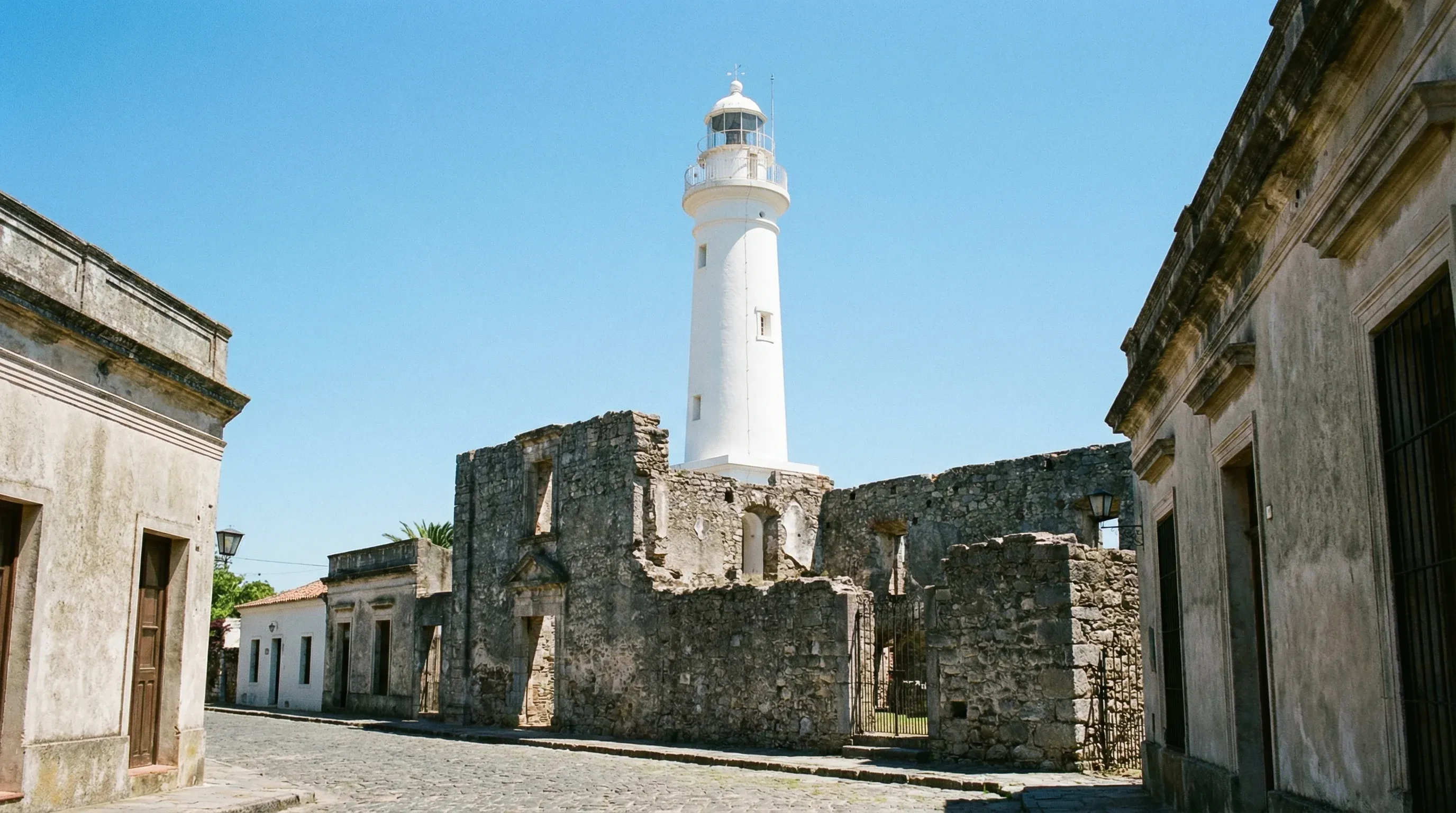
The heart of the experience is the Barrio Histórico. Families should start at the Portón de Campo (City Gate), complete with a wooden drawbridge that captures children's imaginations immediately. A climb to the top of the Colonia Lighthouse is essential; the spiral staircase adventure rewards you with views stretching all the way to Argentina on clear days. The Calle de los Suspiros (Street of Sighs) is the most famous photo spot, with its original rough-hewn paving stones.
Just outside the old town lies the recently restored Plaza de Toros Real de San Carlos. This former bullring, now a cultural center, is an architectural marvel that fascinates kids with its massive scale and history (though bullfighting is long banned). For a touch of nature, the Ferrando Park offers green space for picnics. Nearby, the Granja Arenas museum is a quirky stop holding Guinness World Records for pencil and keychain collections, which often amuses younger travelers.
Practical Advice
Colonia is a year-round destination, though spring (October–November) and autumn (March–April) offer the most pleasant walking weather. Weekends can be crowded with day-trippers from Buenos Aires; visiting mid-week ensures a quieter experience.
Food & Drink
Typical meal times: Lunch is usually served from 12:30 pm to 3:00 pm. Dinner is late by international standards but earlier than Montevideo, typically starting around 8:00 pm to 10:30 pm.
Typical meal costs: A sit-down dinner for a family of four costs approximately $2,800–4,500 UYU (approx. $70–115 USD / €65–105 EUR). Casual snacks are cheaper.
Dietary requirements: Vegetarian options (pasta, salads, cheese) are common. Gluten-free items are available in larger restaurants but less guaranteed in small historic cafés; always ask for "sin gluten".
Signature dishes:
- Chivito – Uruguay's legendary steak sandwich, stacked with ham, cheese, egg, bacon, and salad—a massive hit with hungry teenagers.
- Queso Colonia – A semi-hard cow's milk cheese with large eyes (holes), originating from the region's Swiss immigrants, often served as an appetizer.
- Martín Fierro – A simple, beloved dessert consisting of a slice of cheese (usually Colonia) stacked with a slice of quince paste (dulce de membrillo).
Why this score?
The region is characterized by flat, paved, or cobblestone streets and a highly developed tourism infrastructure centered on history and dining. Families typically explore via walking or golf carts, with no rugged terrain or physically demanding wilderness activities available. It is one of the most accessible and low-impact destinations in the country.
Why this score?
The town has several competent clinics and a public hospital that can handle routine medical issues and minor emergencies for tourists. While staff are professional, English-speaking capabilities are limited compared to the capital. For major surgeries or specialized care, patients are generally transferred to Montevideo, which is about two hours away.
Why this score?
As a UNESCO World Heritage site, it is a major regional draw for day-trippers from Buenos Aires and regional travelers. However, its small size and niche historical focus mean it does not see the massive international volumes of global tier-1 destinations. Tourism is steady but primarily concentrated within the small historic quarter.

Colonia prices are tourist-oriented but generally lower than Punta del Este. A mid-range hotel family room costs $3,500–6,000 UYU (approx. $90–150 USD / €80–140 EUR). Restaurant prices in the historic square command a premium; walking a few blocks east drops the price significantly.

Getting Here & Around
Getting Here
- Ferry – The most popular route is via Buquebus or Colonia Express ferries from Buenos Aires, taking just 1 hour and 15 minutes.
- Bus – Regular buses run from Montevideo's Tres Cruces terminal, taking approximately 2.5 hours.
- Driving – A scenic 2.5-hour drive (180 km) west from Montevideo on Route 1.
Getting Around
- Walking – The Historic Quarter is best explored on foot; cars are restricted in many parts.
- Golf Carts – The signature way for families to travel. Rentals are available near the ferry terminal and allow easy access to the bullring and beaches.
- Bicycle – The terrain is flat and bike-friendly, with many rental shops offering child seats.
No airports in this region. See the country flight map for nearby connections.
Official Links

Packing List
The 17th-century cobblestones are jagged and painful in thin sandals or flip-flops.
Riverside humidity brings mosquitoes, especially during summer evenings.
Old colonial buildings often have scarce or outdated outlets (Type C/I/L).
Tap water is safe, and staying hydrated while walking the open bastions is key.
Uruguay uses a mix of sockets, including the 3-pin Italian style (Type L) which is rare elsewhere in the Americas.
The ozone layer is thinner in this region; UV index can be extreme even on mild days. Sunburn happens fast.
Coastal winds (the 'Sudestada') can be strong and chilly even in summer; essential for beach walks.
Uruguay charges for plastic bags and has a strong culture of using reusable grocery totes.
Essential if visiting estancias or riverside areas in the interior, where mosquitoes can be aggressive.

Activities & Best Times

Urban tourism, museums, historical sites, architecture
UNESCO World Heritage Site with extensive Portuguese colonial architecture (Barrio Histórico, Historic Quarter). 5 historic/cultural attractions including well-preserved colonial quarters and landmarks. This is nationally significant cultural heritage that deserves very_good rating.

Public Holidays & Calendar Next 12 months
Public holidays, festivals, cultural celebrations, and seasonal natural phenomena coming up in Colonia del Sacramento over the next 12 months.
Loading holidays and events...

Travel Advisory
The majority of international agencies classify Uruguay as a safe destination where standard travel safety precautions are sufficient, though increased vigilance is noted for Montevideo.
Safety Topics
Traveller Advice (3 groups)

Uruguay is among the most progressive countries in the region regarding sexual orientation and gender identity. Same-sex marriage is legal and anti-discrimination laws are in place.

Accessibility infrastructure for those with disabilities, including pavements and building access, remains limited in many areas outside of modern districts.

Standard personal safety measures should be followed, such as avoiding isolated or poorly lit areas when walking alone at night, particularly in downtown Montevideo.
Agency Summaries
No specific elevated security threat is identified for the country, but New Zealanders should maintain standard situational awareness and carry comprehensive insurance.
Uruguay is considered safe for Irish visitors, though basic precautions against opportunistic theft and bag snatching are advised.
Travellers should use common sense and follow standard safety routines. While violent crime exists, the overall security situation is stable for the average tourist.
Heightened vigilance is recommended across the country due to rising crime rates, including homicides and armed robberies which can impact visitors.
Uruguay is generally safe, though travellers should maintain standard security awareness. There is a specific regional warning to exercise a high degree of caution in Montevideo due to a higher prevalence of crime.
Most visits are trouble-free, though street crime and petty theft occur, particularly in the capital city of Montevideo.
Information is provided for general guidance only and does not constitute travel, safety, medical, or legal advice. Conditions may change. Users are responsible for independently verifying information before travel.