
Click a region to explore
Overview
Montevideo is a rare gem among capital cities: it is safe, walkable, and remarkably stress-free. For families, the city's defining feature is The Rambla, a continuous 22-kilometer promenade that hugs the coastline. It serves as the city's communal backyard where parents push strollers, children learn to cycle, and locals share mate (the national herbal tea) while watching the sunset. The pace of life here is slow and welcoming. The city mixes eclectic architecture—from Art Deco to colonial—with abundant green spaces. While it has the amenities of a major city, the distances are manageable, and the traffic is rarely overwhelming compared to neighbors like Buenos Aires or São Paulo.
Culturally, Montevideo offers a rich experience for children. The Carnival season (January to March) fills the streets with Candombe drumming and parades, but even outside these months, the artistic spirit is visible in street art and music. The climate is temperate, but the city can be very windy due to its coastal exposure. Winters are cool and damp, while summers are warm but ventilated by ocean breezes, making the urban beaches in Pocitos and Malvín genuinely pleasant spots for a family dip.
Key Attractions
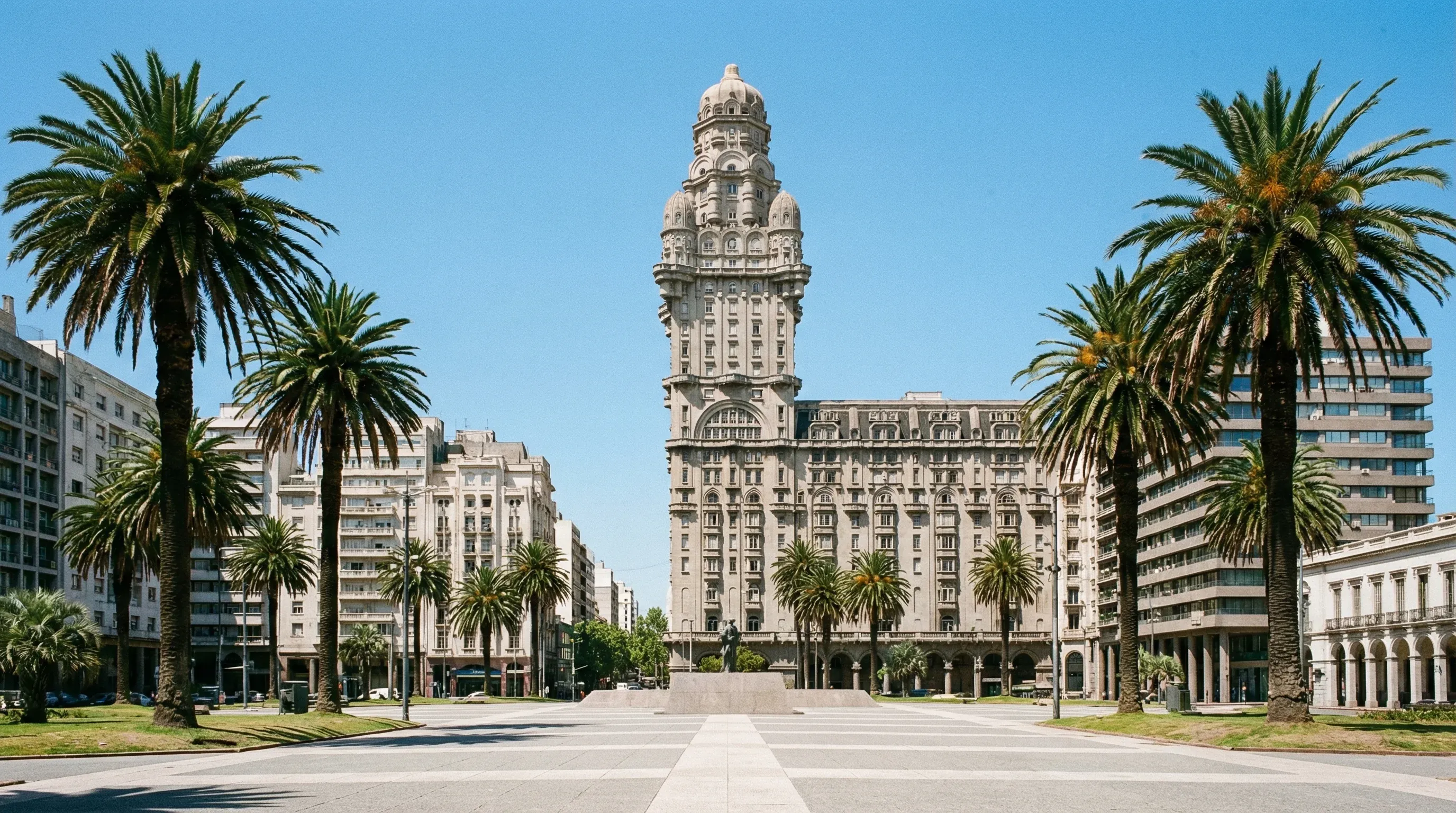
A must-visit for any family is the Parque Rodó Amusement Park. Unlike modern theme parks, this retains a charming vintage feel with classic rides that are affordable and perfect for younger children. Just across the park lies the Museo Nacional de Artes Visuales (MNAV), which has lovely gardens for running around. In the historic Ciudad Vieja, lunch at the Mercado del Puerto is an event in itself; the sights, sounds, and smells of the massive grills (parrillas) are unforgettable. While there, look up at the Palacio Salvo, the city's most iconic building, which looks like a rocket ship designed in the 1920s.
For a dose of culture, the Teatro Solís offers excellent guided tours that explain the theater's history in an engaging way. If you need green space, the Jardín Botánico de Montevideo (Prof. Atilio Lombardo) in the Prado neighborhood provides a quiet escape with beautiful exotic trees and ample space for picnics. Older kids interested in science will appreciate the Museo Nacional de Historia Natural, which captures the region's biodiversity.
Practical Advice
The best time to visit is late spring (November) or early autumn (March). Many museums are closed on Mondays. Sundays are very quiet in the city center, making it a great day for the Rambla but a bad day for shopping.
Food & Drink
Typical meal times: Lunch is 12:30 pm to 2:30 pm. Dinner is late, typically 9:00 pm to 11:00 pm, though restaurants in tourist areas open earlier (7:30 pm).
Typical meal costs: Montevideo is not cheap. A mid-range family meal costs $2,500–4,000 UYU (approx. $65–100 USD / €60–95 EUR). Coffee and cake for four costs around $1,000 UYU (approx. $25 USD / €23 EUR).
Dietary requirements: Very good. Vegetarian and gluten-free options are widely available in neighborhoods like Pocitos and Punta Carretas. Labeling on menus is becoming standard.
Signature dishes:
- Chivito Canadiense – The "Canadian" version of the steak sandwich is a plated mountain of steak, ham, cheese, bacon, egg, olives, and fries. One is often enough for two kids to share.
- Tortas Fritas – Fried dough disks, salted or sugared, traditionally sold by street vendors on rainy days.
- Fainá – A chickpea flour flatbread brought by Genovese immigrants, famously eaten alongside pizza (often placed on top of it, known as "pizza a caballo").
Why this score?
Montevideo is a primarily urban environment with a focus on architecture, shopping, and coastal promenades. The most 'adventurous' activity for most families is cycling along the 22km Rambla, which is entirely flat and paved. It lacks any significant natural hazards or rugged terrain that would classify it as an adventure destination.
Why this score?
The capital is home to the country's best private and public hospitals, including facilities like the British Hospital which are accustomed to treating foreign nationals. Quality is generally high, and specialized care is readily available. While many doctors speak English, the broader administrative and nursing staff may only speak Spanish, presenting some language barriers.
Why this score?
As the capital and main entry point for the country, Montevideo receives a consistent flow of international tourists, though it remains a 'second-tier' South American city compared to neighbors like Buenos Aires. It offers a well-developed circuit of museums, theaters, and a famous waterfront. It serves as a moderate hub for both cultural tourism and regional business travel.

Montevideo is one of the more expensive capitals in South America. A standard hotel room costs $3,000–5,000 UYU (approx. $75–125 USD / €70–115 EUR). Public transport is cheap (approx $1.20 USD per ride), but dining out can rival European prices.

Getting Here & Around
Getting Here
- Airports – Carrasco International Airport (MVD) is the main hub, located 30-40 minutes from the city center. It is modern and user-friendly.
- Ferry – Buquebus and Colonia Express operate direct ferries from Buenos Aires to the Port of Montevideo (approx. 2.5 hours).
- Bus – The Tres Cruces Terminal connects Montevideo to all domestic destinations and neighboring countries (Brazil, Argentina).
Getting Around
- Bus – The city bus system (STM) is extensive and cheap. You can pay cash on board. Use the "Moovit" app for routes.
- Walking – Ciudad Vieja and the Rambla are best explored on foot.
- Taxis/Uber – Uber is widely available, safe, and convenient for families. Yellow taxis run on a meter.
No airports in this region. See the country flight map for nearby connections.
Official Links

Packing List
The Rambla is exposed to strong southern winds; even sunny days can feel chilly by the water.
Older hotels in Centro often have only one available outlet per room.
Supermarkets charge for bags, and plastic reduction is taken seriously.
Uruguay uses a mix of European two-pin and three-pin Italian style plugs.
Uruguay uses a mix of sockets, including the 3-pin Italian style (Type L) which is rare elsewhere in the Americas.
The ozone layer is thinner in this region; UV index can be extreme even on mild days. Sunburn happens fast.
Coastal winds (the 'Sudestada') can be strong and chilly even in summer; essential for beach walks.
Uruguay charges for plastic bags and has a strong culture of using reusable grocery totes.
Essential if visiting estancias or riverside areas in the interior, where mosquitoes can be aggressive.

Activities & Best Times

Urban tourism, museums, historical sites, architecture
A sophisticated capital with a rich blend of Art Deco architecture, world-class art museums like MNAV, and vibrant neighborhood life. The city is most authentic and lively during the warmer months, while winter can be damp and quiet.

Hiking, wildlife, outdoor exploration, ecotourism
Rating claims 'significant wetlands and high-quality botanical gardens' but no such attractions exist in the database. Without evidence of major nature reserves or botanical gardens, very_good rating is not justified. Downgrade to good.

Beach resorts, marine activities: diving, snorkelling, kite surfing, wind surfing, sailing
Iconic urban beaches like Pocitos offer well-maintained sands and a unique riverfront atmosphere on the Rio de la Plata. Peak season is limited to the warm southern summer when water temperatures are suitable for swimming and the Rambla is most active.

Scenic drives, countryside tours, route-based travel
The gateway to world-class scenic drives along the Uruguayan coast and historic routes to Colonia del Sacramento. Bright summer light and clear conditions in late spring/early autumn offer the best visibility for these celebrated coastal journeys.

Sport tourism, fitness activities, active recreation
Offers solid infrastructure for cycling, coastal running along the Rambla, and hiking at Cerro de Montevideo. Peak activity occurs during the dryer, milder months which facilitate organized outdoor sports and active exploration.
Amusement parks, family entertainment venues
Traditional amusement facilities at Parque Rodó provide classic family entertainment but lack the scale of major international theme parks. Best visited during school holidays and warm summer evenings when the outdoor rides are fully operational.

Attractions (15 total)



Public Holidays & Calendar Next 12 months
Public holidays, festivals, cultural celebrations, and seasonal natural phenomena coming up in Montevideo over the next 12 months.
Loading holidays and events...

Travel Advisory
The majority of international agencies classify Uruguay as a safe destination where standard travel safety precautions are sufficient, though increased vigilance is noted for Montevideo.
Safety Topics
Traveller Advice (3 groups)

Uruguay is among the most progressive countries in the region regarding sexual orientation and gender identity. Same-sex marriage is legal and anti-discrimination laws are in place.

Accessibility infrastructure for those with disabilities, including pavements and building access, remains limited in many areas outside of modern districts.

Standard personal safety measures should be followed, such as avoiding isolated or poorly lit areas when walking alone at night, particularly in downtown Montevideo.
Agency Summaries
No specific elevated security threat is identified for the country, but New Zealanders should maintain standard situational awareness and carry comprehensive insurance.
Uruguay is considered safe for Irish visitors, though basic precautions against opportunistic theft and bag snatching are advised.
Travellers should use common sense and follow standard safety routines. While violent crime exists, the overall security situation is stable for the average tourist.
Heightened vigilance is recommended across the country due to rising crime rates, including homicides and armed robberies which can impact visitors.
Uruguay is generally safe, though travellers should maintain standard security awareness. There is a specific regional warning to exercise a high degree of caution in Montevideo due to a higher prevalence of crime.
Most visits are trouble-free, though street crime and petty theft occur, particularly in the capital city of Montevideo.
Information is provided for general guidance only and does not constitute travel, safety, medical, or legal advice. Conditions may change. Users are responsible for independently verifying information before travel.