
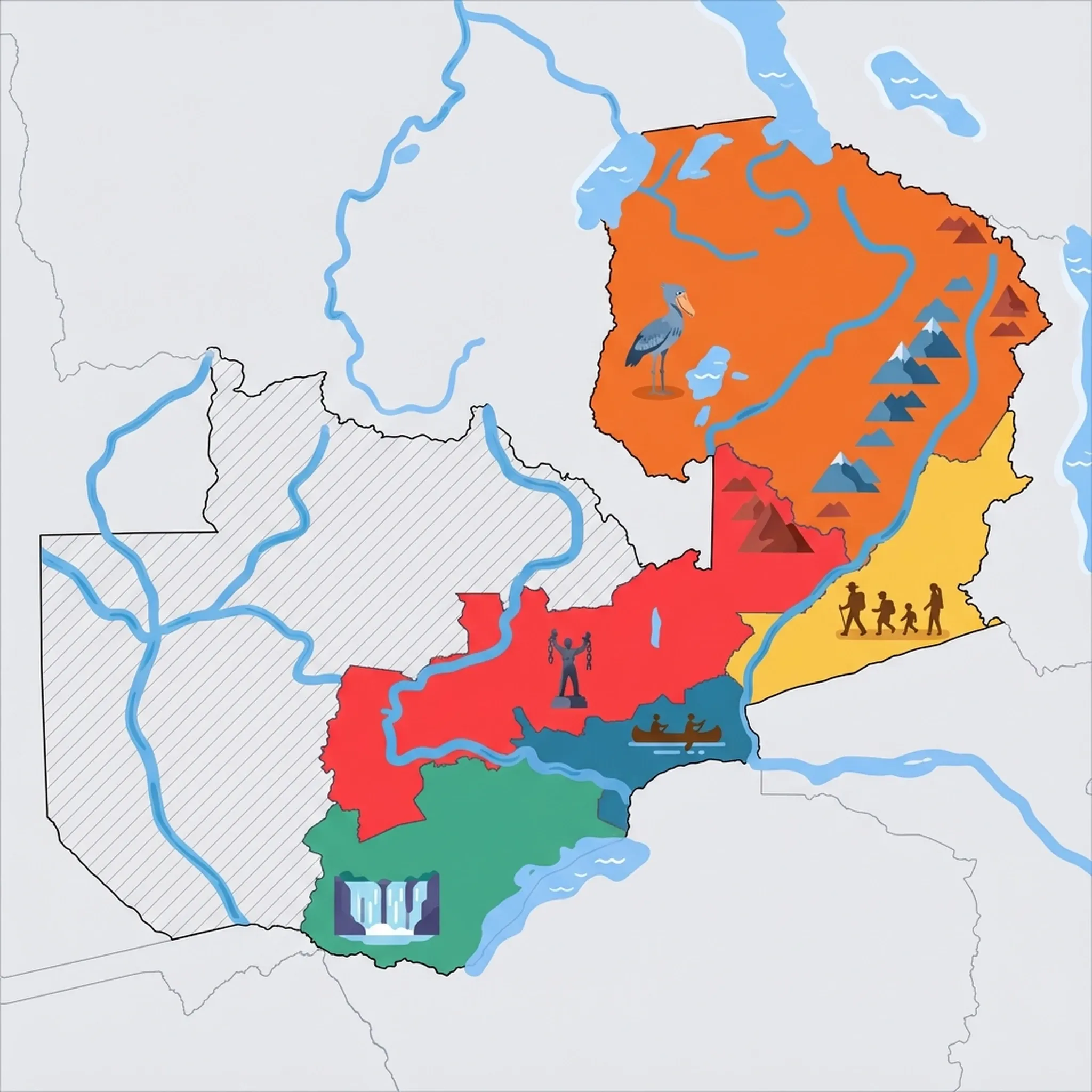
Click a region to explore
Overview
Lusaka is often viewed merely as a transit hub, but for families, it offers a vital pause to acclimatize to African rhythms. The capital is a rapidly modernizing city with shopping malls, cinemas, and markets sitting alongside traditional life. The climate here is moderate due to the high altitude of the central plateau. For children, Lusaka provides a 'soft' introduction to the country, with reliable medical facilities, well-stocked supermarkets for buying road-trip snacks, and comfortable hotels. It is the logistical center of the country, where the journey to the wild begins.
Beyond the city limits, the Central Province opens up into vast farming blocks and bushland. This is the starting point for the legendary The Great East Road (T4) - Luangwa Escarpment Drive leading to wildlife havens. The region itself hosts sanctuary projects that are incredibly impactful for children, teaching them about conservation firsthand. Visits to elephant nurseries or cheetah rescue centers in the greater Lusaka area allow for intimate, educational encounters that are impossible in the wild national parks. It is a region of transition, where the convenience of the city slowly gives way to the call of the wild.
Key Attractions
Within the immediate region, families should not miss the elephant orphanage (Lilayi) where kids can watch baby elephants being fed milk bottles—a heartwarming spectacle. For those willing to drive north, the The Great North Road (T2) - Central Plateau Route leads towards the unique Kasanka National Park (accessible for a long trip), famous for its bat migration. Closer to town, the Lusaka National Park offers a quick and easy game viewing experience with rhinos and giraffes, perfect for filling a half-day layover. The region is also the launchpad for trips to the Lower Zambezi National Park, accessible via the dramatic escapment road which offers breathtaking views for passengers.
Practical Advice
Lusaka has heavy traffic; allow extra time to get to the airport. The best time to visit is May to August when it is cool and dry. This is the best place to draw cash (ATMs are everywhere) and buy SIM cards for connectivity. Malaria is present in the outskirts and rural areas, though less prevalent in the concrete city center; prophylaxis is still advised.
Food & Drink
Typical meal times: City restaurants follow standard international times. Lunch 12:00 pm – 2:30 pm, Dinner 6:00 pm – 10:00 pm.
Typical meal costs: Very affordable. A family meal at a good restaurant costs ZMW 400–700 (approx. $15–27 USD / €14–25 EUR). Street food is under ZMW 50 ($2 USD).
Dietary requirements: Lusaka is very cosmopolitan. You can find excellent Indian, Chinese, and Italian food with plenty of vegetarian and gluten-free choices. Supermarkets stock soy milk and gluten-free bread.
Signature dishes:
- Chikanda – Known as 'African Polony', this is a firm, sausage-like loaf made from wild orchid tubers and peanuts.
- Ifisashi – Green vegetables (pumpkin leaves or spinach) cooked in a rich peanut sauce, often served as a main or side.
- T-Bone Steaks – Zambian beef is excellent, organic, and very popular in Lusaka's steakhouses.
Why this score?
This region is the most developed and urbanized part of Zambia, with paved roads, modern shopping malls, and a generally low level of physical challenge. While there are nature reserves like Lusaka National Park nearby, the experience is largely controlled and suburban compared to the country's wild interior. It serves more as a comfortable base than an adventure destination.
Why this score?
Lusaka offers the best healthcare in Zambia, with private facilities like Medland Hospital and Italian Orthopaedic Hospital providing services closer to international standards. Many doctors are English-speaking and accustomed to treating the expat community and diplomatic corps. While it is the national peak for care, it still lacks the comprehensive specialized facilities found in world-class medical hubs.
Why this score?
As the national capital and primary transport hub, Lusaka sees a high volume of travelers, though many are for business or in transit to safari regions. It has the highest concentration of hotel beds and domestic tourism in the country, but lacks the iconic 'bucket list' draw of the national parks. Attractions like the Lilayi Elephant Nursery provide some local draw for international families.

Lusaka offers excellent value. High-end hotels are priced for business travelers (ZMW 2,600–5,300 / $100–200 USD), but comfortable family guest houses can be found for ZMW 1,000–1,800 (approx. $38–70 USD / €35–63 EUR). Food and groceries are significantly cheaper here than in the safari lodges. Fuel is standard national price.

Getting Here & Around
Getting Here
- Airports – Kenneth Kaunda International Airport (LUN) is the main entry point for international visitors, serviced by Emirates, Qatar, and regional airlines.
- Driving – Lusaka is the hub where The Great North Road (T2) and The Great East Road (T4) meet. It is the center of the country's road network.
- Bus – The Intercity Bus Terminus connects Lusaka to every major town in Zambia and neighboring countries.
Getting Around
- Taxi/Ride-hailing – Yango and Ulendo are ride-hailing apps that work well in Lusaka and are safe for families.
- Car Hire – All major rental agencies (Avis, Europcar) have offices at the airport. Essential if you plan to drive The Great North Road (T2) yourself.
- Minibus – Not recommended for families with luggage due to overcrowding and aggressive driving.
No airports in this region. See the country flight map for nearby connections.
Official Links

Packing List
Zambia experiences load shedding (power cuts); keeping devices charged in the city can be tricky.
Essential for use after handling cash or visiting bustling markets where washing facilities are scarce.
Plastic bags are banned or charged for in many supermarkets; a sturdy tote is useful for supplies.
Zambia uses the British-style 3-pin plug; ensure you have one for your electronics.
Older dollar bills are frequently rejected by banks and lodges; bring only crisp, new notes with 'big heads'.
Bright white lights attract millions of bugs in the bush; amber/red settings keep the insects away at camp.
Strict luggage restrictions on small internal flights (Proflight) often ban hard-shell suitcases.
Power cuts (load shedding) are common; a solar backup ensures phones and cameras stay charged.
Open game drive vehicles are incredibly dusty in the dry season; protect your nose and mouth.

Activities & Best Times

Hiking, wildlife, outdoor exploration, ecotourism
The region offers high-quality nature reserves and farm estates like Chaminuka, providing accessible wildlife encounters for sophisticated families. Peak dry months ensure optimal visibility for game viewing and safe trail conditions before the heavy summer rains.

Urban tourism, museums, historical sites, architecture
Lusaka is a cosmopolitan hub featuring world-class art galleries and museums that reflect Zambia's heritage and modern identity. The cool winter season is ideal for exploring outdoor monuments and vibrant urban markets comfortably.

Scenic drives, countryside tours, route-based travel
The Great North and East Roads provide dramatic scenery across the Luangwa Escarpment, ideal for experienced travelers seeking authentic African road transit. Peak months offer dry roads and clear views, essential for safe navigation through the plateau terrain.

Sport tourism, fitness activities, active recreation
Insufficient evidence for 'very_good' rating on international scale. Mountain biking trails and adventure parks are claimed but not documented. Downgrade to 'good' unless more substantial evidence emerges.
Amusement parks, family entertainment venues
Water-focused entertainment venues like Dream Valley Park offer quality family leisure during the region's hot, dry months. These facilities cater well to international families seeking recreation, though they lack the immersive scale of global theme park destinations.

Learning experiences, scientific sites, historical education
The Wildlife Discovery Centre provides an internationally recognized conservation education experience focused on elephant rescue. Its operations are most effective during the dry season when outdoor learning and animal interactions are most consistent.

Events, celebrations, seasonal attractions
The world-class Kasanka bat migration is a unique natural spectacle occurring strictly at the year's end, drawing global wildlife enthusiasts. This specific window is the only time to experience this internationally significant biological event.

Spa retreats, wellness centers, peaceful getaways
Natural thermal baths at Chinyunyu offer a rustic wellness experience that appeals to adventurous families. The cool months of June through August make the hot springs particularly restorative and pleasant to visit.

Attractions (12 total)



Public Holidays & Calendar Next 12 months
Public holidays, festivals, cultural celebrations, and seasonal natural phenomena coming up in Lusaka & Central over the next 12 months.
Loading holidays and events...

Travel Advisory
The majority of major international agencies classify Zambia as a destination requiring standard safety awareness. While specific risks like crime in cities and landmines near borders exist, they do not currently warrant an elevated nationwide risk rating for most travellers.
Safety Topics
Traveller Advice (4 groups)

Be cautious in social settings like bars and nightclubs where reports of drink spiking have occurred. Avoid travelling solo after dark.

When travelling in rural or border areas, use a 4x4 vehicle and strictly remain on paved or well-marked roads to avoid the risk of landmines and unexploded explosives.

Homosexual activity is illegal and punishable by significant prison time, including life sentences. Travellers should exercise extreme discretion and avoid public displays of affection as social tolerance is low.

Maintain standard security awareness, avoid walking alone at night in urban centers, and stay clear of any political gatherings or demonstrations.
Agency Summaries
Australia advises a baseline of normal safety measures across the country. A higher level of vigilance is necessary near the border with the Democratic Republic of the Congo due to criminal activity and the threat of undetected landmines. Public demonstrations should be avoided as they can escalate quickly.
The United States suggests travellers follow standard safety procedures. While the security environment is generally stable, visitors are encouraged to stay away from political rallies and large crowds, which can occasionally lead to civil unrest or minor violence, particularly during election cycles.
New Zealand recommends a higher level of awareness than one would use at home due to the prevalence of violent crime in major cities and the risk of landmines in frontier zones. Moving through urban areas alone or after dark is discouraged.
Most visits to Zambia are trouble-free. Travellers should remain alert to common street crimes like pickpocketing in busy urban areas. There are specific health warnings regarding contaminated water in mining regions and periodic outbreaks of infectious diseases that require vigilance.
Ireland advises its citizens to maintain typical personal security awareness while visiting Zambia. It is important to confirm entry requirements and ensure travel documents meet the necessary validity standards before departure.
Zambia is considered a safe destination for travel using standard precautions. However, travellers should exercise a high degree of caution in border regions near Angola, Mozambique, and the DRC because of the residual risk of landmines and unexploded ordnance. Compliance with strict laws on mineral exports and the possession of precious stones is essential.
Information is provided for general guidance only and does not constitute travel, safety, medical, or legal advice. Conditions may change. Users are responsible for independently verifying information before travel.