
Eastern Highlands (Nyanga, Chimanimani)
Where mist-covered mountains meet family adventure 🏔️
Click a region to explore
The Eastern Highlands presents a side of Zimbabwe that often surprises first-time visitors. Far removed from the heat of the safari plains, this region is defined by cool, crisp air, rolling green valleys, and pine forests that feel more like the Scottish Highlands than tropical Africa. For families, this offers a unique climate for outdoor exploration without the intense heat found elsewhere in the country. The landscape is dominated by the majestic Vumba and Chimanimani mountain ranges, providing a stunning backdrop for hiking, horse riding, and bird watching. The atmosphere here is tranquil and revitalizing, making it an ideal retreat for parents looking to unwind while children explore the safe, open spaces. The mist that often clings to the peaks adds a magical, fairytale quality to the mornings that children find enchanting.
Culturally, the area is rich with history and local craftsmanship. The town of Mutare serves as the gateway, but the real charm lies in the rural estates and coffee plantations nestled in the hills. Families can explore ancient ruins, visit botanical gardens that bloom year-round, and engage with local sculptors. It is a region where the pace slows down, allowing families to connect over campfires, forest walks, and swims in natural pools. The absence of dangerous predators (lions and elephants are not found in the high mountains) makes this one of the safest areas in Zimbabwe for children to walk freely and explore the natural environment.
Key Attractions
The crown jewel for adventurous families is Nyanga National Park. This vast reserve is one of the oldest in the country and offers accessible adventure. Families can rent cottages and spend days fly-fishing for trout in the sparkling dams, a popular pastime that is easy for beginners to learn. The park is also home to Mount Nyangani, the highest peak in Zimbabwe. While the summit hike is challenging, the lower slopes offer gentle walks suitable for older children, offering panoramic views that stretch into Mozambique.
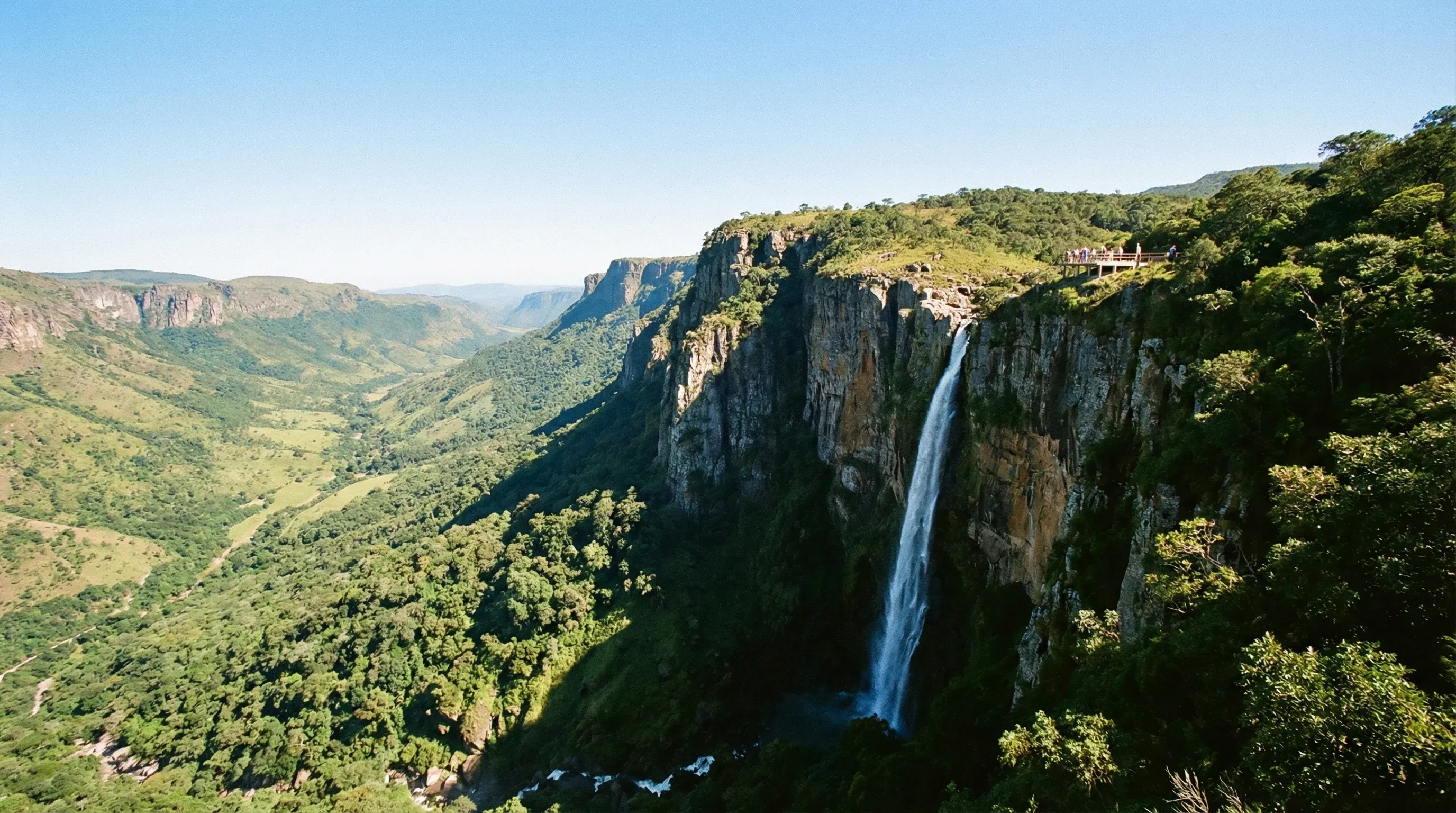
For a thrill that teenagers will never forget, a visit to Mutarazi Falls is essential. Here, you will find the highest waterfall in Zimbabwe, but the real draw is the SkyWalk and SkyLine. The SkyWalk consists of two suspension bridges that cross the lip of the falls—a heart-pounding experience that is completely safe. Nearby, the Chimanimani National Park offers a more rugged, wilderness experience with its jagged peaks and bridal veil waterfalls, perfect for families with older teens who enjoy backcountry camping and hiking. History buffs should not miss the Ziwa National Monument, an archaeological site featuring ancient stone terraces and enclosures that provide a fascinating history lesson about the agricultural societies that once thrived here.
Practical Advice
The climate in the Eastern Highlands is significantly cooler than the rest of Zimbabwe. Nights can be genuinely cold, even freezing in winter (May to August), so packing layers is essential. The best time to visit is during the dry months from April to August for clear mountain views, or September to November when the Vumba botanical gardens are in bloom. Roads can be winding and steep; a high-clearance vehicle is recommended, though a 4x4 is only strictly necessary for Chimanimani.
Food & Drink
Typical meal times: Breakfast is usually served from 7:00 am to 9:00 am, lunch from 12:30 pm to 2:00 pm, and dinner from 6:30 pm to 8:30 pm.
Typical meal costs: A main meal in a lodge or hotel typically costs $15–25 USD (approx. €14–23 EUR / £12–20 GBP). Casual lunches or café meals are around $8–12 USD (approx. €7–11 EUR / £6–9 GBP).
Dietary requirements: Hotels and lodges in this region are accustomed to international tourists and can cater to vegetarian and gluten-free needs with advance notice. However, rural roadside stops will have limited options.
Signature dishes:
- Nyanga Trout – Fresh freshwater trout raised in the local cold dams, often served grilled with lemon butter or almond flakes.
- Tanganda Tea and Scones – A colonial legacy, locally grown tea is a staple here, typically served with fresh scones, cream, and strawberry jam in the afternoon.
- Road Runner Chicken – A flavorful, free-range chicken stew, harder and tastier than commercial chicken, often served with sadza (maize meal).
Why this score?
The region offers notable outdoor activities including trekking the rugged Chimanimani Mountains and ascending Mount Nyangani, the country's highest peak. Modern adrenaline attractions like the Mutarazi Falls Skywalk and Skyline provide high-altitude thrills that cater well to active families.
Why this score?
Medical facilities in towns like Mutare and Nyanga are basic and often lack the specialized equipment or consistent supplies found in the capital. Emergency evacuations to Harare or South Africa are frequently required for serious injuries sustained in remote mountain areas.
Why this score?
While a beloved getaway for domestic travelers and regional hikers, the Eastern Highlands remains a niche destination for international visitors compared to the country's safari hubs. Its cooler climate and pine-forested landscapes offer a different aesthetic that many foreign tourists skip in favor of more 'iconic' African savannahs.

The Eastern Highlands offers good value compared to the safari circuits. Accommodation ranges from affordable self-catering cottages at $80–120 USD (approx. €75–110 EUR / £65–95 GBP) per night for a family, to upmarket lodges at $200–300 USD (approx. €185–275 EUR / £160–240 GBP). Park entry fees are modest.

Getting Here & Around
Getting Here
- Airports – The nearest international gateway is Robert Gabriel Mugabe International Airport (HRE) in Harare. From there, it is a scenic drive to the mountains.
- Driving – The drive from Harare to Mutare/Nyanga takes approximately 3.5 to 4 hours on a good tarred road. It is a straightforward drive, making self-drive a viable option for families.
- Bus – Luxury coaches (like Greyhound or Intercape) connect Harare to Mutare, but they do not reach the specific tourist resorts in Nyanga or Vumba.
Getting Around
- Car – A private vehicle is essential for exploring the Eastern Highlands. Attractions like Nyanga National Park and the various waterfalls are spread out. Roads can be winding and steep.
- Walking & Cycling – This is a prime region for walking. Many lodges offer mountain bikes for hire, and the trails around Ziwa National Monument are excellent for exploring on foot.
No airports in this region. See the country flight map for nearby connections.

Packing List
Temperatures can drop to freezing at night, even when the rest of Zimbabwe is hot.
Trails can be damp and slippery due to the frequent mountain mists and streams.
Self-catering cottages usually have fireplaces; local wood can be damp.
If you plan to fish in Nyanga; gear rental is available but quality varies.
Change is almost never available; $1, $5, and $10 notes are essential for tips and small purchases.
Hotel sockets vary (Type G/D) and outlets are scarce; vital for charging multiple family devices.
Power cuts (load shedding) are frequent, and safari camps can be very dark at night.
Essential for protecting phones and cameras from the heavy spray at Victoria Falls.
Morning game drives and evenings are surprisingly cold, often dropping below 10°C (50°F).
Keeps children engaged on safari; sharing one pair among a family often leads to frustration.

Activities & Best Times

Hiking, wildlife, outdoor exploration, ecotourism
Features spectacular Afromontane landscapes, the world's highest skywalk at Mutarazi Falls, and unique biodiversity. Peak months align with the dry season, providing clear vistas and safe trail conditions for exploring the national parks.

Urban tourism, museums, historical sites, architecture
Home to the significant Ziwa National Monument and regional museums in Mutare that showcase local heritage. Dry winter months are best for navigating to rural archaeological sites and exploring the city's living culture without summer rain disruptions.

Scenic drives, countryside tours, route-based travel
The Nyanga Scenic Loop and Vumba Mountain Drive are celebrated for their dramatic escarpment views and mist-shrouded forests. Travel is discouraged in the peak wet season (Dec-Feb) when heavy rain and dense fog can make mountain roads hazardous.

Sport tourism, fitness activities, active recreation
Offers premier high-altitude trekking and trail running, specifically the ascent of Mount Nyangani. The off-season (Nov-Feb) is critical for safety, as the peaks are prone to dangerous lightning strikes and extreme weather during the summer rains.

Spa retreats, wellness centers, peaceful getaways
Natural thermal springs at Nyanyadzi and Rupisi offer a traditional restorative experience. These are most appealing during the cool winter months when the hot waters provide a soothing contrast to the crisp highland air.

Amusement parks, family entertainment venues
The Mutarazi Falls Skywalk offers a world-class adrenaline experience, though it remains a single-attraction destination rather than a full theme park. Visibility and safety on the high-altitude skyline are significantly better during the dry, mist-free winter months.




Public Holidays & Calendar Next 12 months
Public holidays, festivals, cultural celebrations, and seasonal natural phenomena coming up in Eastern Highlands (Nyanga, Chimanimani) over the next 12 months.
Loading holidays and events...

Travel Advisory
The strong majority of international agencies recommend exercising elevated caution in Zimbabwe. This consensus is driven by significant concerns regarding street crime, the potential for political demonstrations to turn violent, and an unstable economic environment that impacts the reliability of basic services.
Safety Topics
Traveller Advice (3 groups)

Foreign media workers and journalists may face increased scrutiny or official harassment. Ensure all accreditation is properly obtained before attempting to report or film.

Female travellers should avoid walking alone at night and remain vigilant in isolated areas or when using public transport. Dressing conservatively is recommended to respect local norms.

Same-sex sexual activity is criminalised and can lead to imprisonment. Social intolerance is common, and public displays of affection may attract negative attention or legal consequences.
Agency Summaries
A high level of care is necessary due to the threat of crime and civil unrest. The economic situation is volatile, and protests can emerge quickly and become violent.
Irish citizens are urged to maintain high personal security awareness. The risk of muggings and pickpocketing is elevated in cities, especially after dark.
Visitors should increase their safety awareness because of frequent opportunistic crime and the possibility of official harassment of foreign nationals. Violent crimes like carjackings and home invasions also occur.
Travellers are advised to be extremely vigilant due to a high rate of crime and the potential for sudden civil disturbances. The security environment remains unpredictable.
While most visits are incident-free, there is a persistent risk of street crime and political demonstrations. Travellers should avoid any political activity and remain alert in urban areas.
Travelers should be cautious due to safety concerns that exceed standard levels. Political tension is common, and basic infrastructure like power and water can be unreliable.
Information is provided for general guidance only and does not constitute travel, safety, medical, or legal advice. Conditions may change. Users are responsible for independently verifying information before travel.