
Mana Pools & Zambezi Valley
The wildest walking safari on Earth 🦁
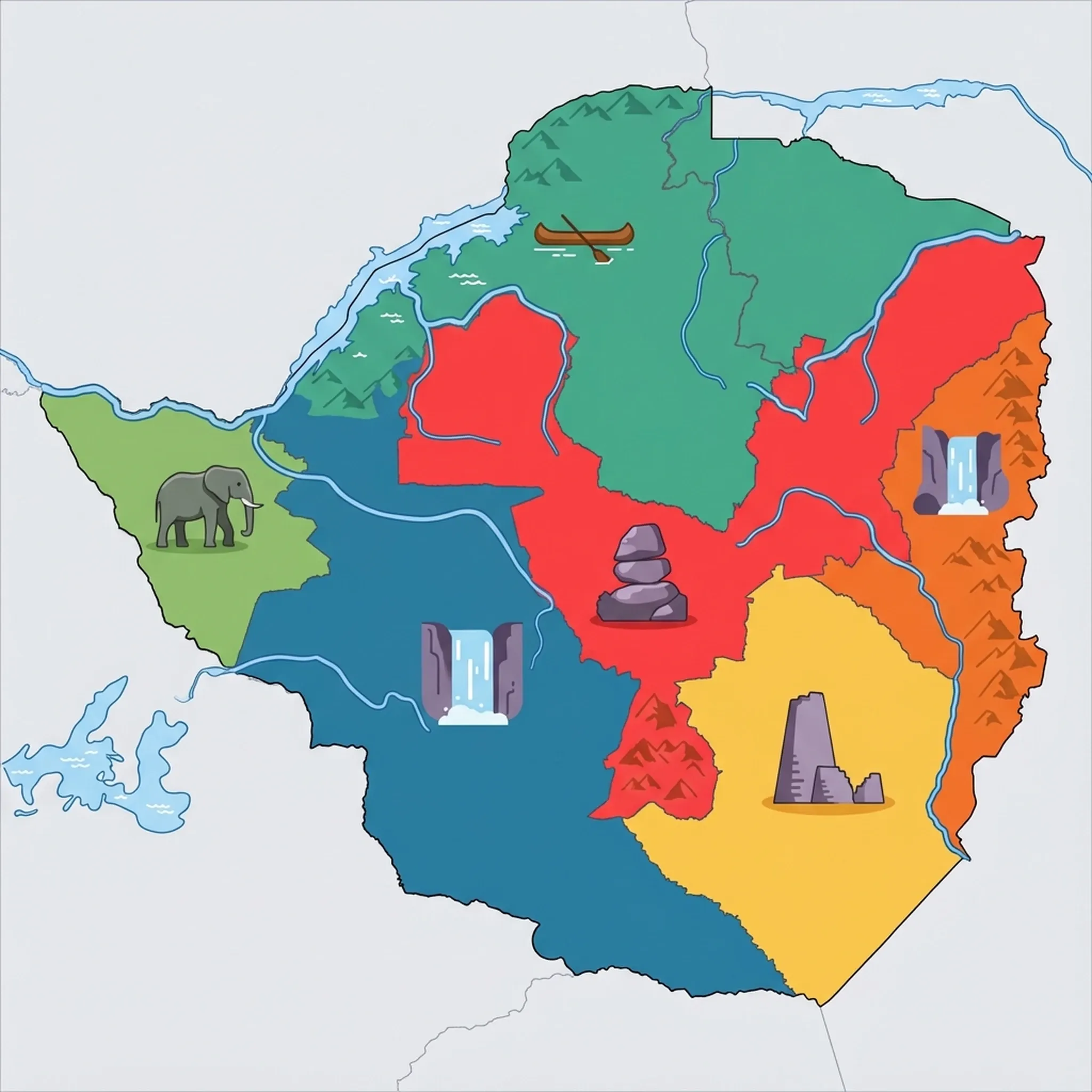
Click a region to explore
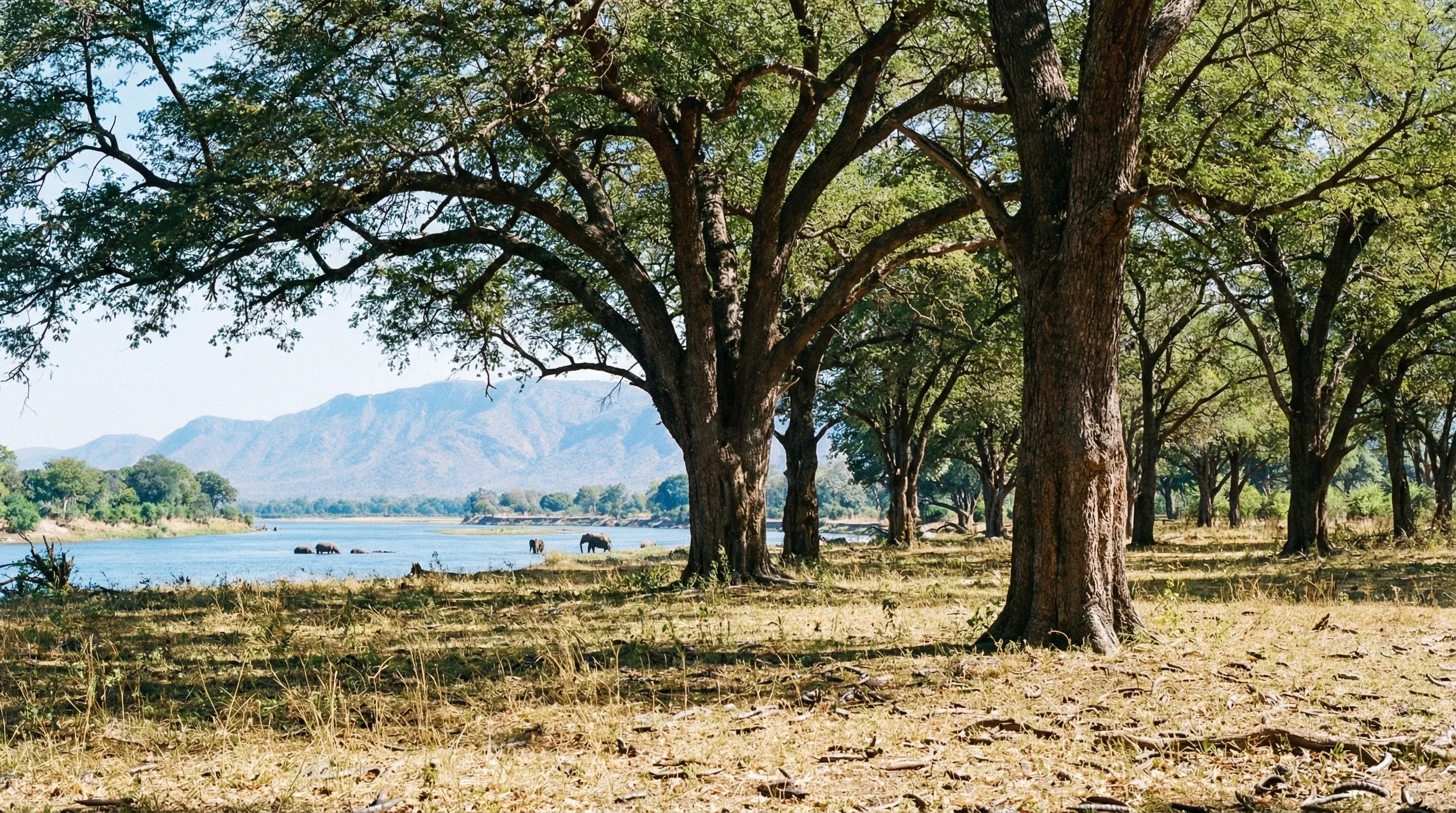
Mana Pools is legendary among safari enthusiasts. It is not a place for a passive holiday; it is a place for immersion. Located in the lower Zambezi valley, the park turns into a garden of Eden during the dry season, with blue distinct hazes hanging over the river and Winterthorn trees creating a cathedral-like canopy. The light here is a photographer's dream. What makes Mana unique is that you are allowed to walk unguided (though for families, a professional guide is strongly advised and essential for safety). It is famous for elephants that stand on their hind legs to reach high branches—a behavior rarely seen elsewhere.
Important Note for Families: Mana Pools is an unfenced wilderness with high densities of dangerous game (lions, hippos, buffalo, elephants) wandering through campsites. It is generally not recommended for very young children (under 12). Many lodges have age restrictions (often 12+ or 16+ for walking). However, for families with teenagers, this is the ultimate classroom. Canoeing down the Zambezi River, dodging hippos (safely with a guide), and camping on islands under the stars is a bonding experience unmatched in Africa.
Key Attractions
The core experience is Mana Pools National Park itself. The four main pools (Main, Chine, Long, and Chisambik) hold water year-round and attract huge concentrations of wildlife. Long Pool is particularly famous for its resident hippo populations and crocodiles. Seeing them from the safety of the bank is thrilling.
Canoe Safaris are the signature activity here. Drifting silently past herds of elephants drinking at the river's edge offers a perspective you cannot get from a vehicle. These trips range from a few hours to multi-day expeditions. For those driving in, the route passes near the Chinhoyi Caves (listed here as a stopover point from Harare), which makes for a great break in the journey to swim with the cobalt blue water in view. But the real attraction in Mana is the walking safari—tracking lion prints in the dust and learning about the small ecosystem details like termites and dung beetles.
Practical Advice
Mana Pools is seasonal. It is best visited from May to October. During the rains (November to April), roads become impassable and many camps close. This is a malaria area, and Tsetse flies can be a nuisance—they have a painful bite and are attracted to dark blue and black colors (avoid wearing these!). Wear light-colored, long-sleeved clothing.
Food & Drink
Typical meal times: Early start! Breakfast 5:30 am, Lunch 12:00 pm, Dinner 7:00 pm.
Typical meal costs: Almost exclusively all-inclusive lodges ($600+ per person). Self-catering campers must bring 100% of their food and water from Harare or Karoi. There are no shops in the park.
Dietary requirements: Lodges cater to all needs. Self-caterers must plan meticulously as re-supply is impossible.
Signature dishes:
- Fresh Bream (Tilapia) – Often caught from the river and grilled over a fire the same day.
- Sadza Balls – Leftover maize porridge rolled into balls, a common bush snack for guides.
- Bush Brunch – A full English breakfast cooked on a gas skottel in the middle of the bush after a morning walk.
Why this score?
Renowned for its 'wild' reputation, this region offers serious adventure through walking safaris and canoe trips past large populations of hippos and crocodiles. The lack of permanent fences and the emphasis on close-up animal encounters make it one of the most physically and mentally engaging safari experiences in Africa.
Why this score?
The Zambezi Valley is extremely remote with no professional medical facilities nearby for several hours of difficult driving. Tourists are entirely dependent on their lodge's emergency protocols and private medevac insurance for anything beyond minor scrapes.
Why this score?
Despite its UNESCO status, Mana Pools remains a niche destination due to its remote location and seasonal accessibility during the dry months. It caters primarily to high-end safari-goers and hardcore photography enthusiasts seeking an authentic, less-crowded wilderness experience.

Mana Pools is an exclusive destination. High-end tented camps cost $600–1,500 USD (approx. €550–1380 EUR / £470–1180 GBP) per person per night. Self-camping is cheaper ($100 USD / approx. €92 EUR / £78 GBP per site) but requires significant equipment and 4x4 logistics.

Getting Here & Around
Getting Here
- Driving – Access requires a 4x4. The drive from Harare takes 5–6 hours. The last stretch into Mana Pools National Park is on rough corrugated dirt roads.
- Airports – Most international tourists fly into small airstrips (Mana Main or Dandawa) via light aircraft charter from Harare or Victoria Falls.
Getting Around
- Walking – Mana is one of the few parks where walking is the primary mode of transport. Always walk with a professional guide.
- Canoe – Travel by river is a major method of moving between camps along the shoreline.
- Car – 4x4 is mandatory for game drives. No off-road driving is permitted; you must stick to tracks.
No airports in this region. See the country flight map for nearby connections.
Official Links

Packing List
Tsetse flies are aggressive here; locals mix Dettol with baby oil as a deterrent.
Dark blue and black attract tsetse flies instantly. Wear khaki or white.
Camps are unfenced and very dark at night; essential for spotting eyes in the dark.
The valley gets extremely hot (40°C+); dehydration is a real risk for kids.
Change is almost never available; $1, $5, and $10 notes are essential for tips and small purchases.
Hotel sockets vary (Type G/D) and outlets are scarce; vital for charging multiple family devices.
Power cuts (load shedding) are frequent, and safari camps can be very dark at night.
Essential for protecting phones and cameras from the heavy spray at Victoria Falls.
Morning game drives and evenings are surprisingly cold, often dropping below 10°C (50°F).
Keeps children engaged on safari; sharing one pair among a family often leads to frustration.

Activities & Best Times

Hiking, wildlife, outdoor exploration, ecotourism
Mana Pools is a UNESCO World Heritage site renowned for authentic walking safaris and canoe trails along the Zambezi River. The peak dry season (Jul-Oct) offers world-class wildlife viewing as animals congregate by the river, while many camps close during the wet months (Dec-Mar) due to impassable roads and flooding.

Urban tourism, museums, historical sites, architecture
Limited cultural heritage is focused on historic infrastructure like the Otto Beit Bridge and the Chirundu Fossil Forest rather than vibrant urban centers. Visits are most comfortable in the cooler dry months, as high humidity and rainfall during the austral summer make the valley floor oppressive for sightseeing.

Sport tourism, fitness activities, active recreation
The region offers specialized infrastructure for tiger fishing and organized multi-day canoe expeditions on the Zambezi River. Conditions are best from April to November; the rainy season presents significant safety risks and logistical challenges for river-based activities.




Public Holidays & Calendar Next 12 months
Public holidays, festivals, cultural celebrations, and seasonal natural phenomena coming up in Mana Pools & Zambezi Valley over the next 12 months.
Loading holidays and events...

Travel Advisory
The strong majority of international agencies recommend exercising elevated caution in Zimbabwe. This consensus is driven by significant concerns regarding street crime, the potential for political demonstrations to turn violent, and an unstable economic environment that impacts the reliability of basic services.
Safety Topics
Traveller Advice (3 groups)

Foreign media workers and journalists may face increased scrutiny or official harassment. Ensure all accreditation is properly obtained before attempting to report or film.

Female travellers should avoid walking alone at night and remain vigilant in isolated areas or when using public transport. Dressing conservatively is recommended to respect local norms.

Same-sex sexual activity is criminalised and can lead to imprisonment. Social intolerance is common, and public displays of affection may attract negative attention or legal consequences.
Agency Summaries
A high level of care is necessary due to the threat of crime and civil unrest. The economic situation is volatile, and protests can emerge quickly and become violent.
Irish citizens are urged to maintain high personal security awareness. The risk of muggings and pickpocketing is elevated in cities, especially after dark.
Visitors should increase their safety awareness because of frequent opportunistic crime and the possibility of official harassment of foreign nationals. Violent crimes like carjackings and home invasions also occur.
Travellers are advised to be extremely vigilant due to a high rate of crime and the potential for sudden civil disturbances. The security environment remains unpredictable.
While most visits are incident-free, there is a persistent risk of street crime and political demonstrations. Travellers should avoid any political activity and remain alert in urban areas.
Travelers should be cautious due to safety concerns that exceed standard levels. Political tension is common, and basic infrastructure like power and water can be unreliable.
Information is provided for general guidance only and does not constitute travel, safety, medical, or legal advice. Conditions may change. Users are responsible for independently verifying information before travel.