

Chile is often described as a geographic miracle, a narrow strip of land that encompasses almost every climate zone imaginable. For families, this translates into a giant outdoor playground where geography textbooks come to life. From the arid dunes of the north to the glacial fjords of the south, the country offers high-adventure landscapes that remain accessible and safe for traveling with children.
In the north, the Atacama Desert provides a surreal backdrop that feels like another planet. Families can base themselves in San Pedro de Atacama to explore the Valle de la Luna (Moon Valley), where children can run down giant sand dunes and walk through salt caves. The region is also one of the world's best places for stargazing; many observatories offer tours specifically designed for younger astronomers to view the rings of Saturn or the craters of the moon through powerful telescopes. During the day, trips to high-altitude lagoons reveal flocks of pink flamingos and grazing vicuñas.
Moving central, the capital, Santiago, is a modern metropolis with sprawling green spaces. Take the cable car up San Cristóbal Hill for panoramic views of the Andes, or visit the interactive Mirador Interactive Museum (MIM). Just a short drive toward the coast lies Valparaíso, a UNESCO World Heritage site famous for its steep hills. Kids enjoy riding the creaky but reliable ascensores (funicular elevators) and spotting vibrant street art on every corner. Nearby seaside towns like Viña del Mar offer beaches and botanical gardens.
The south offers a different kind of magic. The Lake District, centered around Pucón and Puerto Varas, is lush and green. Here, you can hike through Araucaria forests, view the smoking cone of the Villarrica Volcano, and relax in natural thermal hot springs that act as giant warm swimming pools. Further south lies Patagonia. While the full trekking circuits in Torres del Paine can be demanding, plenty of easier day hikes allow families to see the granite towers, azure lakes, and local wildlife like guanacos and rheas. Boat trips to majestic glaciers provide a comfortable way to witness the ice fields without strenuous hiking.
Practical Considerations: Chile is one of the safest and most developed countries in South America. The water is generally safe to drink in major cities, and the healthcare system is high quality. Distances are vast, so families often rely on domestic flights to hop between regions. When it comes to food, even picky eaters usually enjoy empanadas (savory pastries) and the famous completo hot dogs. Remember that seasons are reversed compared to the Northern Hemisphere; January and February are peak summer months, while July offers world-class skiing in the Andes.

Explore Regions
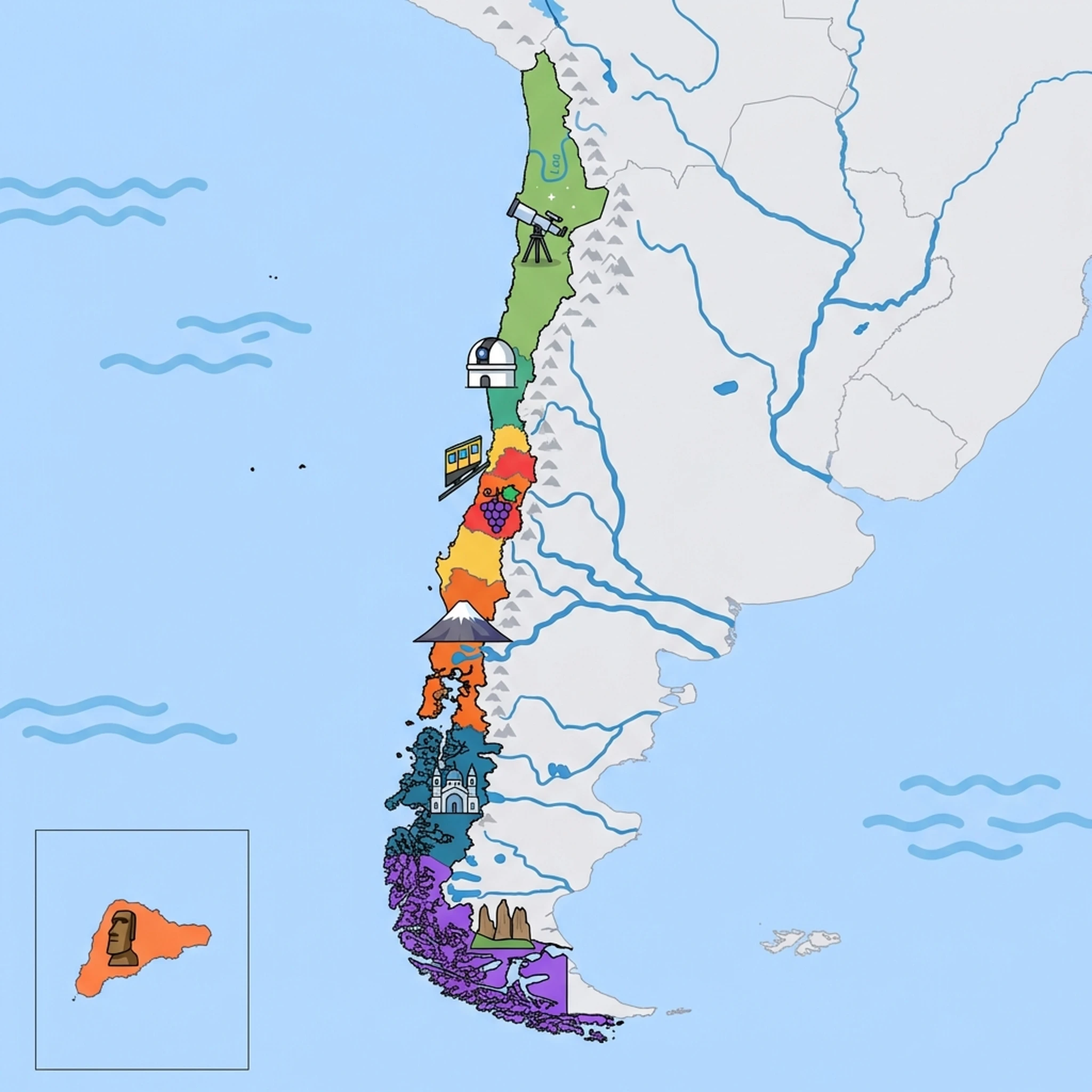
8 Regions
Atacama Desert & Altiplano
Where the earth meets the stars ✨
Elqui Valley & Coquimbo Coast
Sunny beaches and the world's clearest skies 🔭
Northern Patagonia (Carretera Austral)
A wild green road trip into nature 🌲
Rapa Nui (Easter Island)
Mysteries of the Moai in the Pacific 🗿
Santiago & Central Valley
Urban adventures at the foot of the Andes 🚠
Southern Patagonia
Land of giants, glaciers, and penguins 🐧
The Lake District & Chiloé
Volcanoes, lakes, and island legends 🌋
Valparaíso & Central Coast
Bohemian hills and golden sand dunes 🎨
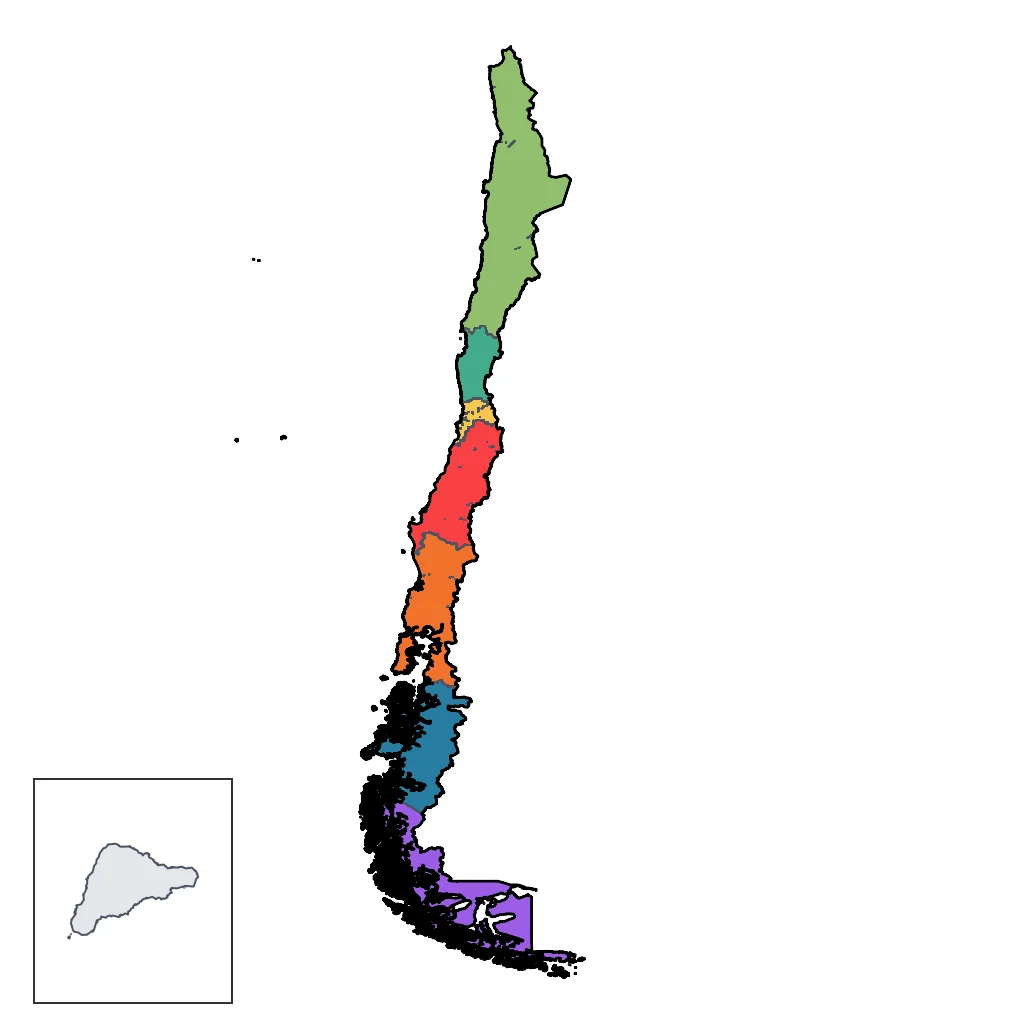
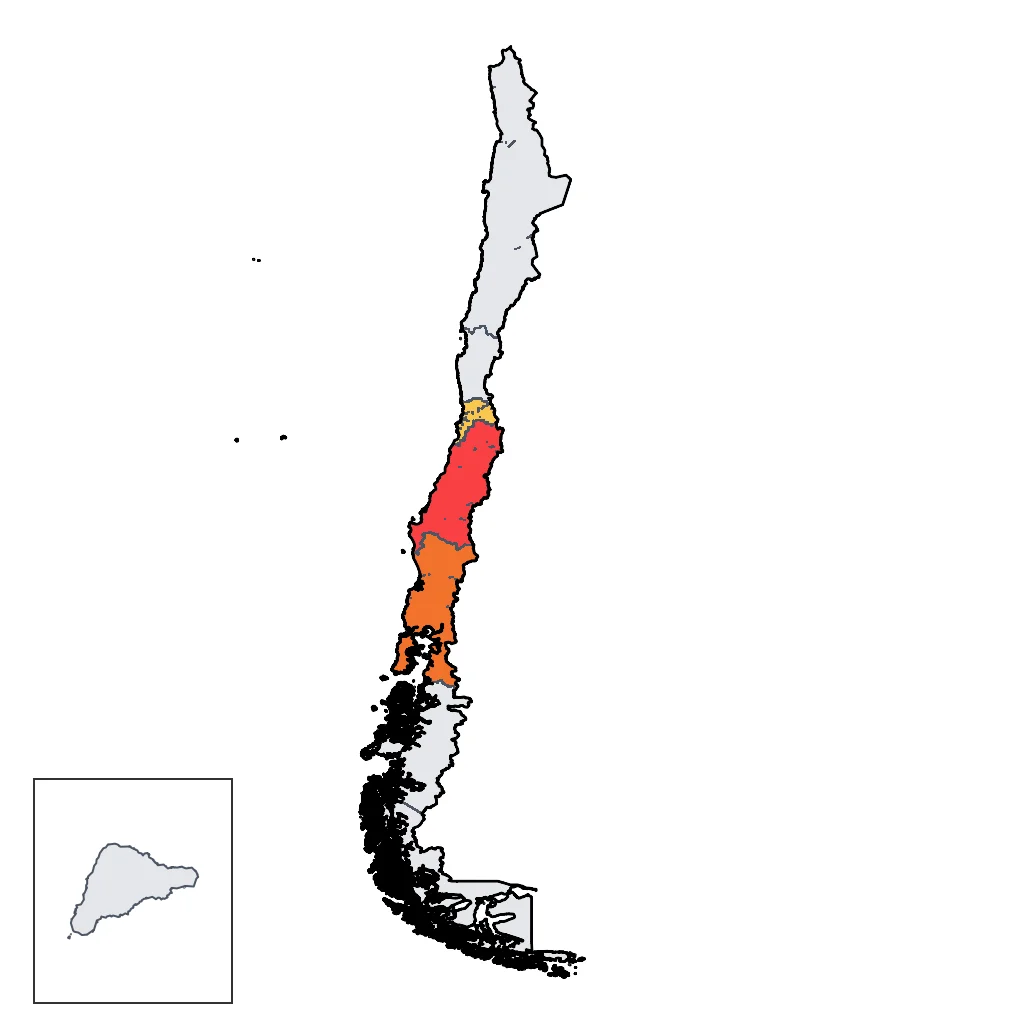
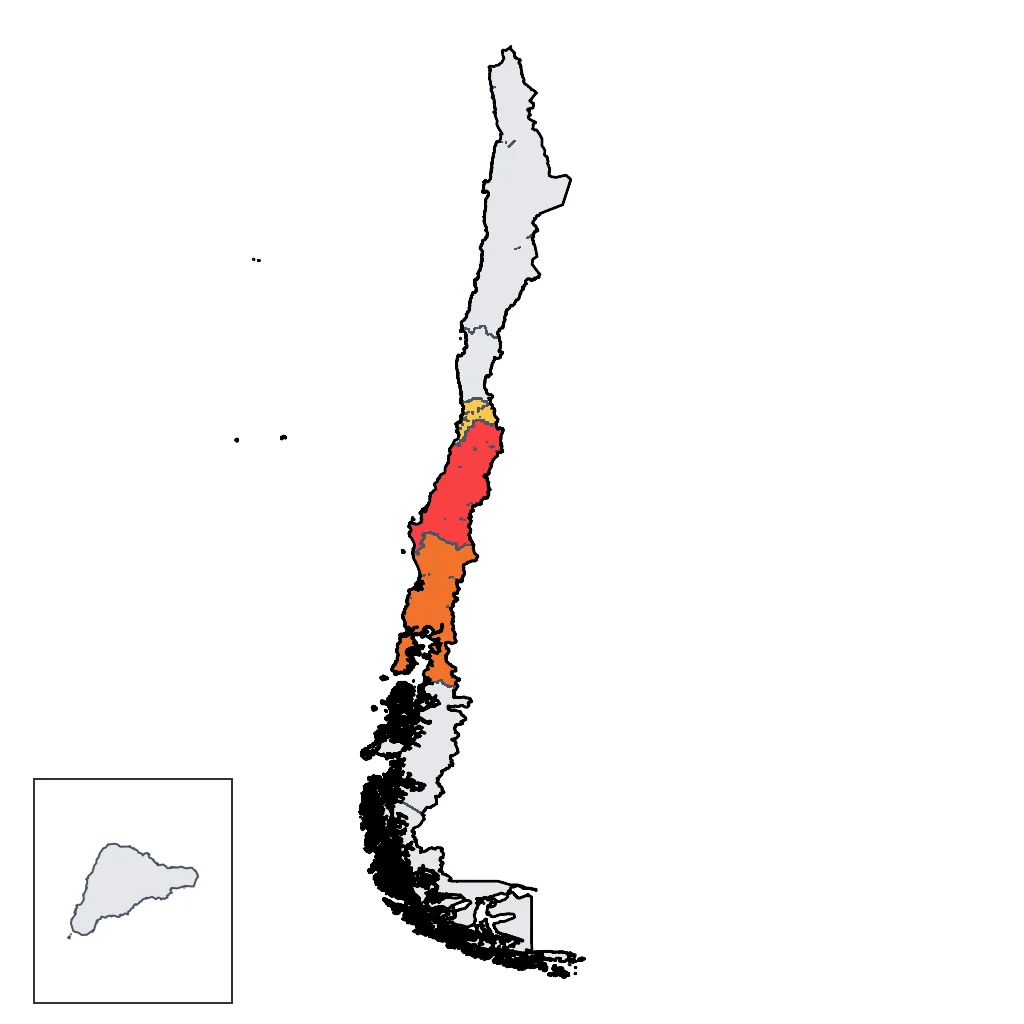
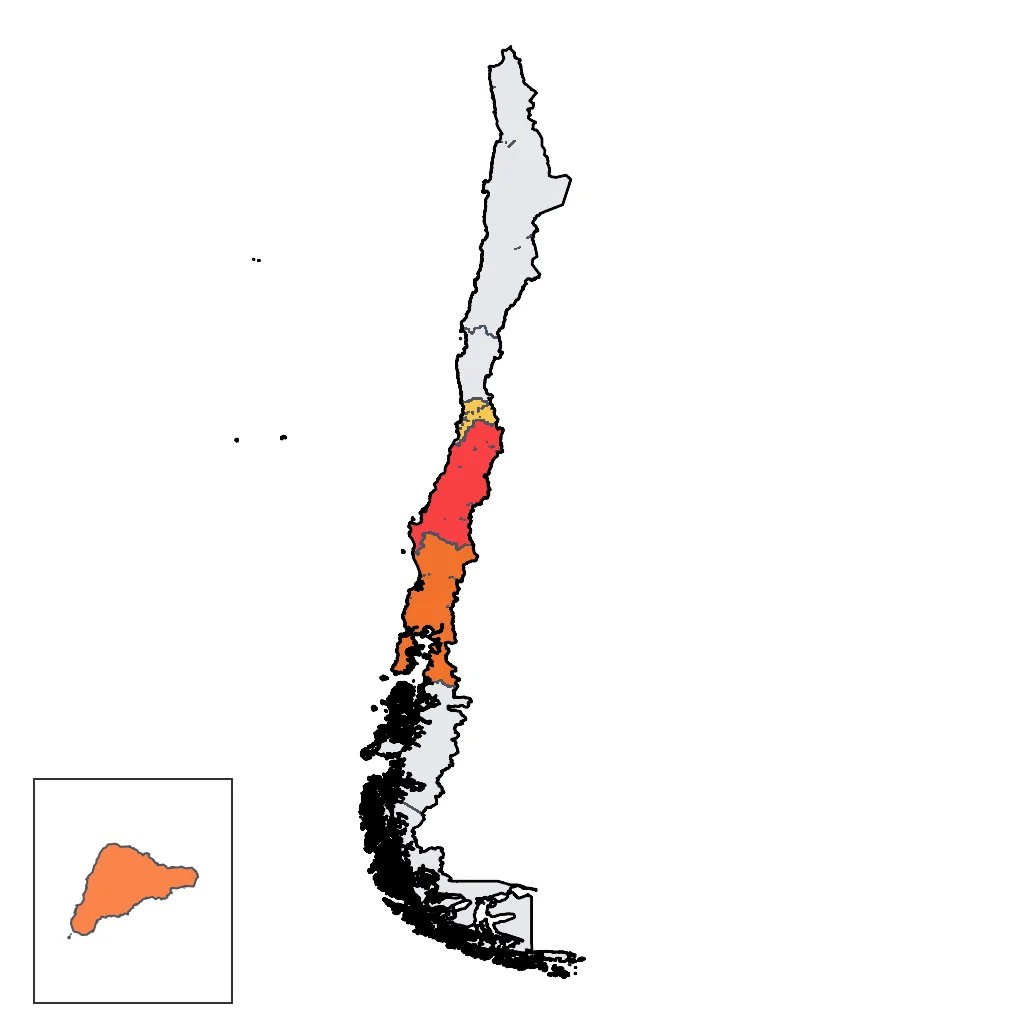
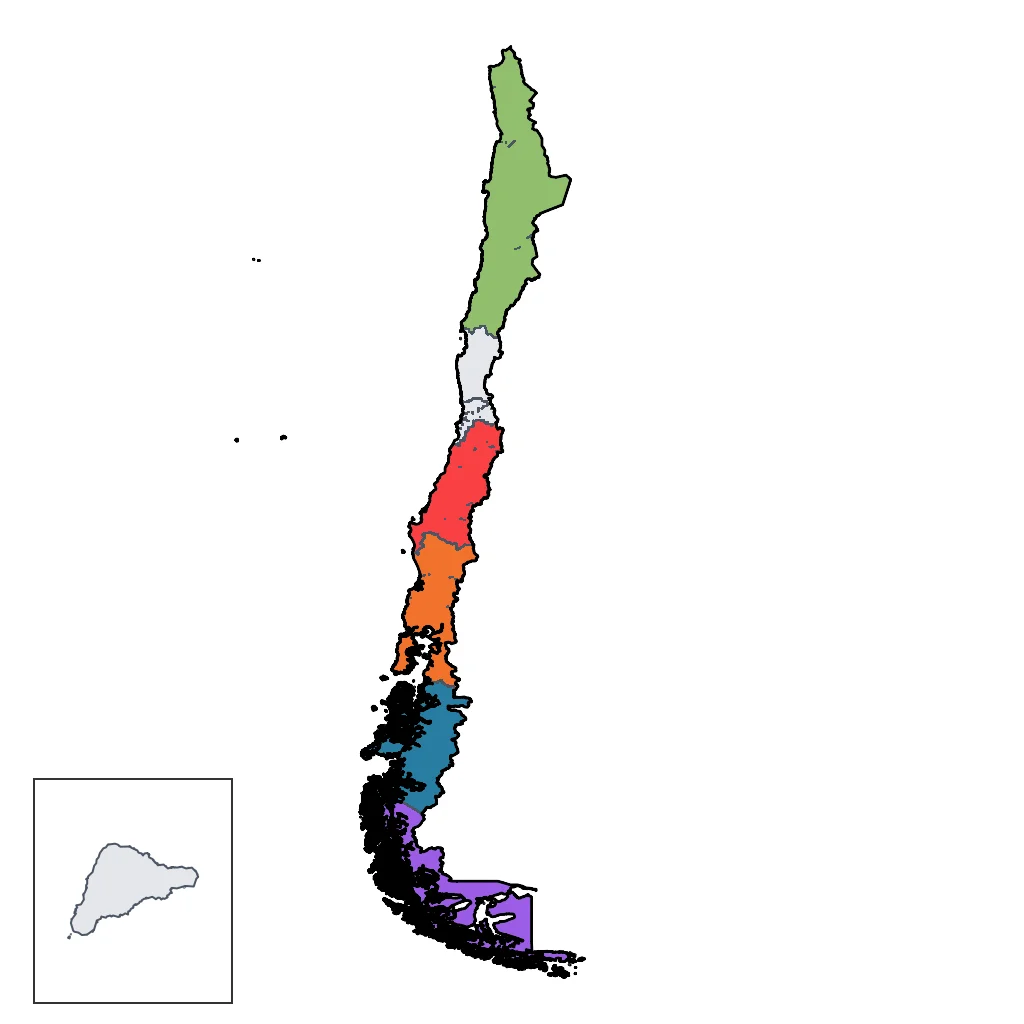
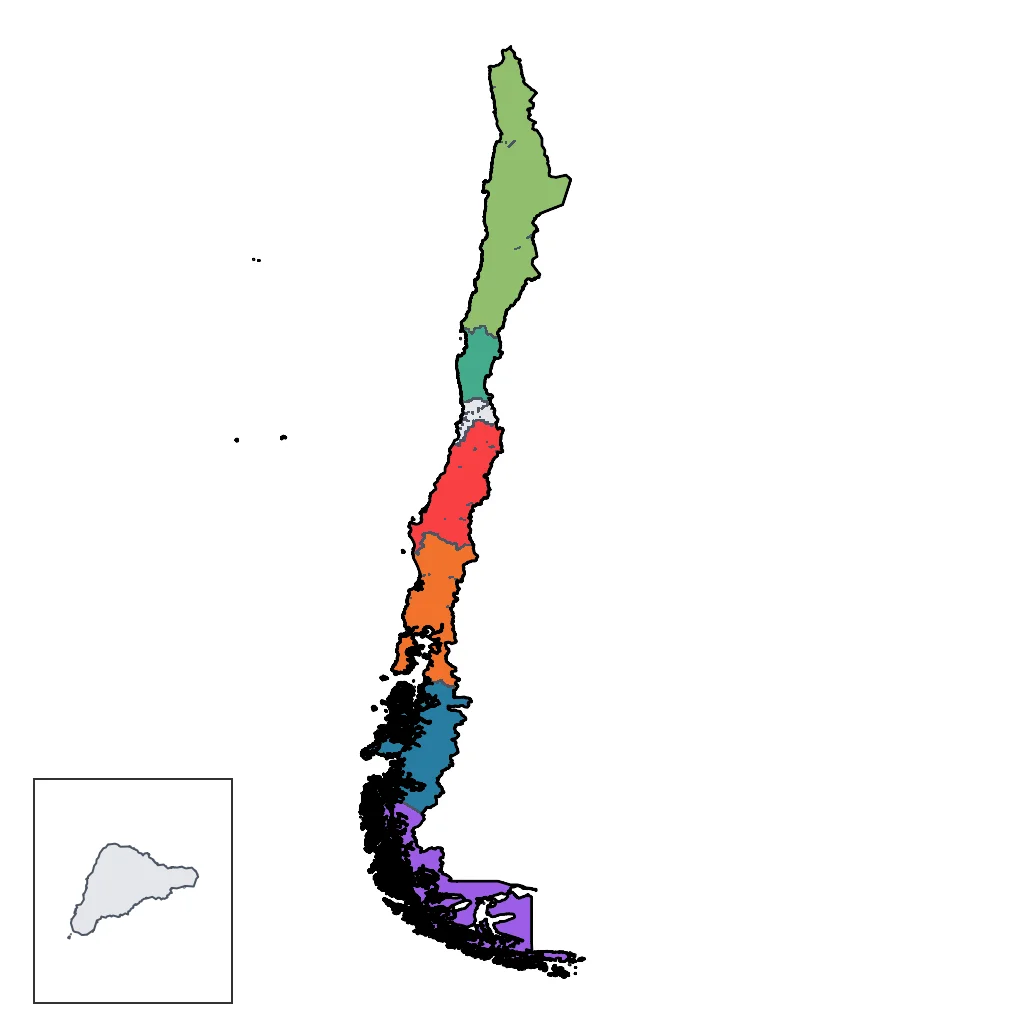
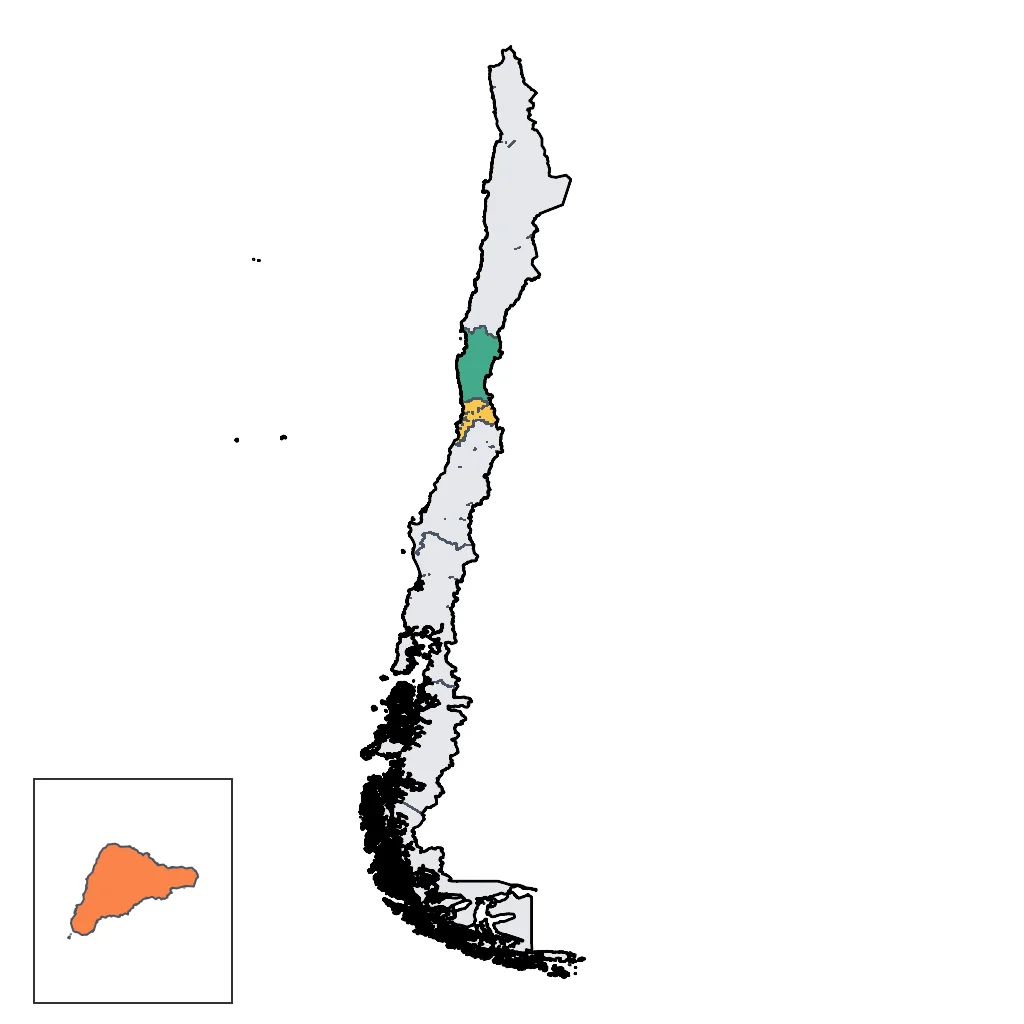
Click on a region marker to explore details. Use the dropdown to color regions by activity suitability.

Activities & Best Times

Adventure & Nature
ExcellentHiking, wildlife, outdoor exploration, ecotourism
A global pinnacle for desert exploration, featuring world-class landscapes like the Valley of the Moon and Tatio Geysers. Peak months offer dry, stable conditions with pleasant daytime temperatures, while the 'Altiplanic Winter' in January and February brings cloud cover and occasional rain that can limit access to high-altitude sites.
Features world-class volcanic trekking and the unique temperate rainforests of Chiloé National Park. Peak summer (Jan-Feb) provides the only period with rainfall below 100mm; mid-winter (May-Aug) sees extreme precipitation exceeding 300mm, making trails impassable.
A global pinnacle for wilderness exploration, featuring the iconic Torres del Paine granite towers and massive calving glaciers. Peak summer (Dec-Feb) provides the maximum daylight and 'warmest' temps for trekking, while shoulder months offer stunning autumn colors or spring blooms despite cooler conditions; winter is harsh with many trails becoming inaccessible.

Educational & Exploratory
ExcellentLearning experiences, scientific sites, historical education
As a UNESCO World Heritage site with hundreds of iconic Moai, it offers an unparalleled, world-class archaeological and historical learning experience. Peak months coincide with the driest periods (72-88mm), ensuring accessibility to remote sites like Rano Raraku, while winter rains (up to 173mm) can hinder exploration.
Offers unparalleled astronomical education under the world's clearest skies and fascinating archaeological insights into the Likan Antai culture. Winter months are peak for stargazing due to maximum atmospheric clarity and low humidity, whereas summer months see higher cloud probability.
As a global capital for astronomy, the region offers world-class scientific observatories and dark sky sanctuaries that provide unparalleled educational experiences. Peak season ensures the cloudless nights necessary for stargazing, while winter months (May-Aug) bring higher rainfall and obscured skies.

Road Trips & Scenic
ExcellentScenic drives, countryside tours, route-based travel
The Carretera Austral is globally recognized as one of the most spectacular scenic drives, passing through dramatic fjords and mountain passes. Peak summer offers the best visibility and manageable road conditions on unpaved sections; winter months are unsuitable due to dangerous mud, snow, and the closure of essential ferry connections and remote services.
Spectacular, well-maintained high-altitude routes offer some of the most scenic driving experiences on the planet through salt flats and past turquoise lagoons. Peak travel occurs when roads are clear and visibility is highest; summer rain can occasionally wash out remote unpaved tracks.
The region offers spectacular scenic drives through the Maipo and Colchagua wine valleys and up into the Andes. Summer months provide crystal-clear visibility and dry roads; winter carries significant risk of road closures in the mountains due to heavy precipitation.

Ski & Snow
ExcellentWinter sports, ski resorts, snow activities
Home to Portillo, one of the world's most iconic and authentic ski resorts, offering elite terrain and a prestigious history. Peak winter (July-August) provides world-class snow coverage in the high Andes; summer months are entirely unsuitable as the snow vanishes.
Without Portillo (which is in the Valparaiso region), Santiago's ski offering rests on Valle Nevado, La Parva, and El Colorado. These are strong regional resorts but not globally elite by Swiss Alps, Japanese, or Colorado standards. The classification note incorrectly references Portillo as being in this region.
Features a unique international experience of skiing on active volcanoes like Villarrica and Osorno with high-quality boutique lodges. Peak season (Jul-Aug) aligns with the highest precipitation for reliable snow cover; summer months are entirely unsuitable as snow recedes from the skiable slopes.

City & Cultural
Very GoodUrban tourism, museums, historical sites, architecture
Santiago features world-class museums like the Pre-Columbian Art Museum and a burgeoning culinary scene that appeals to discerning palates. Peak spring and autumn offer mild temps; winter is downgraded due to high rainfall and urban smog trapping in the valley.
Valparaiso is a genuine UNESCO gem with authentic bohemian culture, but 'excellent' should be reserved for cities with globally top-tier cultural density (Kyoto, Rome, Istanbul). Valparaiso's museum infrastructure and heritage breadth, while unique, don't reach that pinnacle. Very_good accurately reflects its strong international appeal without overstating.
Features the UNESCO-listed wooden churches of Chiloé and the unique German-influenced architecture of Frutillar. Summer is the peak for outdoor cultural exploration and vibrant local markets, while the persistent, heavy winter rains make urban walking tours uncomfortable for families.

Festivals & Seasonal
Very GoodEvents, celebrations, seasonal attractions
Tapati Rapa Nui is extraordinarily authentic and unique, but 'excellent' should benchmark against Rio Carnival, Oktoberfest, Diwali-level events with massive international draw. Tapati is a niche, small-scale event that most international travelers wouldn't plan a trip specifically around. Very_good properly reflects its authenticity and uniqueness while acknowledging its limited scale.
Hosts the world-renowned Viña del Mar International Song Festival and one of the globe's largest New Year's Eve firework displays. These high-profile events occur during the warm summer peak; the rest of the year is quiet regarding international-standard celebrations.
The March-April 'Vendimia' (grape harvest) festivals are authentic, world-class celebrations of Chilean heritage. September hosts the national Fiestas Patrias, though the colder, wetter winter months lack significant cultural events for international visitors.

Relaxation & Wellness
Very GoodSpa retreats, wellness centers, peaceful getaways
High-end viticultural retreats and thermal spas in the Andes foothills offer world-class luxury and serenity. The sunny, dry summer is ideal for vineyard lounging, whereas cold, damp winters limit the appeal of outdoor-integrated wellness facilities.
Features high-end, remote eco-lodges and natural hot springs (e.g., Puyuhuapi) providing deep immersion in pristine nature. Summer months offer the best weather for enjoying outdoor thermal pools; the off-season is characterized by extreme humidity and cold that can limit the comfort of these remote wellness retreats.
Home to high-end 'eco-luxury' lodges that integrate world-class spa facilities with natural hot springs like the Puritama Termas. The warmer months are ideal for enjoying outdoor pools and open-air relaxation, while mid-winter temperatures can drop well below freezing at night, making outdoor-centric wellness less comfortable.

Sports & Active
Very GoodSport tourism, fitness activities, active recreation
Features exceptional cycling routes through historic vineyards and challenging mountain biking in the Andes. Optimal conditions occur during the dry season (Nov-Mar); high winter rainfall (up to 318mm in June) makes most outdoor athletic pursuits impractical.
Offers world-class fly fishing and elite-level white-water kayaking on the Futaleufú River. Peak summer provides optimal water conditions and the mildest temperatures for active recreation; heavy rains and freezing temperatures in the off-season make these sports dangerous or impossible.
Exceptional terrain for high-altitude trekking, mountain biking, and world-class sandboarding in the Valle de la Muerte. Peak conditions avoid the biting cold of winter and the slightly higher humidity of mid-summer, providing the most comfortable climate for physical exertion.
Beach & Sea
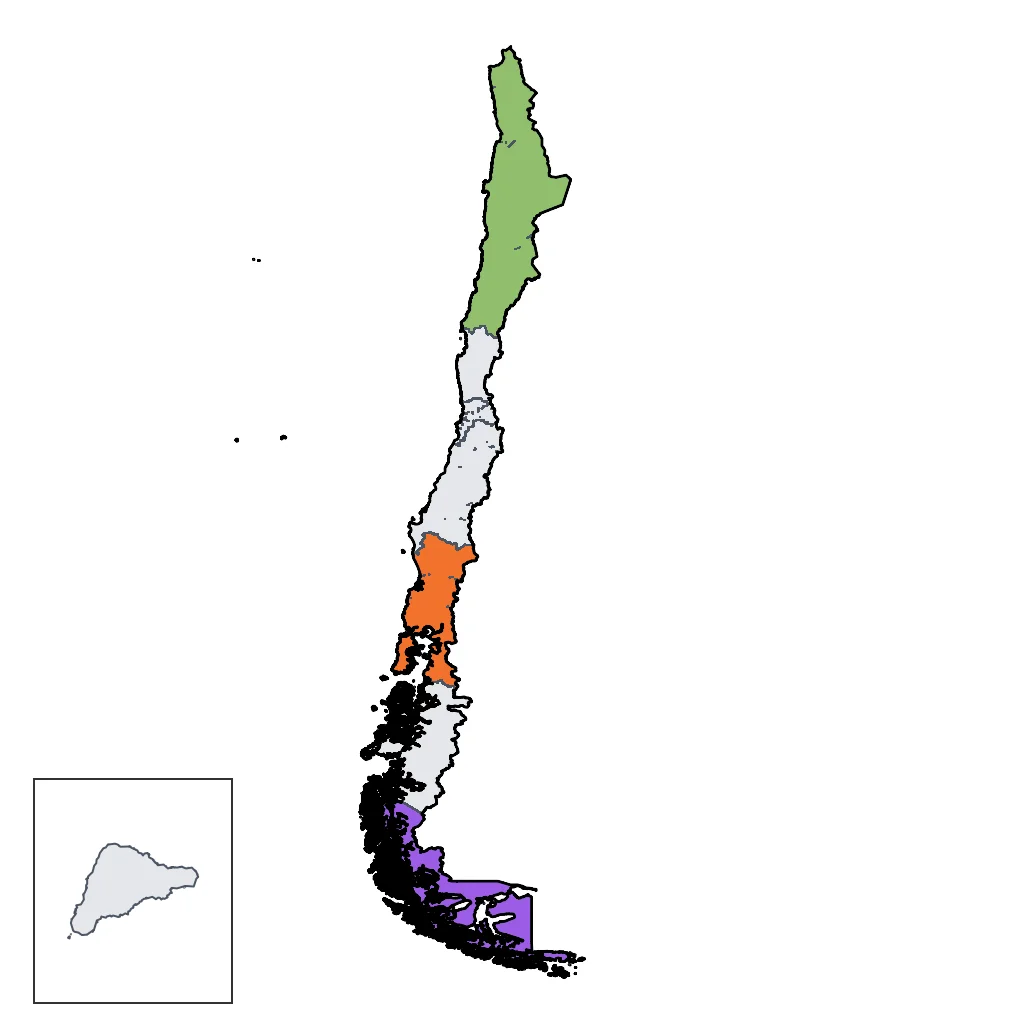
GoodBeach resorts, marine activities: diving, snorkelling, kite surfing, wind surfing, sailing
Anakena beach provides a stunning, authentic tropical setting with world-class clarity for snorkeling, though limited in scale. Peak months offer the highest water and air temperatures (avg 23°C+); winter months are too cool and rainy for a primary beach-focused holiday.
Viña del Mar and Zapallar offer sophisticated coastal infrastructure and high-end resorts, though the Humboldt Current keeps waters cold by international standards. Summer provides optimal air temperatures for sunbathing; winter is too cold and wet for beach activities.
While the Humboldt Current makes the water cold for casual swimming, the pristine beaches and rich marine biodiversity offer excellent boat-based exploration and surfing. January and February provide the warmest air temperatures for coastal lounging; winter months are too cold and rainy for beach activities.
Airports & Flight Routes
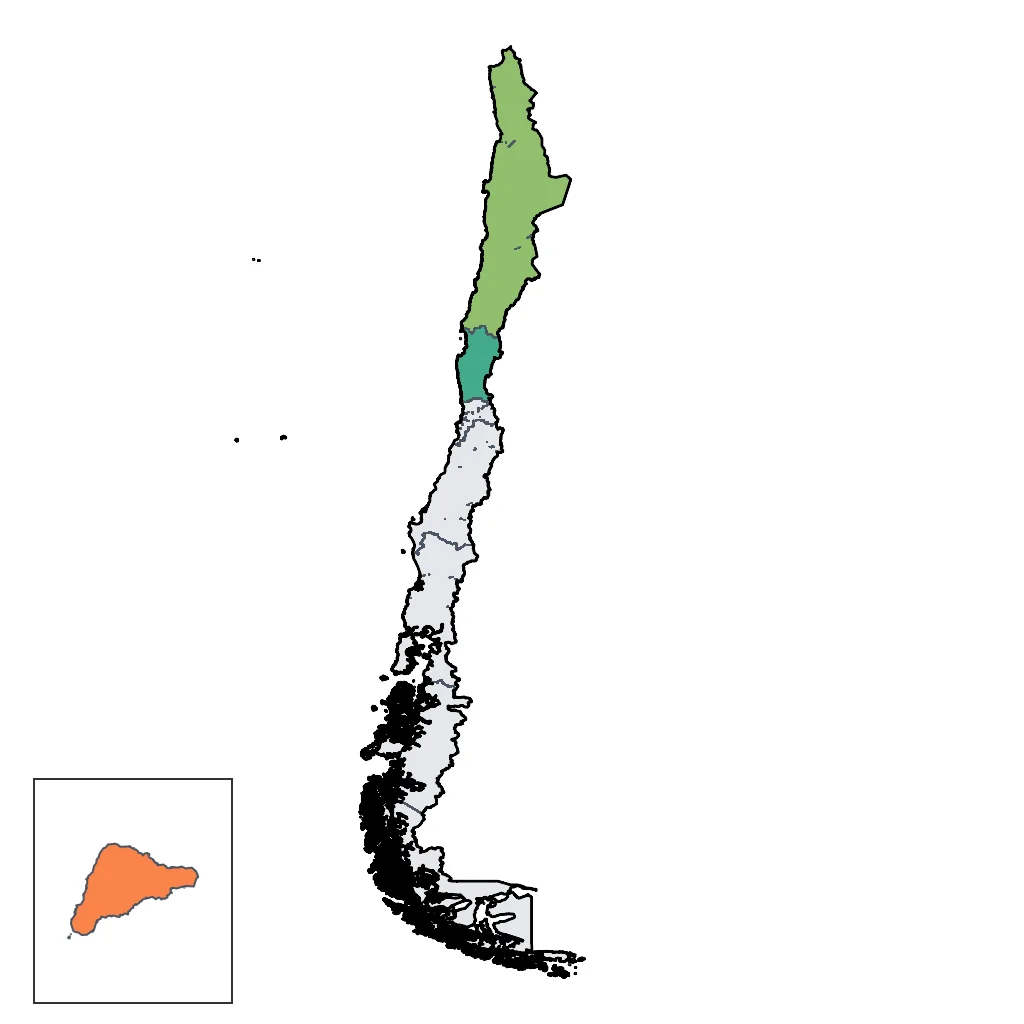
Toggle options to view domestic routes and international airports. Click an airport for details.
Climate & Weather
Atacama Desert & Altiplano
Show Details
| Month | Temp °C | Rain | Humidity |
|---|
Elqui Valley & Coquimbo Coast
Show Details
| Month | Temp °C | Rain | Humidity |
|---|
Northern Patagonia (Carretera Austral)
Show Details
| Month | Temp °C | Rain | Humidity |
|---|
Rapa Nui (Easter Island)
Show Details
| Month | Temp °C | Rain | Humidity |
|---|
Santiago & Central Valley
Show Details
| Month | Temp °C | Rain | Humidity |
|---|
Southern Patagonia
Show Details
| Month | Temp °C | Rain | Humidity |
|---|

Travel Advisory
General safety risks exist across the country, primarily driven by civil unrest and street crime. Increased vigilance is required in urban centers.
Safety Topics
Traveller Advice (3 groups)

When exploring borders with Argentina, Bolivia, or Peru, hikers must register with the National Department of State Borders and Boundaries (DIFROL). It is recommended to use registered guides for volcano and desert tours.

Parents travelling with minors must carry original birth certificates and, if applicable, court-ordered custody papers to satisfy exit requirements for children.

Solo female travellers may experience verbal harassment. It is advised to avoid walking alone after dark and to never leave drinks unattended in bars or clubs due to the risk of spiking.